Malaysia Fires Up Asean's First Homegrown EV Battery Line in Sepang — Graphene Chemistry Could Triple Range
A small factory in Suria Industrial Park, Sepang, fired up production this month of what its maker calls Asean's first homegrown electric vehicle battery. The line is tiny. But the technology inside it — graphene-enhanced lithium-ion cells — could change the math on who gets to build the batteries the world's EVs will run on.
The battery rolls out of a 15,000 square foot facility run by Gigafactory Malaysia, a wholly owned subsidiary of NanoMalaysia Berhad. NanoMalaysia sits under the science, technology and innovation ministry (MOSTI) and has spent over a decade quietly developing nanotechnology commercialisation projects. The EV battery programme cost around RM20 million to bring to production.
"We are on the verge of operationalising Malaysia's first local battery technology production factory," NanoMalaysia CEO Rezal Khairi Ahmad told Nikkei Asia. He described the project as "likely the first of its kind in ASEAN. No other country in the region is producing homegrown battery tech."
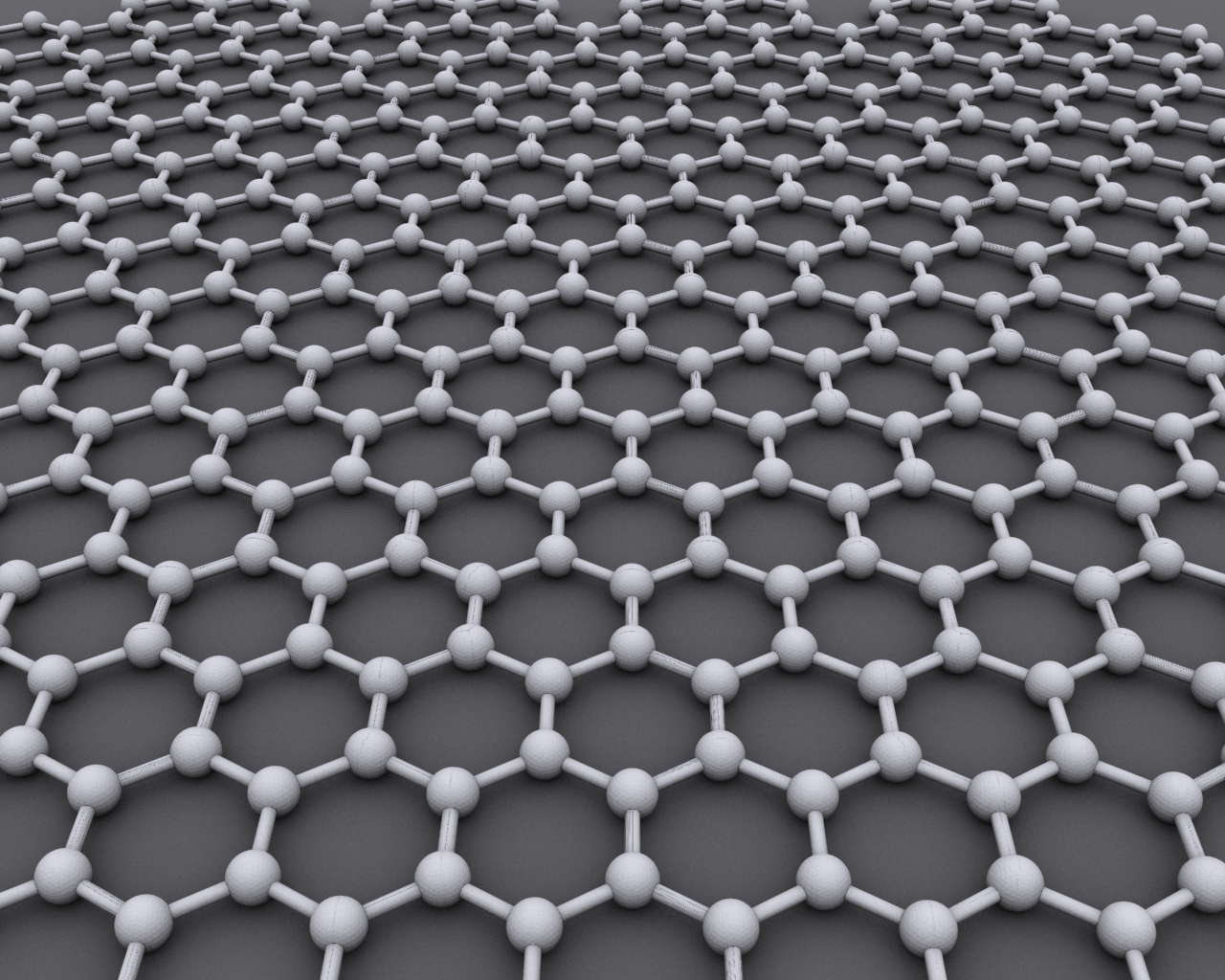
The clever part is the chemistry. Most commercial lithium-ion cells use graphite for the negative electrode. Malaysia's battery swaps that for graphene — a sheet of carbon just one atom thick. The result, Rezal says, is an energy storage capacity up to three times higher than conventional graphite-based cells, with a projected driving range of up to 640 km per charge and support for fast charging.
The battery uses a nickel manganese cobalt (NMC) formulation, not lithium iron phosphate (LFP), making it best suited for EVs with energy densities above 200 Wh/kg.

Small Start, Big Ambition
The factory is starting with modest output. At full tilt it will produce about one megawatt-hour (MWh) of batteries a year — roughly 92,000 cells. For reference, China's CATL shipped that much capacity every few minutes in the first five months of 2026, when it alone supplied 40.2 percent of the world's EV batteries, according to South Korean research firm SNE Research. BYD, another Chinese giant, took another 14.4 percent.
But NanoMalaysia is playing a long game. A first order for a 25-kilowatt hour (kWh) pack — about the size of a small EV's battery — has already come in from a local organisation that NanoMalaysia has not named. More deals are being finalised, and export markets including Indonesia, South Korea, India and Pakistan are in its sights.
The company is also pursuing a nickel supply partnership with Indonesia, which holds the world's largest reserves, and is working on recycling end-of-life batteries to secure raw material supply. That adds up to a full value chain, not just an assembly line.
Why It Matters for Southeast Asia
Malaysia's battery push comes at a moment when carmakers everywhere are desperate to diversify away from China's grip on battery supply. Beijing has shown it is willing to restrict exports of graphite — the very material NanoMalaysia's battery replaces — and Perodua has publicly complained that Chinese vendors for its QV-E electric car were not meeting its quality standards, delaying production.
Batteries are also the fastest growing power technology in the world, according to the International Energy Agency. The world added 108 gigawatts of battery storage in 2025 alone, 40 percent more than the year before, as costs fell more than 90 percent since 2010. "Batteries are changing the game before our eyes," IEA executive director Fatih Birol has said.
Malaysia registered 44,813 EVs in 2025, more than double the year before. The country's newest solar tenders now require grid-scale battery storage built in. Every one of those batteries, in every car and on every grid, is currently imported. A homegrown supplier changes that calculus.
Africa Also Joins the Battery Race
Malaysia is not alone in trying to build domestic battery manufacturing. On July 24, the African Development Bank (AfDB) approved a €100 million (US$114 million) loan to Gotion Power Morocco to build what it calls Africa's first integrated lithium iron phosphate (LFP) battery gigafactory, in the Rabat-Salé-Kénitra Free Trade Zone.
The facility, led by China's Gotion High-Tech, plans an initial 10 GWh of cell and pack capacity for EVs, scaling to 100 GWh. The bank also expects to mobilise an additional €141 million from financial partners.
"Battery storage is the missing link in Africa's clean energy transition," said Kevin Kariuki, the AfDB's vice president for power, energy, climate and green growth. "A facility of this scale, powered primarily by renewable energy, strengthens the foundations for the large-scale integration of solar and wind power."
The Morocco plant will be the first integrated battery manufacturing site in the Middle East and North Africa region, according to the AfDB. Achraf Tarsim, the bank's country manager for Morocco, said the gigafactory is expected to strengthen the country's industrial competitiveness and accelerate its emergence as a manufacturing hub for sustainable mobility.
Two Paths, Same Goal
The Malaysia and Morocco projects represent two very different strategies for breaking into the battery supply chain. One is a government-backed nanotechnology spin-off starting small and aiming to prove domestic intellectual property. The other is a Chinese joint venture building at industrial scale from day one.
Both face the same reality: the global battery market is projected to grow from about $120 billion in 2025 to nearly $400 billion by 2032, according to industry estimates. The IEA says global nameplate manufacturing capacity for lithium-ion batteries reached more than 4 TWh by the end of 2025, up roughly 30 percent compared to 2024.
What the Sepang line lacks in scale, it makes up in strategic intent. NanoMalaysia's Rezal is clear that the goal is not to out-produce CATL overnight but to prove that Asean can design and manufacture its own battery technology. Taiwan Semiconductor Manufacturing Company started as a government-backed long shot in 1987 that few took seriously. It now produces over 90 percent of the world's most advanced chips.
Nobody should pretend Malaysia has birthed a battery giant. But every giant starts as a seed. This month, a battery rolled off a Malaysian line carrying Malaysian intellectual property. Small cell. Big spark.
The graphene anode chemistry also has potential beyond EVs. Higher energy density and fast charging make it attractive for grid-scale battery storage, consumer electronics, and even aerospace applications where weight matters. If NanoMalaysia can scale the chemistry beyond its current MWh-per-year output, the Sepang pilot could become a blueprint for other Southeast Asian nations looking to build their own battery supply chains.
For now, the immediate question is whether the first local customer — the unnamed organisation that ordered the 25-kWh pack — reports positive real-world results. A successful pilot deployment would open the door to the export deals NanoMalaysia has already lined up in South Korea, India, Pakistan and Indonesia. If the graphene-enhanced NMC cells deliver on the promised range and fast charging, the factory in Sepang may need to expand far beyond 15,000 square feet sooner than planned.
Read more about battery technology and explore related coverage in Electric Vehicles.