Lucid's Operational Reset Pushes Affordable EV to 2027 as Robotaxi Program Takes Center Stage
NEWARK, Calif. — Lucid Group is betting its survival on a pivot that would have sounded improbable two years ago: the luxury electric-vehicle maker founded on the promise of a $70,000-plus sedan is now pouring its engineering might into robotaxis, while the affordable model meant to broaden its appeal slides to the second half of 2027.
The shift crystallized Tuesday when chief executive Silvio Napoli laid out what the company calls an "operational reset" alongside second-quarter results that missed Wall Street estimates on both the top and bottom lines. Lucid reported a loss of $3.30 per share on revenue of $405 million, versus expectations of a $2.46 loss and $416 million in sales. Shares fell 13 percent in after-hours trading.
Napoli, who took the helm in June after a stint running an escalator and elevator business, did not mince words. "We're not going to make the mistake of the past where products, great cars, were in fact tainted by launching before things were ready," he told CNBC. "I think it's going to be '27. ... Most likely the second half of '27."

The Transformation Program
The reset is built around a $1.4 billion cash-flow improvement target for 2026. Lucid broke that down into three buckets: $600 million to $800 million from vehicle inventory reductions, $500 million from capital-expenditure cuts, and $200 million from operating-expense savings. The company also narrowed its strategic focus to three pillars it labels "cash and cost," "customer and quality," and "culture and team."
Production at the Casa Grande, Arizona factory has already dropped from two shifts to one, a move announced in June that cut output capacity but preserves cash. Total liquidity stood at $3 billion at quarter's end, which Lucid says funds operations well into 2027. The Saudi Public Investment Fund, Lucid's majority owner, has backed the plan publicly. "Silvio and his leadership team are transforming the company, and the Board stands firmly behind their actions," chairman Turqi Alnowaiser said in the earnings release.
The reset comes weeks after Lucid forcefully denied an online report that it was considering bankruptcy or a take-private transaction. The rumor crashed the stock in mid-July; even after a partial recovery, shares remain down roughly 30 percent for the year.
Robotaxi Ambitions With Uber and Nuro
At the heart of the new strategy is a robotaxi program Lucid now calls a "top priority." The company plans to build prototype vehicles based on the Gravity SUV rather than the delayed midsize platform, targeting delivery of about 100 pre-production units to partners by year-end. Actual vehicle production for the robotaxi fleet would begin in early 2026.
Lucid's partners are Uber Technologies and Nuro, the autonomous-delivery startup. The collaboration aims to put Lucid's software-defined vehicle architecture — built on a centralized compute platform the company developed in-house — into a ride-hailing context where uptime, efficiency, and passenger experience matter more than outright range bragging rights.
"The robotaxi opportunity is huge, and it's an industry that is about to start an exponential growth," Napoli said. "Not many companies are ready for it. We are a software-defined vehicle company, so we are well positioned."
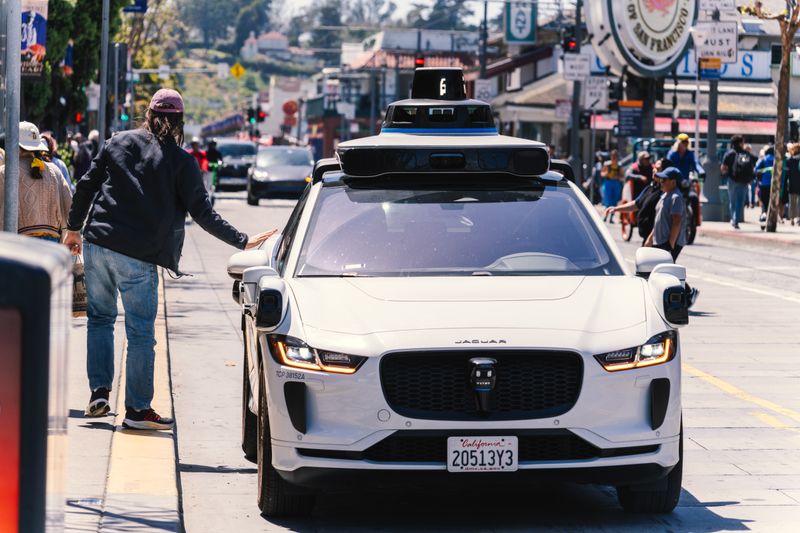
The pivot echoes a broader industry trend: legacy EV startups that once chased Tesla's retail playbook are now chasing Waymo's robotaxi model. But Lucid's angle is different. Most rivals retrofit third-party autonomy stacks onto existing platforms. Lucid argues its ground-up electrical architecture — 900-volt propulsion, integrated thermal management, and a single high-performance compute box — gives it a native advantage when the vehicle must drive itself 24/7.
Saudi Factory and the Long Game
Parallel to the robotaxi push, Lucid is building its first overseas plant in King Abdullah Economic City, Saudi Arabia. The facility, backed by the PIF, is designed for an eventual capacity of 155,000 vehicles annually. Initial production will focus on the Air and Gravity for the Middle East market, but the site could eventually supply robotaxi fleets across the region.
The Saudi factory also serves a geopolitical purpose. For the kingdom, it is a flagship of Vision 2030's industrial diversification. For Lucid, it is a lifeline: the PIF has injected billions since 2018 and owns roughly 60 percent of the company. The relationship survived the bankruptcy rumor intact — a signal that the sovereign fund views Lucid as a strategic asset, not a financial trade.
Q2 by the Numbers
Beneath the strategic narrative, the quarter was ugly. Net loss topped $1 billion, more than double the $539 million loss a year earlier. Adjusted loss came in at $901 million, or $3.30 per share. Production rose 24 percent year-over-year to 4,774 vehicles, and deliveries climbed 19 percent to 3,953 — but both figures reflect the Air and Gravity, which start above $70,000 and $80,000 respectively. The volume gains did not translate to revenue growth; average selling pressure from a shifting mix and incentive spending kept the top line below expectations.
Napoli declined to reinstate 2026 guidance, saying the new leadership team needs time to align internal forecasts with external consensus. He did flag that second-half production will trail the first half, while deliveries should exceed it — a pattern that suggests inventory drawdown rather than demand acceleration.
What Comes Next
Three milestones will define whether the reset works. First, the robotaxi prototypes must hit the streets on schedule. Second, the Saudi factory must commission without the cost overruns that plagued Casa Grande's early ramp. Third, Lucid must prove it can generate positive gross margin on the Air and Gravity while idling half its Arizona capacity.
If any of those slip, the $3 billion liquidity runway shrinks fast. The company has no committed follow-on financing beyond the PIF's existing stake, and capital markets have shown little appetite for pre-revenue EV stories since 2022.
For now, Lucid is asking investors to trust a former elevator executive to turn a luxury carmaker into a robotaxi platform company — and to wait until 2027 for the volume model that was supposed to arrive this year. The clock is ticking.
Sources: CNBC — Lucid begins 'operational reset' as CEO says EV maker will delay midsize vehicle
Internal links: EV, Robotics & Drones, AI
Keywords: Lucid Motors, operational reset, robotaxi, Silvio Napoli, Saudi Arabia, EV startup, Uber, Nuro, Gravity SUV, Air sedan, Public Investment Fund