LG and Nvidia Sign a Robotics Pact That Puts a Humanoid on the 2027 Calendar
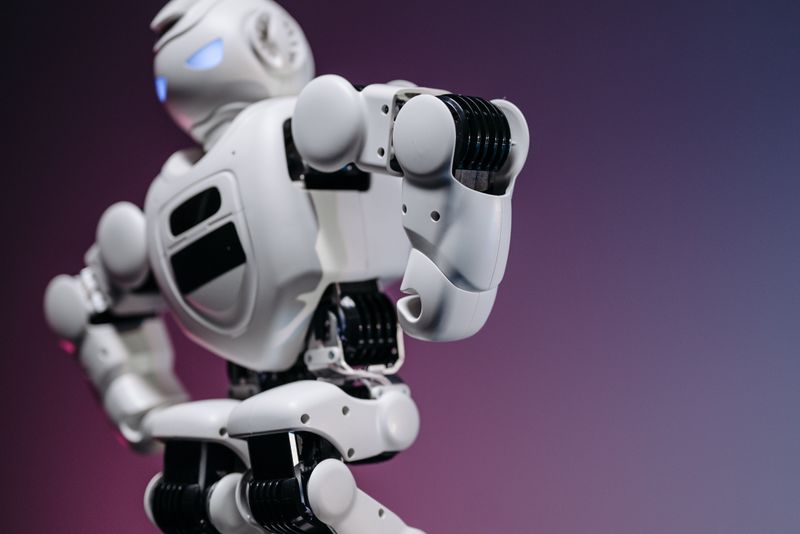
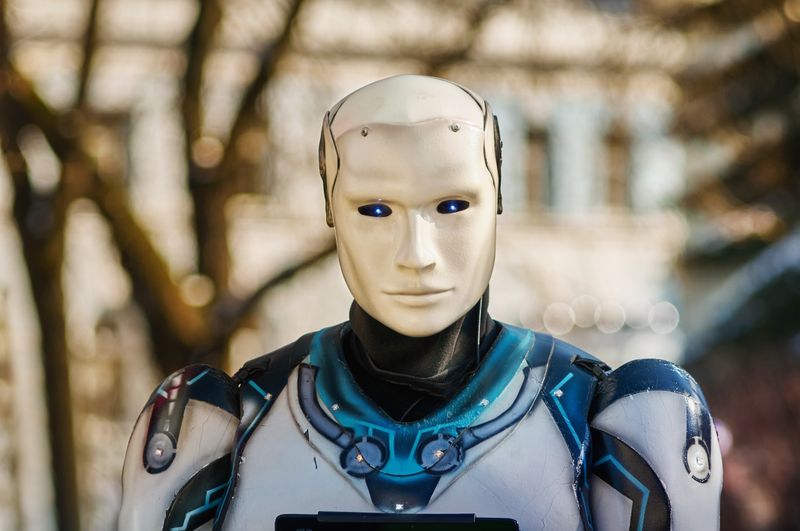
LG and Nvidia signed a memorandum of understanding on Thursday that pulls the two companies into a much deeper partnership on robots, AI factories and self-driving cars. The headline piece is a bipedal humanoid robot LG wants to show the world in the first quarter of 2027, built around Nvidia's Jetson Thor compute module and trained on Isaac GR00T, Nvidia's open reasoning model for humanoid robots.
LG Group Chairman and CEO Kwang Mo Koo and Nvidia founder and CEO Jensen Huang signed the deal at Nvidia's headquarters in Santa Clara, California, on August 13. The two executives last met in June at LG Twin Towers in Seoul during Huang's visit to South Korea. Since then, LG has set up a robotics business center that reports directly to its chief executive, a sign the group is serious about turning robots into a revenue line rather than a showcase.
The humanoid project pulls in three LG affiliates at once. LG Electronics will supply the actuators, LG Innotek the sensors and LG Energy Solution the batteries. That "One LG" approach is the core of the pitch: a single corporate family that can build almost every part of a robot in-house, from the electric muscles to the power pack, and wrap it in Nvidia's software stack.
From handshake to hardware
What changed on Thursday is execution. The June meeting produced strategy talk; the August agreement sets deadlines. LG is targeting a public unveiling of its next-generation bipedal humanoid in the first quarter of next year, with Nvidia's Jetson Thor handling onboard compute, Isaac GR00T providing the reasoning layer and Nvidia Halos for Robotics acting as the safety system. Halos is Nvidia's full-stack safety framework for robots, covering simulation, validation and runtime monitoring.
Nvidia frames the whole effort as "physical AI" — giving machines the ability to perceive the real world, reason about it and act safely around people. Jensen Huang described the opportunity in broad terms, saying the two companies are combining LG's product engineering and manufacturing strengths with Nvidia's technology to speed up a new era of robots, AI factories and autonomous vehicles.
LG's Koo said the tasks and goals in AI factories and physical AI have become clear as talks moved quickly, and that LG will push the spread of AI by building reference sites that lead the industry.
The CLOiD robot goes to work in Tennessee
The humanoid is not the only robot in the pipeline. LG also plans to validate its CLOiD wheel-based robot on a washing machine production line at LG Electronics' plant in Tennessee later this year, testing the technology in a real factory before expanding to other production sites, homes and commercial spaces.
CLOiD made its debut at CES in January as a home robot with a display face and a tray-like body, designed to carry objects and act as a moving assistant around the house. Putting it on an appliance assembly line is a deliberate test: LG wants to prove the robot can handle repetitive logistics work in a manufacturing environment, where the economics of automation are easier to measure than in a living room.
Data collected from those factory trials, plus the robotics workstreams, is expected to feed back into LG Group's own robot foundation model, improving how its machines handle real-world tasks.
An AI factory in Cheonan and a car platform
The partnership also reaches into two other businesses. LG plans to build an AI factory reference site in the first half of next year based on Nvidia's next-generation Vera Rubin platform, testing cooling, power and IT systems, then expand the facility to 80 megawatts in Cheonan, South Chungcheong Province, during the first half of 2028. The site will use prefabricated modular construction that LG says cuts building time by more than 20 percent.
In mobility, LG will combine Nvidia's DRIVE Hyperion autonomous-driving platform with its own in-vehicle infotainment and software capabilities to build a computing platform for AI-defined vehicles. That extends LG's automotive electronics business beyond cockpit displays and into the self-driving stack, with LG offering global automakers an integrated package that pairs autonomous functions with in-car AI services.
Investors took note. LG Electronics shares traded at about 217,000 won ($151) on Friday morning, up roughly 5 percent from the previous session.
Why a chaebol is betting on physical AI
The timing is not accidental. The humanoid sector is entering a crowded phase: Unitree went public in Shanghai this week with a $900 million IPO and a valuation around $9 billion, while rivals AgiBot and Leju Robotics are preparing listings in Hong Kong and Shenzhen. Wood Mackenzie expects the global humanoid fleet to grow more than 90 percent a year through 2035 and surpass 10 million units, with average prices having fallen about 93 percent between 2020 and 2025 to $58,000.
LG is arriving with a different profile than the startups. It has manufacturing scale, a captive supply chain and decades of appliance engineering, but it lacks the software depth of Nvidia's ecosystem. The deal trades those strengths: LG brings hardware and production, Nvidia brings the model stack and compute. The two companies will run a joint task force of technology and business specialists spanning research, field trials and commercialization.
Analysts see the logic. Lee Sang-heon of IM Securities said LG's subsidiaries are increasingly combining hardware manufacturing, AI model design, sensing technology and learning and control platforms into a single ecosystem, and that as commercialization of physical AI robots becomes more visible, LG's growth potential should accelerate.
There are still open questions. LG has not said which market the humanoid will target first, what it will cost, or whether it will be a home companion, a factory worker or both. The first-quarter unveiling will answer some of that. For now, the agreement is a signal that one of the world's largest consumer electronics groups is treating humanoid robots as a product category with a calendar, not a research curiosity.
The deal also deepens the robotics rivalry with other appliance and electronics giants. Samsung has its own humanoid ambitions through investments and research, and Chinese players such as UBTech and Unitree are pushing into consumer and industrial robots alike. By locking in Nvidia's stack early, LG is betting that the winner in physical AI will be the company that combines proven manufacturing with the strongest AI foundation — a bet it can now point to in writing.
What to watch next
Three milestones matter in the coming months. First, the CLOiD pilot on the Tennessee washing machine line, expected this year, which will show whether LG's wheel-based robot can earn its keep in a real factory. Second, the AI factory reference site in the first half of next year, which tests whether LG's cooling and power systems can support Nvidia's Vera Rubin platform at scale. Third, and most visibly, the humanoid unveiling in the first quarter of 2027, which will reveal what a chaebol-built, Nvidia-brained humanoid actually looks like.
If the robot ships on schedule, LG will become the first major appliance maker to put a bipedal humanoid on the market with a top-tier AI stack behind it. If it slips, the delay will be measured in months, not years — the partnership structure is built for speed, with executives from both companies on a joint task force and LG's robotics center reporting straight to the CEO.
Either way, the pact marks a moment when physical AI stopped being a phrase in keynote slides and became a line item in a memorandum of understanding between two of the industry's biggest names. The robots, the factories and the cars are all now on a shared calendar, and the first date is the humanoid's debut early next year.
LG's broader robotics push connects to coverage we have tracked across this site: the Unitree IPO showed how Chinese humanoid makers are racing to public markets, and our look at welding robots for warship construction examined how established industrial players are deploying automation at scale. The LG-Nvidia deal sits in between — a consumer electronics giant using a chipmaker's platform to enter the humanoid race with both feet.
The outbound sources for this report are the LG announcement via Yahoo Finance, the Korea JoongAng Daily report, UPI's coverage of the expanded alliance, and CNBC's look at humanoid economics.