Leidos and CoreWeave are joining forces to build a dedicated sovereign AI cloud aimed at the US Intelligence Community and the Department of War. The two companies announced the collaboration this week, pairing Leidos's long record of mission-critical federal systems with CoreWeave's AI-native cloud platform. The goal is to give intelligence and defense agencies a way to build, train, and run AI at mission scale inside secure environments.
The Intelligence Community and the Department of War sit at what both companies call an inflection point, where AI-assisted analysis has become a source of competitive edge in national security. That has pushed secure AI compute capacity for government workloads near the top of the procurement list. Rather than bolt AI onto existing systems, Leidos and CoreWeave are building dedicated capacity from the ground up, using the same technology stack that powers some of the most advanced commercial AI deployments and adapting it to the security and classification rules that national-security organizations have to live by.
This counts as a fresh entry in the race toward sovereign cloud, the push by governments around the world to control their own compute and data instead of renting it from a handful of overseas providers. Sovereign AI infrastructure is now a stated priority for a growing number of national governments, and the US federal market is one of the larger and more demanding customers in that trend.
What the collaboration actually covers
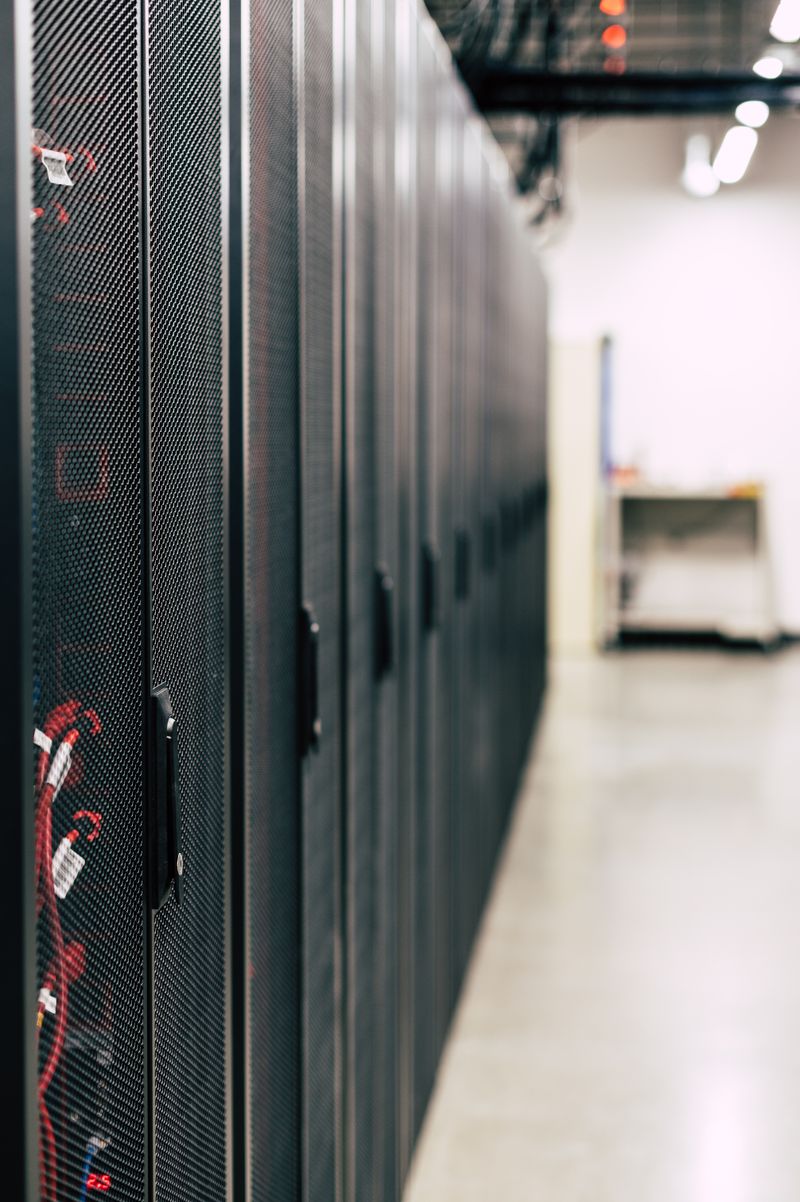
CoreWeave plans to run its AI-native platform inside Sensitive Compartmented Information Facilities, known as SCIF-accredited data centers. That covers purpose-built infrastructure, advanced networking, AI-optimized storage, and cloud-native orchestration for both training and inference workloads. Leidos takes the mission-integration side: secure architecture accreditation, cyber operations, data engineering, and customer delivery for intelligence and defense programs.
The two firms list five feature areas they expect to build out:
- Classified AI cloud services, meaning secure environments for model training, fine-tuning, evaluation, deployment, and ongoing monitoring.
- Intelligence-analyst augmentation, with AI-driven workflows to fuse intelligence from multiple sources, handle imagery analysis, and support decision-making.
- Cyber AI ranges for simulation, autonomous defense testing, threat modeling, vulnerability prioritization, and adversarial AI evaluation.
- Synthetic data and simulation, covering secure generation of mission-relevant data, digital twins, and training environments.
- Edge-to-cloud AI orchestration, which ties a central AI cloud platform together with forward-deployed, disconnected, and tactical environments.
That last item points at the role of edge computing in modern defense. Field units often operate in disconnected or bandwidth-poor settings, so the ability to push models out to the tactical edge and pull fresh results back to a central cloud matters as much as raw compute. The sovereign platform is designed to acknowledge that split rather than assume everyone sits on a fast link to a big data center.
Why the timing matters
The announcement builds on the recent launch of CoreWeave Federal, the unit CoreWeave set up to sell AI cloud services to government agencies and the Defense Industrial Base. CoreWeave has become one of the more prominent names in the AI-cloud buildout, raising large sums, buying up GPU capacity, and landing deals with big AI labs. Leidos brings the accreditation and integration know-how that a classified environment demands, and both sides say the fit is the point.
"Combining CoreWeave's AI cloud platform with our mission-grade federal integration accelerates delivery for IC and DoW priorities, expanding our nation's AI superiority," said Jason O'Connor, president of Leidos Intelligence. He called it the next evolution of mission technology, describing the work as sovereign AI compute at scale, secure by design, and mission integrated.
Sachin Jain, chief operating officer at CoreWeave, took a similar line. He said federal teams need secure, scalable platforms to put AI to work, and that CoreWeave plans to extend its capabilities to highly secure government settings with the performance and rigor those missions require.
Why everyone is chasing sovereign cloud AI
Sovereign cloud is broader than defense. Governments across Europe and Asia have been pushing for domestic infrastructure that keeps data under national control, and the EU is spending big on local AI computing as part of that same impulse. The defense market is simply a more demanding extensions of the same logic, with classification rules as an additional layer on top of the usual data-sovereignty concerns.
The collapse of reliance on foreign providers has also become a talking point in Washington. Policy debates about whether American agencies should depend on a small number of hyperscale clouds for cutting edge AI capacity have grown louder, and a vendor like CoreWeave has positioned itself as a specialist alternative to the three big public clouds. Bringing an AWS or an Azure into classified work is complicated, and some officials have argued for a wider set of certified, purpose-built providers.
That is the opening Leidos and CoreWeave are trying to grab. Their pitch is a federal cloud that does not just carry classified workloads, but unifies fragmented AI infrastructure across multiple domains and agencies. They also expect to help with the common problem of agencies running several different AI stacks that do not talk to each other.
The security picture
Designing for classified workloads changes the security conversation. The platform will be built around federal security controls, auditability, model governance, data protection, and mission continuity as baseline requirements. Compute deployment and architecture will be decided by mission needs and by federal appropriation priorities, which is the vendor's way of saying that not every project will be funded or sited the same way.
The customer-side risks are real. A dedicated cloud still has to earn accreditation, protect supply chains, and keep third parties out of environments that handle highly classified material. Both companies have gone to some lengths to say the architecture will follow federal security standards rather than asking the government to change its rules to fit the product.
What comes next
The collaboration names need to hold through the procurement process before real workloads flip onto the platform, and the deal does not come with a public price tag or a timeline. Both companies are betting that the demand pipeline, and the federal dollars behind it, are large enough to turn this from an announcement into a line of business.
For the wider Cloud & Edge Computing category, the deal is another sign that AI compute is the main driver of data-center investment, and that government customers are becoming a meaningful force in the AI buildout. The same AI infrastructure that powers commercial chatbots and enterprise software is being repurposed, hardened, and certified for defense, the clearest signal yet that the sovereign's appetite for AI is not slowing down.
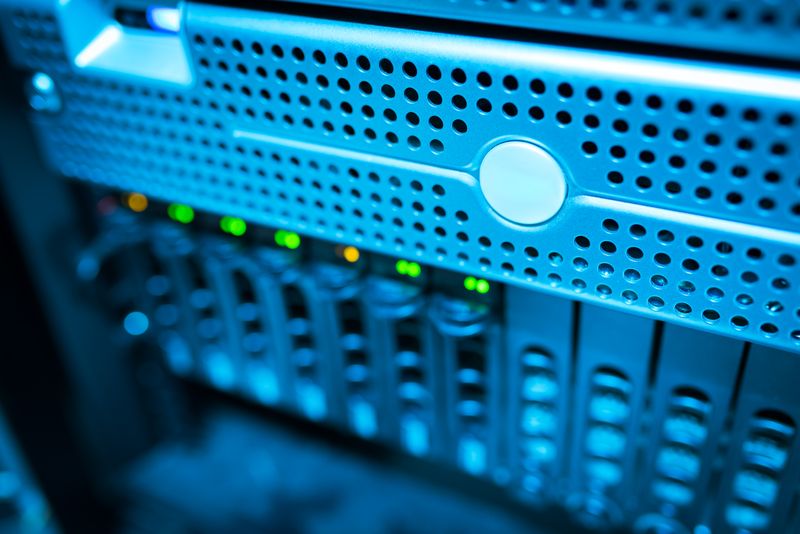
The tie-up is worth watching for the rest of the industry too. If a specialist provider like CoreWeave can win meaningful classified business, it proves out the argument that the hyperscalers are not the only option for serious government AI. AWS, Microsoft, and Google have long held the mainstream of federal cloud contracts, and rivals like Oracle have been trying to break in from the other direction.
Whether Leidos and CoreWeave end up as a footnote or as a template depends on delivery. The next few quarters, as prototypes move toward accreditation and early test workloads, will tell the story. For now, the two companies are telling a market that wants options that the most sensitive AI workloads in the country finally get a secure place to run.
Context for readers
Cloud and edge computing keeps getting pulled in two directions at once: the hyperscalers push more capacity into ever-larger data centers, and a separate wave of builders push compute out to the edge where the data actually lives. A sovereign cloud sits in between, aimed at a customer, the federal government, that has both extremes. For a deeper read on the forces shaping this market, our Cloud & Edge Computing section covers hyperscaler earnings, data-center buildouts, and the push toward sovereign and edge compute.
The announcement was covered by PacketPushers data-center trade press and by Fast Mode, with the original release published by Leidos.