Leapmotor Breaks 100,000 Monthly Deliveries for the First Time as Indonesia Assembly Comes Online
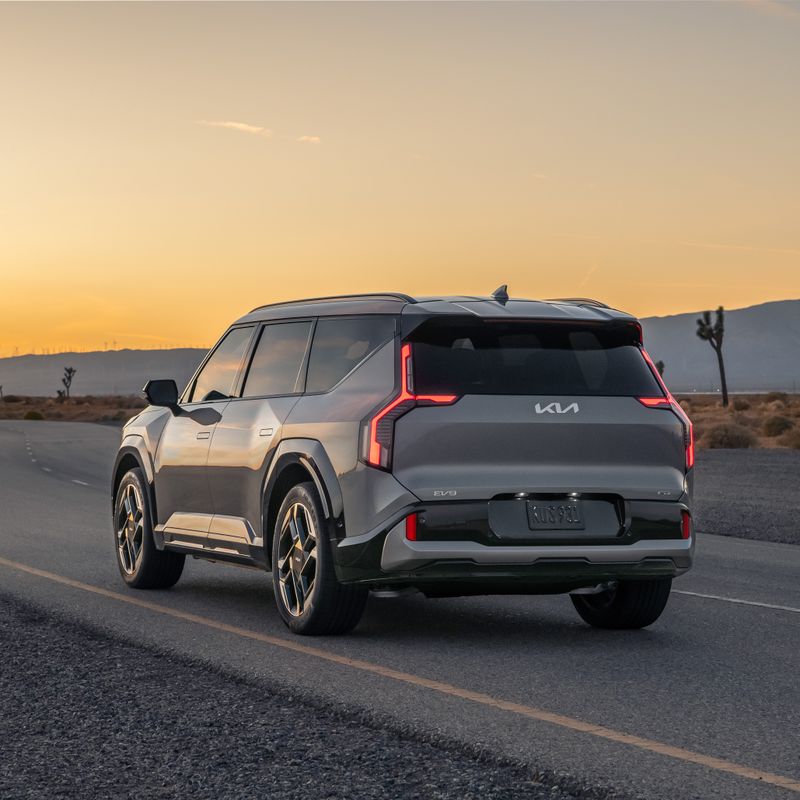
Leapmotor pushed past a milestone that no other Chinese EV startup has reached: 101,267 vehicles delivered globally in July, the first time the company has cleared 100,000 units in a single month. The figure is up 102% from a year earlier and 8.5% above June's 93,376, marking the fourth consecutive monthly record for the Stellantis-backed automaker.
The record landed in the same week the company formally entered Indonesia, where its first locally assembled cars are due to reach customers in August. Together, the two events capture where Leapmotor sits in 2026: growing fast at home, scrambling to keep up with its own 1-million-vehicle annual target, and building local production bases across Southeast Asia to soften the cost of going global.
The company has been here before, in a smaller key. It broke the 50,000-unit monthly mark only late last year, then spent the first half of 2026 doubling that pace. Xu Jun, the senior vice president who has fronted several of these delivery updates, told analysts the company's job now is to keep the curve rising through the second half while new models and overseas plants come online.
The July Record, in Numbers
Deliveries for the first seven months of 2026 total 457,754 vehicles, up 68.4% year-on-year. Cumulative deliveries since the company handed over its first car in 2020 have reached 1,653,857, according to data compiled by CnEVPost.
July was also the fifth straight month of sequential growth. The company's run through the middle of the year has been steady rather than flashy: 93,376 in June, a record at the time, then the 100,000 barrier a month later.
What makes the number notable is the pace of the jump. Leapmotor grew at a faster clip in percentage terms than most Chinese-owned groups selling in Europe, and it did so while expanding its model lineup at home.
The Target Keeps Moving Away
The company's stated goal for 2026 is 1 million deliveries, roughly double the near-600,000 vehicles it handed over in 2025. July's record leaves Leapmotor at about 45.8% of that figure with five months to go.
The math is unforgiving. Hitting 1 million now requires an average of roughly 108,449 vehicles a month from August through December — a pace above July's record and above the 107,253 monthly average the same calculation produced at the half-year mark. A record month, in other words, raised the required run rate rather than lowering it, because the target climbs faster than volume has.
Senior vice president Xu Jun said in mid-July that the company has no plans to adjust the figure. He acknowledged Leapmotor outperformed the broader market in the first half while still falling short of its own goal, and described the target as a push to keep the organization moving.
Most Chinese automakers closed the first half with less than 40% of their annual targets completed. Leapmotor sat at about 35.6% at that point, ahead of the pack even as it trailed its own ambition.
What Carried July
Two models did most of the visible work. The A10 compact SUV, which opens the range near 65,800 yuan (about $9,700), delivered close to 30,000 units in July and has become the company's volume anchor. The D19, a flagship full-size SUV, cleared 10,000 units and is described by the company as the best-selling full-size SUV priced under 400,000 yuan in China.
Leapmotor now covers a 60,000-to-300,000-yuan band across four series — A, B, C and D — and July was the first month in which all four contributed at scale, according to EV, an industry site tracking the sector.
The D99, the company's first multi-purpose vehicle, launched June 25 priced from 249,800 to 319,800 yuan and began deliveries July 20, so July carries only a partial contribution from it. Refreshed versions of the B01 sedan and B10 SUV went on sale July 16 after opening pre-orders July 8, extending a product offensive that had already refreshed the C10, C11 and C16 onto an 800-volt architecture in June.
New models are supposed to carry the second half. Management has said the A-platform cars, including the A10, would account for roughly 60% of total sales in 2026.
Indonesia: The KD Play
On July 31, Leapmotor and the Indomobil Group jointly announced that local knock-down assembly would be handled by the latter's PT National Assemblers unit. The plant began operations in April, and the first Indonesia-assembled B10 and C10 vehicles are expected to begin deliveries to customers in August.
The company showcased both models at the 2026 Gaikindo Indonesia International Auto Show (GIIAS) the same week and used the event to confirm its official entry into the Indonesian market, according to a statement covered by CnEVPost.
The structure of the Indonesian push follows a familiar Stellantis pattern. PT Indomobil National Distributor will handle local sales and network development, and Leapmotor plans to establish 50 sales and service outlets in the country by the end of 2026. Vehicles will be sold under the Stellantis Brand House model, sitting alongside brands including Jeep and Citroën in the same showrooms.
Indonesia imposes steep tariffs on fully imported vehicles, so local assembly cuts costs and makes it easier to qualify for government EV incentives. Indomobil is one of the country's largest automotive dealer groups, with a nationwide distribution network that Leapmotor can plug into without building from scratch.
Two Bases in Southeast Asia
The Indonesian plant gives Leapmotor two knock-down production bases in Southeast Asia, a position few Chinese EV brands hold. The first is in Gurun, Kedah, Malaysia, where Stellantis began assembling the C10 earlier this year after a five-month delay, with the B10 to follow.
Local assembly matters more than the sticker price suggests. It dodges import duties, unlocks government incentives for buyers, and shortens delivery times in markets where customers are wary of waiting months for a Chinese-built car. Leapmotor said it plans to introduce one new model a year in Indonesia and neighboring markets.
Overseas sales are already a meaningful slice of the business. The company set a target at the start of the year for exports to make up 20% to 35% of total volume, and the share approached 30% in the first half. Exports hit roughly 100,000 units in the first six months — already above the full-year 2025 total of about 67,000.
Money Behind the Momentum
Leapmotor posted its first full-year profit in 2025, with net income of 540 million yuan on revenue that roughly doubled, and it is targeting five billion yuan in net profit for 2026.
The company's international joint venture with Stellantis — a 51/49 split with Leapmotor International handling exports — is profitable in Europe. Italy remains the standout market, where Leapmotor holds more than a third of the battery-electric segment and the T03 city car is the best-selling fully electric model. European registrations reached 56,005 units in the first half.
Second-quarter deliveries reached 246,332 units, up 83.7% year-on-year. The company has also confirmed on its first-quarter earnings call that a second brand positioned above 300,000 yuan is in development, with first products expected between late 2026 and early 2027. FAW Group's 5% stake supports a jointly developed Hongqi model aimed at overseas markets.
The gap between where Leapmotor is and where it wants to be is still wide. But the direction is clear: a Chinese EV maker that started selling cars in 2020 is now assembling them in two Southeast Asian countries, profitable in Europe, and pushing 100,000 units a month. For the Indonesian market, the question is no longer whether Chinese EVs will arrive in volume — it's how fast the local assembly lines can feed them.
For more on the sector, see our EV coverage and Battery Tech sections.