Leapmotor Breaks 100,000 Monthly Deliveries for First Time as Indonesia KD Plant Starts Shipping
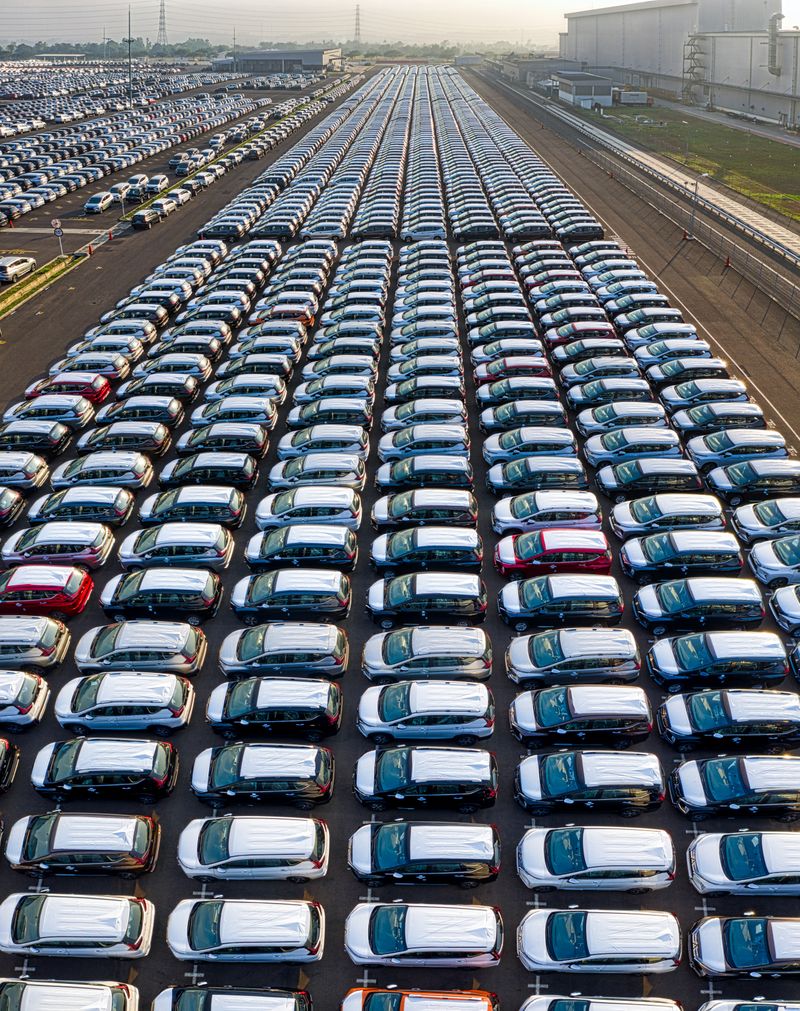
SHANGHAI — Leapmotor delivered 101,267 vehicles globally in July, crossing the 100,000-unit threshold in a single month for the first time since the company began deliveries in 2020. The milestone arrives as the Stellantis-backed automaker simultaneously kicks off local assembly in Indonesia, giving it a dual manufacturing base in Southeast Asia alongside its existing Malaysian plant.
The July figure represents a 102 percent increase year-on-year and an 8.5 percent rise from June's 93,376 units. It marks the fourth consecutive monthly delivery record and the fifth straight month of sequential growth. Cumulative deliveries since 2020 now stand at 1.65 million units, according to data compiled by CnEVPost.
The Million-Unit Target Remains Steep
Despite the record pace, Leapmotor is still tracking behind its full-year goal of 1 million vehicles for 2026. Through the first seven months, the company has delivered 457,754 units — roughly 45.8 percent of the target. That leaves a gap of 542,246 vehicles to be delivered over the remaining five months, an average of 108,449 per month, which exceeds the July record.
Senior vice president Xu Jun said in mid-July that the company would not adjust its full-year target and would work through products, marketing, and channels to close the gap. The math is unforgiving: to hit 1 million, Leapmotor needs to sustain a monthly pace it has only just reached for the first time, and then exceed it consistently. The company delivered 356,487 units in the first half, up 60.8 percent year-on-year, but that still left a second-half requirement of roughly 643,500 units — an average of 107,250 per month.
Product Blitz Powers Growth
Leapmotor has accelerated its model cadence to drive volume. In June, the company launched refreshed versions of its C10, C11, and C16 SUVs and rolled out its first MPV, the D99. In July, it introduced updated B01 sedan and B10 SUV models, with long-range variants adopting an 800-volt fast-charging platform. The B01 starts at 95,800 yuan ($14,110) and the B10 at 99,800 yuan.
On July 27, Leapmotor opened pre-orders for the A05 compact EV, its second model on the A platform after the sub-$10,000 A10 SUV. The A05 will compete directly with the BYD Dolphin and Geely Xingyuan in China's fiercely contested entry segment. Management has previously said new models, including the A10, would account for 60 percent of total sales in 2026. The A10 alone hit 100,000-unit production in August, just 135 days after launch.
The refreshed B10 and C10 models shown at GIIAS 2026 are both global strategic vehicles for Leapmotor. In China, the refreshed B01 sedan currently starts at 95,800 yuan ($14,110), while the refreshed C10 SUV starts at 125,800 yuan. The 800-volt architecture on long-range variants enables charging from 10 to 80 percent in roughly 15 minutes, a key selling point in markets where charging infrastructure is still maturing.
Indonesia Entry Anchors Southeast Asia Strategy
While domestic volume builds, Leapmotor is laying the groundwork for its next growth leg overseas. On July 31, the company announced it had formally entered Indonesia, with local knock-down (KD) assembly handled by PT National Assemblers, a unit of the Indomobil Group. The KD plant began operations in April, and the first locally assembled B10 and C10 vehicles are expected to reach Indonesian customers in August.
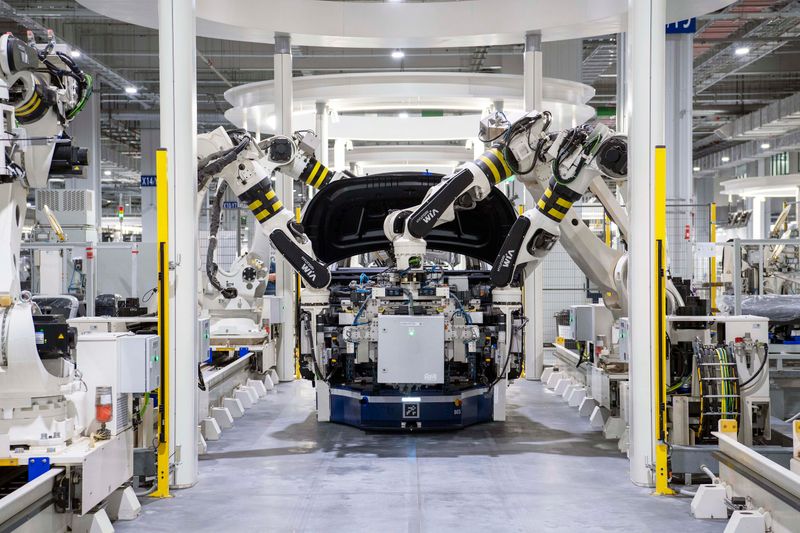
The move gives Leapmotor a dual-base manufacturing footprint in Southeast Asia. It already assembles vehicles in Malaysia through a Stellantis joint venture that began production in June. The company says it is now one of the few EV brands with two KD production bases in the region.
Local assembly carries major cost advantages in Southeast Asia. Indonesia imposes steep tariffs on fully imported vehicles, while domestic production can sidestep some of those duties and qualify for government EV incentives. At the 2026 Gaikindo Indonesia International Auto Show (GIIAS), Leapmotor showcased the B10 and C10 — both global strategic models — and outlined plans for 50 sales and service outlets in Indonesia by year-end. PT Indomobil National Distributor, one of Indonesia's largest dealer groups, will handle sales and network development under the Stellantis Brand House model, with Leapmotor vehicles sold alongside Jeep and Citroën.
Indonesia's EV policy framework has sharpened over the past year. The government now offers purchase subsidies and tax breaks for locally assembled models, but only if they meet minimum domestic content requirements. Leapmotor's KD approach — importing partially assembled kits and completing final assembly locally — positions it to capture those incentives while keeping capital expenditure lower than a greenfield plant would demand.
Indomobil Group, Leapmotor's Indonesian partner, brings decades of automotive distribution experience to the table. The conglomerate represents brands ranging from Suzuki and Mitsubishi to Citroën and Jeep, and its dealer network spans the archipelago. That reach matters in a country where geography — 17,000 islands, scattered population centers — makes distribution as much a competitive moat as product quality. PT National Assemblers, the Indomobil unit running the KD line, has assembled vehicles for multiple brands at its facility in Bekasi, West Java, giving it a trained workforce and established logistics that Leapmotor can tap immediately.
Stellantis Partnership Opens Distribution Doors
Leapmotor's global expansion is tied to its 2023 partnership with Stellantis. The European automaker invested in Leapmotor and established Leapmotor International, a joint venture responsible for exports and sales outside China. That JV gives Leapmotor immediate access to Stellantis's distribution network across Europe, South America, and now Southeast Asia.
Leapmotor targeted overseas sales at 20–35 percent of total volume for 2026; the share approached 30 percent in the first half. The company now operates in more than 40 countries with over 2,000 sales outlets. Xu Jun has said shifting overseas policies and rising fuel prices are accelerating the transition to electrification, creating favorable conditions for Chinese EV brands with competitive cost structures.
The Stellantis JV also handles regulatory homologation, a process that can take years for a newcomer to handle alone. By plugging into an existing OEM's type-approval pipeline, Leapmotor can enter new markets in months rather than years. That speed matters in a segment where first-mover advantage compounds quickly — early entrants lock in dealer networks, charging partnerships, and brand recognition before rivals arrive.
Stellantis itself benefits from the arrangement. The European group has struggled to field competitive affordable EVs in key growth markets, and Leapmotor's cost structure — honed in China's brutal price wars — fills that gap. The Leapmotor International JV, in which Stellantis holds a controlling stake, controls export pricing, market selection, and product allocation. For Stellantis, it is a low-risk way to participate in the EV transition outside Europe without building ground-up platforms. For Leapmotor, it is a distribution accelerator that would have taken a decade to build independently.
The Road Ahead
The July delivery record proves Leapmotor can hit six-figure months. The question is whether it can stack five more of them. The product pipeline is dense — new models rolling out every quarter — and the Indonesia and Malaysia KD plants add local-cost advantages that imported vehicles cannot match. But the domestic market is saturating, and every Chinese EV maker is chasing the same export markets.
Leapmotor's edge is its Stellantis lifeline. Most Chinese EV startups go global alone; Leapmotor goes with a legacy automaker's dealer network, homologation expertise, and financial muscle. If the Indonesia ramp follows the Malaysia template, the dual-base model could become a blueprint for other Chinese brands eyeing Southeast Asia.
For now, the numbers say Leapmotor has arrived at a new tier of scale. Whether it graduates to the million-unit club by December will depend on execution — not just in Shanghai, but in Bekasi, Shah Alam, and every Stellantis showroom that now carries a Leapmotor badge.
Analysts tracking the Chinese EV sector note that Leapmotor's trajectory mirrors the early growth phases of BYD and Li Auto, but compressed into a shorter timeframe thanks to the Stellantis partnership. The next six months will test whether the company can translate its domestic momentum into sustained export volume, or whether the million-unit target joins the list of ambitious goals that proved just out of reach.
Sources: Leapmotor tops 100,000 monthly deliveries for first time, Leapmotor enters Indonesia as local KD plant starts production
Internal links: EV, Battery Tech
Keywords: Leapmotor, electric vehicle, Indonesia, KD assembly, Stellantis, delivery record, Southeast Asia, EV market