Hyundai’s $5 Billion Georgia Battery Plant Starts Roll-Out for 300,000 EVs a Year
Hyundai’s $5 billion joint-venture battery plant in Bartow County, Georgia, began commercial production in early July, delivering its first cells to the Hyundai Motor Group Metaplant America assembly line near Savannah. The facility, Hyundai-SK Battery Manufacturing America, will eventually turn out 35 gigawatt-hours of battery cells a year — enough to power roughly 300,000 electric vehicles — and its output is earmarked first for the three-row IONIQ 9 SUV.
The plant’s opening closes a critical gap in Hyundai’s U.S. electric-vehicle supply chain. Until now, SK On supplied the Metaplant from its own Commerce, Georgia facility, but a dedicated joint-venture line means Hyundai and its Kia and Genesis brands can count on local cell production as they scale American EV output. “The plant is currently in the early stages of production and plans to gradually expand output,” HSBMA CEO Hang Ki Moon said in a statement.
A $5 billion bet on American-made EVs
The Georgia battery plant is half-owned by Hyundai Motor Group and half by SK On. It covers 752 acres and employs more than 3,500 people, making it one of the largest economic-development projects in state history. Initial cells are being assembled into battery packs by Hyundai Mobis before they reach the Metaplant assembly line. Those packs will appear first in the IONIQ 9, the flagship electric SUV Hyundai launched in March 2025.
The facility was originally supposed to begin delivering cells in the second half of 2025. Delays pushed the timeline, but HSBMA says it is now in series production. The timing matters because Hyundai is trying to position the Metaplant as a direct counterweight to Tesla’s manufacturing dominance. At full capacity, the Metaplant campus could support up to 500,000 units of Hyundai, Kia and Genesis electric and hybrid vehicles.
The plant also adds to SK On’s growing Georgia footprint. The company already operates a wholly owned facility in Commerce under the SK Battery America banner, and the new Bartow County site gives Hyundai a second nearby source for advanced battery cells. That redundancy is increasingly valuable as automakers try to smooth out the bumpy ramp-up that has plagued EV production over the past two years.
Where Hyundai stands in the American EV race
Hyundai (excluding Kia and Genesis) sold 26,936 all-electric models in the United States in the first half of 2026, making it the third-most-popular EV brand, according to Cox Automotive. Tesla remains the leader, and Chevrolet held second by a margin of just 1,331 vehicles. But Chevy’s EV sales plummeted 40 percent from the same period in 2025, while Hyundai’s IONIQ 5 has become the country’s third-best-selling EV behind the Tesla Model 3 and Model Y.
IONIQ 5 buyers are switching from other brands at a 69.8 percent conquest rate, according to Hyundai data. The IONIQ 9, the family-focused three-row SUV that gets its batteries from the new plant, has a 64.3 percent conquest rate. Hyundai is also running aggressive summer promotions with 0 percent APR and up to $10,000 off EVs, trying to turn plant capacity into showroom volume faster. The IONIQ 9 is up 380 percent year-over-year through the first six months, a sign that the three-row electric SUV segment is finally finding buyers.
For readers tracking the global rivalry, see our EV coverage and Battery Tech coverage.
Why local battery cells matter more than ever
Local battery manufacturing has become a strategic priority for automakers racing to meet U.S. tax-credit rules and avoid the geopolitical risks of Chinese-dominated supply chains. Hyundai already operates a second Georgia battery plant with LG Energy Solution near Savannah, which opened in April 2026 after a delayed construction period. The parallel SK On partnership gives Hyundai two domestic sources for pack components.
The SK On facility also advances the U.S. government’s goal of reducing reliance on foreign-processed battery materials. Group14, Sila Nanotechnologies and other anode startups have all announced domestic production plans in recent quarters, but SK On’s plant is one of the first to reach volume with a major automaker. HSBMA declined to disclose specific cost targets but said “operational excellence, quality and safety” will guide the ramp-up.
The Inflation Reduction Act’s $7,500 consumer tax credit for EVs with domestically produced batteries has accelerated the rush for local cell factories. Automakers that source from plants like HSBMA can bundle those credits into lease and purchase deals, effectively lowering the upfront cost of an EV and narrowing the price gap with gasoline-powered rivals.
What the ramp-up means for shoppers
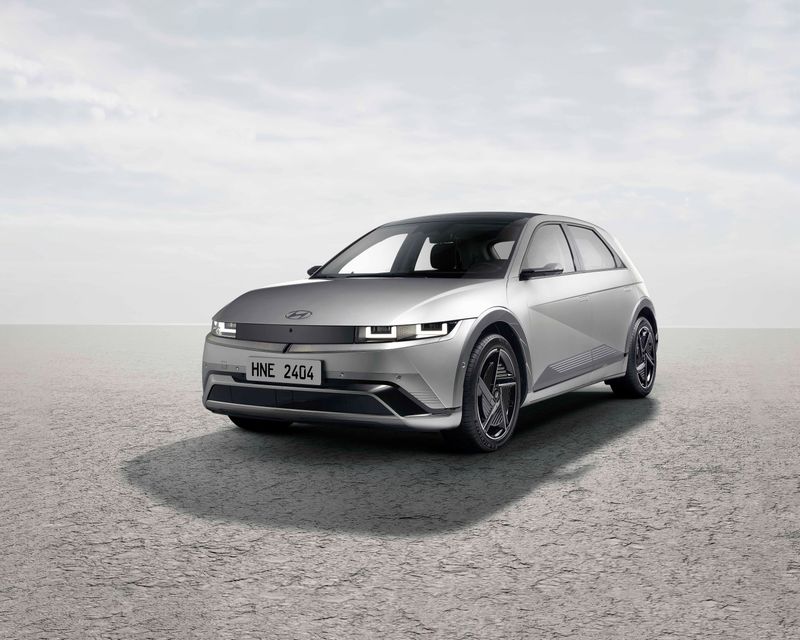
Hyundai is passing some savings from its expanded Georgia footprint to buyers. The 2026 IONIQ 5 starts at $35,000 before any federal clean-vehicle credits, making it one of the most affordable EVs in the United States. The IONIQ 9, the first recipient of the new SK On cells, sits in the premium three-row segment where competition with Tesla’s Model X and upcoming Rivian models is intensifying.
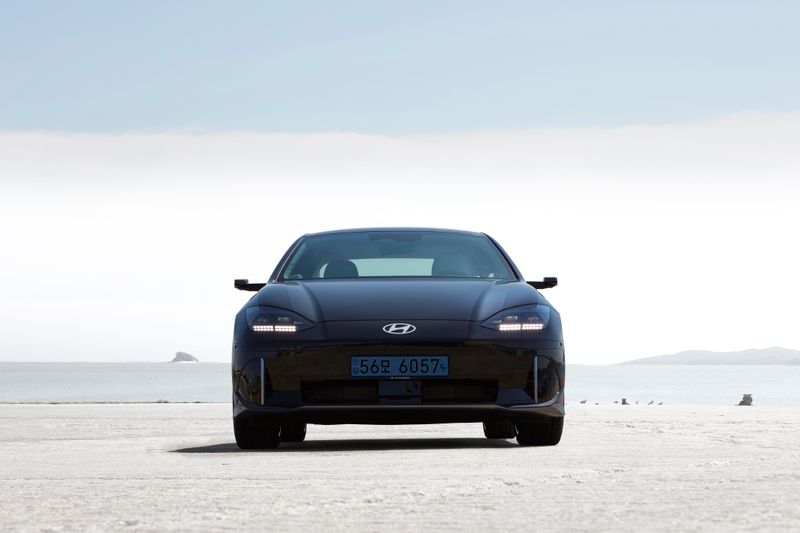
Analysts at Cox Automotive note that while Hyundai’s overall U.S. EV share slipped slightly in the first half compared to a year earlier, the decline was almost entirely due to the phase-out of the standard IONIQ 6, which was replaced by the high-performance IONIQ 6 N. With the IONIQ 5 performing strongly and the IONIQ 9 climbing 380 percent year-over-year, the product mix is shifting toward higher-margin, higher-volume models.
The battery plant also means Hyundai can promise buyers a domestic supply chain story when they showroom the IONIQ 9 and future Kia and Genesis EVs. That narrative matters in swing states where automotive manufacturing jobs are a perennial political issue.
The road ahead
Hyundai’s U.S. EV strategy rests on three pillars: local assembly at the Metaplant, localized battery supply through the HSBMA and LG Energy Solution plants, and a broadened lineup that spans entry-level compact SUVs to three-row family haulers. The company has not given a date for when the SK On plant will reach its full 35 GWh capacity, but the start of commercial production is the clearest sign yet that Hyundai intends to challenge Tesla on its home turf.
Sources: Electrek, UPI, Hyundai Motor Group Metaplant America.