The Open Home Keeps Eating Protocols
Home Assistant spent the first half of 2026 quietly doing what it does best: absorbing yet more of the smart home's messy protocols into one local box. Two releases this spring and summer show the direction clearly. The May 2026.5 update added native radio frequency (RF) control, a first-class citizen alongside the infrared support that landed a month earlier. Then in late June, the project rebuilt its entire Matter engine on a fresh open-source foundation, promising fewer dead devices and a map of your Thread network you can actually read.

For the average household, the practical win is simple: more of the cheap, old, brand-agnostic gear already in the house starts working without a cloud account or a new hub. That's the pitch the Open Home Foundation has run for years, and 2026 is where it shows up in the release notes.
RF Joins The Family
The 2026.5 release put radio frequency on equal footing with Wi-Fi, Bluetooth, Zigbee, Z-Wave, and Matter. Think of the devices that have always sat outside the smart home because they only speak RF: motorized blinds and curtains, garage door openers, ceiling fans, wireless wall switches, RF outlets, doorbells, and holiday string lights. Plenty of those gadgets are still in service because they were cheap and they work. Until now, bringing them in meant a workaround or a custom integration. With 2026.5, Home Assistant speaks RF natively.
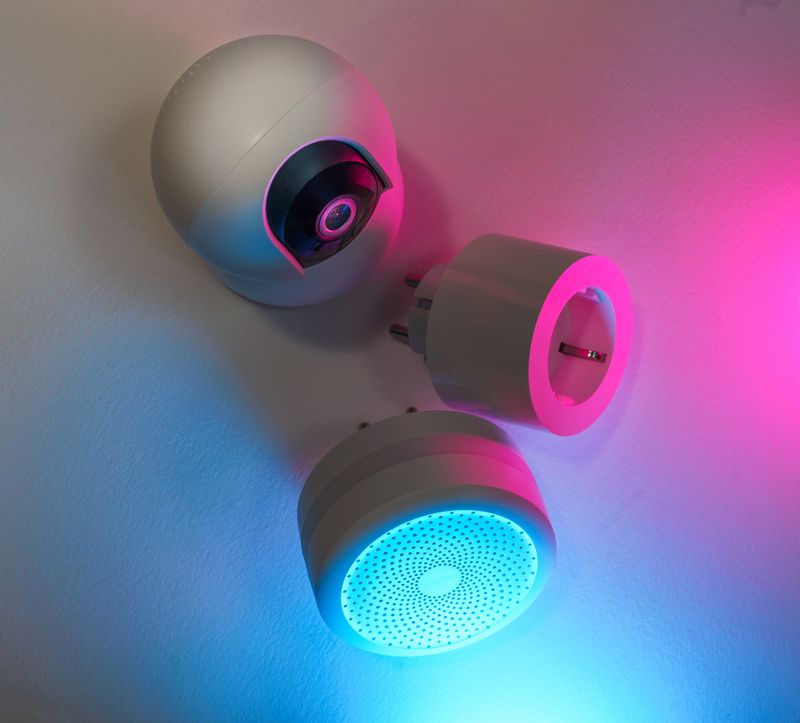
The same release shipped a Maintenance dashboard aimed squarely at the battery problem every smart-home owner knows. Instead of discovering a dead sensor when it fails, the dashboard surfaces battery levels across devices in one place. Small feature, real quality-of-life gain, and a hint of where Home Assistant is leaning: it wants to manage the home, not just toggle it. Serial ports can now be proxied over the network through ESPHome, autocomplete landed in the code editors, and twelve new integrations arrived in a single month.
Matter Gets Rebuilt From The Studs
The bigger story broke on June 23. Home Assistant replaced the Python-based Matter server it had relied on since 2022 with a TypeScript implementation called matter.js, donated to the Open Home Foundation and already powering projects like Homebridge and openHAB. The old C++ SDK server was solid, the team wrote, but it couldn't keep pace with their open-source ambitions. Four months of beta testing later, the new engine is the default.
The payoff is stability. Devices reconnect faster after a restart, over-the-air updates are more reliable, and start-up is quicker. The server moved to the Matter 1.5.1 specification, with 1.6 on the way, which broadens support for cameras, doorbells, and closures. Paired with an updated OpenThread Border Router app that supports Thread 1.4, the aim is a Mesh that just holds together.
A Map You Can Actually Read
The feature that steals the show is network visualization. The Matter Server's web UI now draws your Thread or Wi-Fi network as a graph. Each device is a node, tagged with its role — leader, router, sleepy end device — and the lines between them are colored by signal quality: green for strong, orange for medium, red for weak, gray for no signal. For Thread especially, where data can hop across several devices before reaching the border router, that picture turns guesswork into diagnosis. A user on the forums put the pain plainly: a red node on the diagram, but no easy way to tell which real device it was. The visualization is the first step toward closing that gap.
For related reading, browse the IoT archive for more on connected-device standards, and the AI archive for how local automation is starting to borrow model-driven tricks. The two threads meet in Home Assistant, where rule engines and device graphs live side by side.
Security Tightened, Not Loosened
A rebuild is also a chance to close holes, and the new server does. When you commission a device, uncertified gadgets carrying an official development or test certificate can no longer be added out of the box — that blocks a class of malicious or half-finished hardware from joining your network silently. The server also checks certificate revocation data during commissioning, adding a second gate. For a platform whose whole identity is local control, tightening the trust path matters more than flashy UI.
Why This Matters For The Local-First Crowd
Matter now runs in 38 percent of Home Assistant instances and ranks twelfth among all integrations — a sign of where the smart home is heading whether vendors like it or not. The appeal is interoperability: a standard that lets gadgets from different brands speak one language, no cloud translation required. Home Assistant's bet is that owning that layer locally, rather than renting it from a vendor hub, keeps the home working when the vendor's servers don't.
That local-first stance is exactly why appliance makers and chip vendors watch Home Assistant closely. When the project adds native RF, it drags a whole category of dumb-but-useful devices into the automatable world without asking permission from a hub manufacturer. When it hardens Matter commissioning, it sets a bar that commercial controllers eventually have to meet.
The Catch
None of this is free of friction. The Matter rollout reached users through the 'Matter Server app 9.0,' a drop-in replacement that migrates data on first start — smooth in theory, but the forums fill with the usual mixed results: some Ikea devices flaky until a later firmware, a few red nodes that still resist identification, Thread merges that finally worked after years of pain. The RF platform is new and leans on hardware that can vary by region and frequency band. Early adopters should expect to read release notes, not just click update.
What Comes Next
The roadmap is now public, hosted by the Open Home Foundation, and the matter.js work is explicitly a foundation for what's next: camera and doorbell support under Matter 1.5.1, Thread 1.4 mesh maturity, and a visualization tool the team calls only a first step. If the pattern holds — infrared in April, RF in May, Matter rebuilt by June — the second half of 2026 should keep pulling stray protocols into the local fold.
For primary detail, read the 2026.5 release notes and the Matter upgrade announcement on the Home Assistant site. The Open Home Foundation roadmap is where the next moves get debated in the open, and the matter.js repository holds the engine itself.