Google DeepMind's Gemini Robotics 2 Gives Humanoids Whole-Body Control, From Feet to Fingertips
Google DeepMind has released Gemini Robotics 2, the second generation of its robotics AI family, and this time the models can control an entire humanoid robot — not just its upper body. The company says the system can handle walking, crouching, stretching, and fine manipulation in one continuous reasoning loop, a step past the table-top skills its earlier models showed.
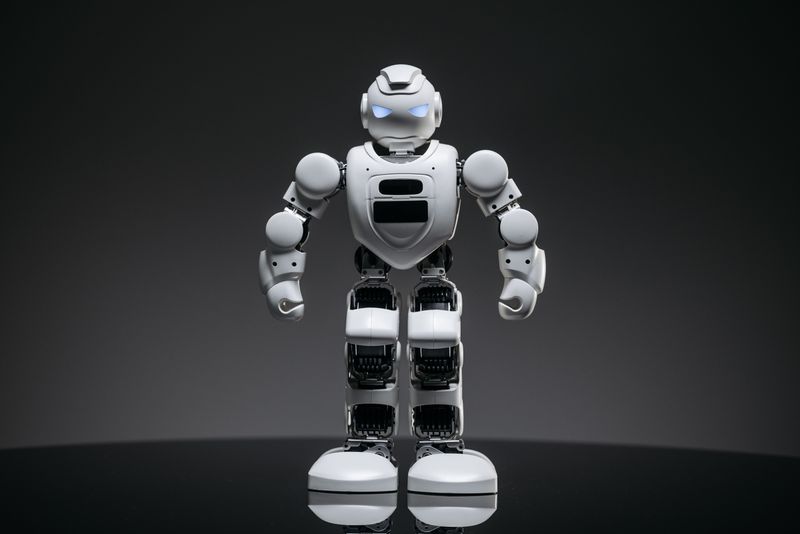
The announcement landed Thursday, roughly nine months after DeepMind's first Gemini Robotics models. The update is built around three models that split the work: a vision-language-action model for motor control, an embodied reasoning model that plans multi-step jobs, and an on-device model that runs locally on the robot itself.
One model, three layers, and a few hours of adaptation
The flagship piece is the Gemini Robotics 2 vision-language-action (VLA) model, which turns vision and language input into motor commands. DeepMind says it can control full humanoids — from feet to fingertips — as well as two-armed robots. A second model, Gemini Robotics ER 2, handles embodied reasoning: it watches a room, breaks an instruction into steps, and talks to a human while the job runs. The third, Gemini Robotics On-Device 2, is a leaner VLA built to run locally, without a network connection.
The on-device model carries over the "motion transfer" techniques DeepMind introduced in Gemini Robotics 1.5. The company says a new robot body — even one with different shapes, sensors, and degrees of freedom — can be adapted in a few hours, typically with fewer than 200 examples. That matters for hardware makers who do not want to retrain a model from scratch for every chassis. DeepMind points to three test platforms — Dexmate, SO101, and Trossen — as proof that a single checkpoint transfers across bodies with very different geometries.
Apollo 2 picks up a watering can, ties a trash bag
DeepMind's demo videos lean on Apptronik's Apollo 2 humanoid, which appears throughout the release. In one clip, Apollo processes the instruction "put the watering can into the green bin on the bottom shelf," walks to a table, picks up the can, steps to the shelves, and places it. In another, the robot uses a five-fingered, 22-degree-of-freedom SharpaWave hand to seal a ziplock bag and tie a trash bag.
The company is honest about the speed gap. "Our robots have more to advance in movement speed," the blog post notes, before arguing the release matters for whole-body coordination tasks that need reach, bend, and balance in cluttered spaces. Two-fingered parallel grippers on a Franka Duo platform also get the treatment, handling tasks like tight packing.
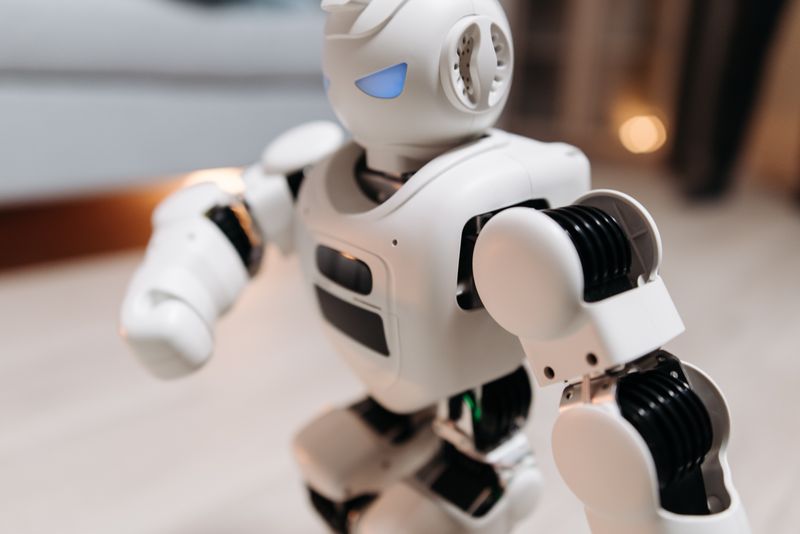
Dexterity is the other headline. Previous Gemini Robotics models controlled upper bodies for table-top manipulation; the new release extends that to whole-body motions and to end effectors that range from anthropomorphic hands to simple parallel grippers. Sealing a ziplock bag, tying a trash bag, and unscrewing a lightbulb all appear in the demo reel, tasks that require a mix of force control and tactile awareness. Wired's write-up describes the model as "several different AI models into a single system," with a vision language model handling communication and reasoning while two vision-language-action models manage full-body movement and gripper control.
Robots that work as a team
Gemini Robotics ER 2 brings a capability the first generation lacked: multi-robot collaboration. Different robot types can now communicate and coordinate on workflows a single machine could not finish alone. One DeepMind video shows Apollo 2 directing a dual-arm robot to put tools in a bin while Apollo cleans a garage.
The reasoning model also tracks progress differently. DeepMind says ER 2 understands when a task begins and ends, can pinpoint when key events happen, and can self-correct when a step fails. The company frames the release as part of a longer arc toward "physical AI" that works alongside humans, with Demis Hassabis, DeepMind's CEO, previously telling Wired he wants an "Android for robots" — an operating system that runs across many different machines. Carolina Parada, head of robotics at Google DeepMind, called the release "another milestone in our path towards really getting towards what we call like physical AGI, which means we get a robot to do anything that a human can."
Safety layers, and a new benchmark
Whole-body robots that move around people bring new risks, and DeepMind is leaning on a multi-layered safety story. Gemini Robotics ER 2 is described as the safest robotics model the company has shipped to date on safety-constraint and human-proximity benchmarks. It can detect when a person gets close, trigger safety tool calls, and bring the robot to a safe stop.
The company is also releasing ASIMOV-Agentic, a benchmark for agentic safety orchestration. It measures whether an embodied reasoning agent refuses unsafe tool calls from a VLA, and whether it predicts when a task is impossible and asks a human for help instead of pressing on. Parada told Wired the safety question gets "more pressing" as models leave the digital world, because robots face "a lot of uncertainty" in real environments. The safety stack sits on top of the physical safeguards already built into DeepMind's robots, and the company published a separate safety technical report alongside the model release.
What it means for the humanoid race
The release lands as the humanoid field splits into two camps: hardware makers like Apptronik, Figure, and Unitree building the bodies, and AI labs like DeepMind, Nvidia, and a handful of startups supplying the brains. DeepMind's bet is that one intelligence layer can span many bodies, the way Android spans many phones. The early-access partner list includes Apptronik, Boston Dynamics, and Agile Robots, which gives the model a wide set of hardware to prove itself on. Google previously worked with Boston Dynamics on Gemini-powered Atlas demos, and its robotics research pedigree runs deep — DeepMind's SayCan and PaLM-SayCan papers on language-guided robot behavior are among the most cited in the field.
The competitive pressure is real. Anthropic and OpenAI have led in chatbots and coding tools, but Google's robotics record is stronger, and the search giant has said publicly it expects AI to move out of the digital world to realize its full value. That puts Gemini Robotics 2 squarely in a race that also includes Nvidia's robotics stack and a wave of Chinese humanoid startups pushing cheaper hardware.
For hardware partners, the on-device piece may matter more than the flashy demos. Many factory and warehouse deployments run in environments where a dropped network link means a stopped line, so a model that executes locally removes a failure point. DeepMind says On-Device 2 keeps the multi-embodiment property of its bigger sibling, which means a single deployment can span a fleet of differently shaped machines without per-unit retraining. That is the kind of economics warehouse operators actually run the numbers on, and it is why DeepMind positions the release as an infrastructure play rather than just a research result. Apptronik, for its part, has been pushing Apollo 2 toward commercial pilots in logistics and manufacturing, so having a model that walks the whole body through those environments is a direct fit for what its customers want to test.
Skeptics still have the receipts. Wired notes that frontier AI models controlling robots have produced unexpected behavior in past research, and DeepMind itself concedes movement speed and human-level dexterity remain unfinished work. Sealing a ziplock bag is progress; folding laundry for a full house is a different order of difficulty. The safety question grows more urgent as these systems leave research labs, since a misstep in a home or factory carries physical consequences that a chatbot error never will.
Still, the pattern is worth watching. Every generation of Gemini Robotics has widened the envelope — from table-top arms to whole bodies, from single robots to teams, from cloud-dependent to on-device. The next test is whether the speed catches up to the ambition. For more on the broader robotics beat, see our Robotics & Drones coverage, and for the AI models behind these machines, check the AI category.