GM's Fourth-Generation EV Platform Banks on New LMR Battery Chemistry
Introduction
General Motors has formally launched its fourth-generation electric vehicle platform, a sweeping rework of its EV engineering model that pairs a new battery chemistry with redesigned drive units and centralized computing. Announced at GM's Forward event in New York City on October 21, 2026, the platform is GM's bet that affordable, longer-range electric vehicles can move from niche products into the company's highest-volume segments. GM President Mark Reuss described the timing simply: one of every four vehicles sold worldwide is now an EV, and the company intends to be ready when mass-market demand arrives. The stakes are practical rather than symbolic — GM aims to cut the traditional five-year vehicle development timeline in half, to roughly two years, by running design, engineering, and manufacturing teams concurrently on a unified digital thread instead of in sequential relay-race fashion. Learn more about related topics in the EV category on our platform. The initiative reflects GM's response to intensifying competition from Chinese manufacturers, whose aggressive pricing and rapid scaling have reshaped global expectations for electric vehicle affordability and technology adoption.
A Battery Breakthrough Tested Virtually First
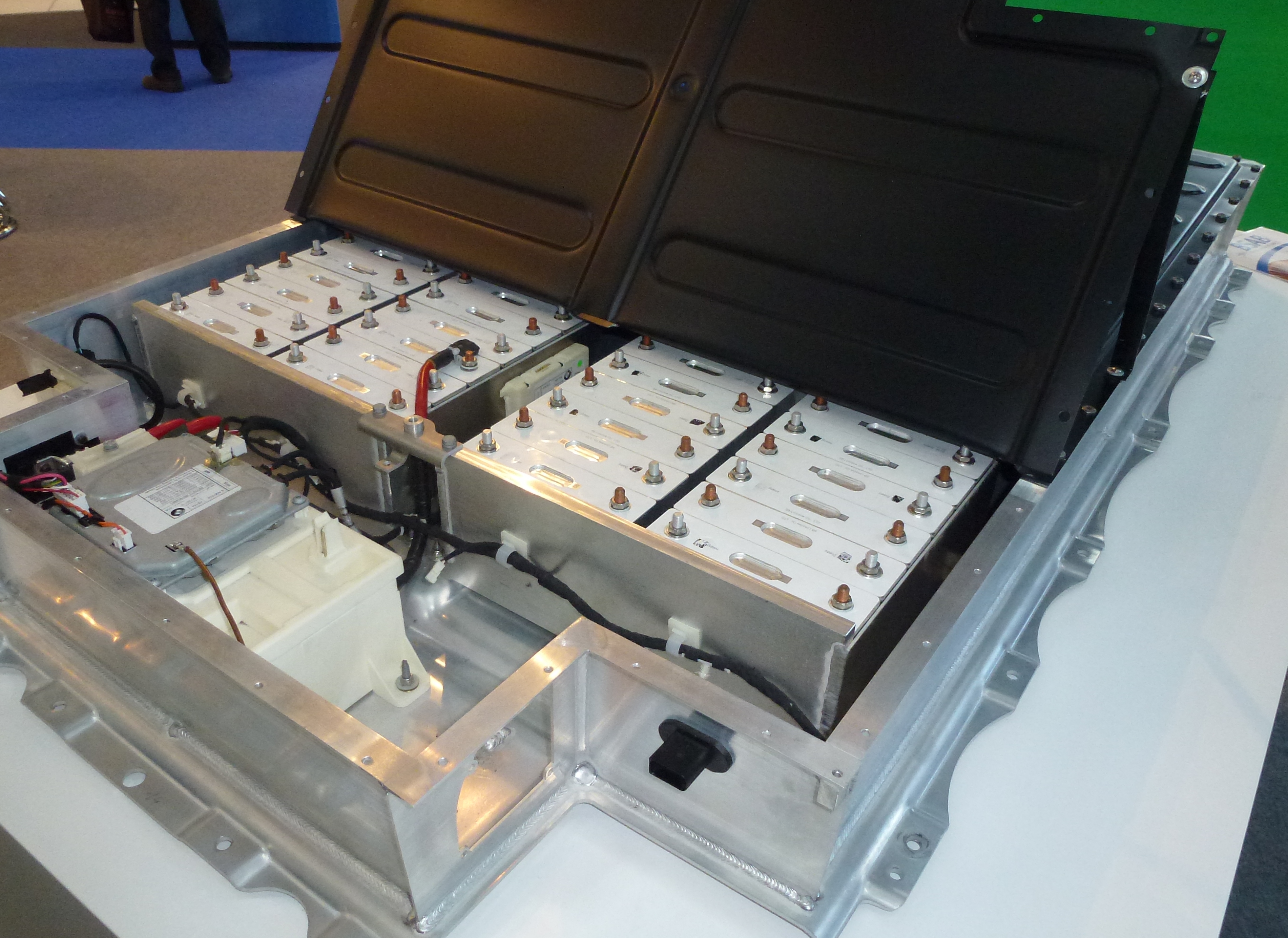
At the heart of the platform is lithium manganese rich, or LMR, prismatic cell chemistry built at GM's Ultium Cells joint venture with LG Energy Solution in Spring Hill, Tennessee. GM plans to deploy LMR in its highest-volume EV segments, where range, durability, and affordability matter most. Traditionally, developing a new battery chemistry means building and physically testing hundreds or thousands of cell designs over several years. GM took a different route: engineers used computer modeling to evaluate more than 300,000 battery designs before a single physical prototype was assembled. The program moved from its first LMR battery pack concept to formal approval in just one month — a pace GM attributes to simulation-first development rather than slow physical iteration.
LMR is engineered to offer 33% more energy density than lithium iron phosphate, or LFP, the low-cost chemistry that has come to dominate much of the global EV market. More energy density means longer driving range in a smaller, lighter pack, and GM says LMR can deliver that range at a price comparable to LFP. That combination is important because cheaper chemistries have historically traded away range, while premium chemistries have carried premium prices. GM is attempting to close the gap for volume-selling vehicles rather than flagship models only.

20% More Range From Every Kilowatt-Hour
The payoff of redesigning the vehicle as one integrated system, GM says, is roughly 20% more range per kilowatt-hour of battery energy. Gains come from pairing the higher-density LMR cells with more efficient electric propulsion and better aerodynamics. Because every component, gram, and atom of material must earn its place on the platform, the battery can be smaller and less costly while the motors and structure stay light. The result is a vehicle architecture where range improvements come from system-level efficiency as much as from raw battery capacity.
Simpler, Lighter Drivetrains and Centralized Computing
GM is also simplifying what propels the vehicle. A new family of electric motors and power electronics cuts the number of parts inside each drive unit by 40%. The smaller, lighter e-motor system lowers production costs and opens up space for more people and cargo while helping lower production costs. Future GM EVs will also have fewer control modules and 30% less wiring than current-generation models. Perception, propulsion, active safety, and chassis controls are consolidated into a single, high-speed Central Compute Unit, and GM claims roughly 40 times more processing power for AI-enabled features. Together, these changes extend the “better-faster” development approach across the life of the vehicle with a simpler foundation for future software updates, smarter energy management, more responsive displays and voice controls, and continued improvements to features like Super Cruise and OnStar.
Insight-Driven Assembly
In the fourth-gen EV’s manufacturing process, assembly workers will be armed with insight. Digital models will allow manufacturing teams to test production steps, review equipment placement, and identify safety or ergonomic concerns before new hardware is installed. When production is underway, PlantBrAIn, GM’s factory intelligence platform, will combine plant-floor data with computer models to help teams improve how fourth-generation electric vehicles and battery packs are built. We’re already proving it out. At GM’s battery-pack assembly facilities, this approach has helped us get battery packs through the process 30 percent faster. Similar tools are used across stamping, casting, welding, painting, and final assembly.
Fourth-gen EVs will also aid in their own successful build process. Thanks to the new compute and electrical architecture, a vehicle can test electrical connections as it moves down the line, eliminating the final validation check once the vehicle has been built.
Autonomous Driving and the Road Ahead
Beyond the platform itself, GM is continuing to invest in autonomous highway driving, which the company announced last year would arrive by 2028. Pre-production vehicles are now being tested, and hands-free highway driving will soon expand beyond GM’s EV lineup into its most popular gasoline-powered models. This system will also be powered by the Central Compute Unit.
“As we move towards a more autonomous future, it becomes what you need it to be when you need it—a genuine thinking space, a planning space, a space to recharge. It really extends your life onto the road instead of pausing it until you get to your destination,” Sebastian Bauer, head of human interface design at GM, said. “None of this works without trust, and trust is not a feature. It is a foundational design principle, and one that means adapting to your conditions and your needs, and being very transparent about the decisions that the vehicle is making so that you always understand why.”
References
- GM Newsroom, \"Speed and simplicity shape GM's fourth-generation EVs,\" October 21, 2026 — news.gm.com
- Road & Track, \"General Motors Is About to Bet Big on a New Electric Platform,\" October 2026 — roadandtrack.com
- General Motors Forward event materials, New York City, October 21, 2026
- Ultium Cells joint venture — GM's battery cell joint venture with LG Energy Solution
- EV category on news.jualin.id
Outlook
The fourth-generation EV platform does not have a firm vehicle launch date attached, but its design philosophy signals where GM expects volume EV growth to come from: mass-market chemistry, fewer parts, and software-defined vehicles that improve after they leave the factory. Whether LMR chemistry can hold its 33% density advantage in mass production, and whether the two-year development cycle survives contact with real-world engineering, will determine whether the platform becomes the foundation of GM's next decade of electric vehicles or another postponed bet.