Global EV Sales Surge to 1.85 Million in July 2026 as Regional Divergence Intensifies
July 2026 marked a milestone month for the global electric vehicle market, with 1.85 million electric vehicles sold worldwide, bringing year-to-date (YTD) 2026 EV sales to 11.5 million units. The performance reflects sustained growth momentum, yet beneath the headline number lies a story of stark regional divergence — Europe is accelerating while China's domestic market flatlines and North America faces headwinds.
European market leads growth, capturing 33% YTD increase EV category
According to Benchmark Mineral Intelligence, Europe's EV sales grew 33% year-on-year in July 2026, driven by continuing legislative drivers and subsidies in major markets. Senior EV analyst George Whitcombe noted that consumer-facing support currently available in its major markets is enabling them to be prominent performers in terms of EV sales growth within the region, highlighting the substantial impact that consumer-facing support has.
The International Council on Clean Transportation (ICCT)'s European Car Market Monitor for July 2026 confirms the trend: battery electric car registrations reached a 22% market share in January–July 2026, up 5 percentage points from the same period in 2025. When plug-in hybrids are included, the combined electric share reaches 32% of the market. Germany and France, Europe's largest car markets, registered battery electric market shares of 26% and 29% respectively — representing increases of 8 and 11 percentage points compared with January–July 2025. Italy and Spain, the third- and fourth-largest European markets, also saw growth, with battery electric shares reaching 8% and 10% respectively, up 3 and 2 percentage points from January–July 2025. In Poland, Europe's fifth-largest market, the market share remained unchanged at 5%.
From January 2025 to July 2026, adjusted carbon dioxide (CO2) emissions among manufacturer pools stood at approximately 94 g/km on average, 1 gram away from the average EU manufacturer target for 2025–2027 of 93 g/km. Among the seven largest automakers in Europe, the BMW Group led with 102 g/km, while the Stellantis pool averaged 108 g/km, and the Hyundai-Kia pool at 97 g/km. The EU's new vehicle CO2 emission standards, effective 2025–2027, continue to spur manufacturer investment in electric transition as penalties for non-compliance grow stricter.
China's domestic market flatlines while exports surge
While Europe grows, China's domestic EV narrative has shifted. Benchmark Mineral Intelligence reports that EV sales inside China fell 12% in the first seven months of 2026, and the International Energy Agency expects the market to "end flat" this year for the first time this decade. "We've moved from export opportunity to export necessity," said Bill Russo of the Shanghai-based advisory firm Automobility.
The data bears this out: 980,000 EVs were sold domestically in China in July 2026, while a monthly record of 540,000 units left the country — working out to one EV exported for every two sold domestically, compared with one for every five last July. "The export surge is partially due to overcapacity, but that's not the only factor," said Lei Xing of Chinese auto industry consultancy AutoXing. "Chinese cars are inexpensive, widely available, and carry the technology buyers want."
The Rest of World analysis confirms that Chinese EV exports to Brazil, Thailand, and the Gulf Cooperation Council countries grew dramatically, with some regions receiving one EV for every two domestic sales — a dramatic shift from one for every five the previous year. This permanent relocation of production capacity, rather than a response to a single bad year, follows the price war that has played out inside China for two years, now extending overseas. "We are witnessing a notable reconfiguration of the global auto industry since the transition from diesel to gasoline," said Felipe Muñoz, global automotive analyst at JATO Dynamics.
UK market shows strongest growth but mandate gap persists
The Society of Motor Manufacturers and Traders (SMMT) reported that Britain's new car market grew 11.7% in July, with 156,571 units registered — the best performance since 2019. Battery electric registrations were up 44.5% after a subdued July 2025, with demand driven by model choice, heavy discounting and government incentives. Latest industry outlook expects 2.18 million new car registrations in 2026 with BEVs claiming 27.4% — still significantly short of the 33% mandate target. Plug-in hybrids up 33.6% to take a 14.9% share of the market, and hybrids up 11.6% to account for 13.2%.
Demand grew across all sectors, with private buyer uptake rising 12.6%, fleet deliveries up 9.5% — representing six in 0.59.9% of registrations — and the lower-volume business segment up 61.3%. Growth was driven by electrified vehicle uptake, with plug-in hybrids up 33.6% to take a 14.9% share of the market, and hybrids up 11.6% to account for 13.2%. Battery electric cars specifically accounted for the strongest growth profile. The UK's EV mandate, introduced in 2024 requiring 22% new car sales to be zero-emission by 2025 and 33% by 2027, continues to set ambitious targets that the current market trajectory is approaching but has not yet fully achieved.
North America faces mixed trends
North American EV sales showed modest improvement in July 2026, with both new and used EV sales increasing according to Cox Automotive. However, the region's growth lags behind Europe, and year-on-year comparisons are complicated by the turbulent start to the year. Benchmark Mineral Intelligence notes that the global EV market continues to be defined by regional divergence, with year-to-date growth rates varying dramatically by market. JD Power forecasts that EV adoption in the US will reach 30% of new vehicle sales by 2028, up from an estimated 7.5% in July 2026.
Implications for the industry
The July 2026 data reveals a market at a crossroads. European policy support is producing measurable results — 22% BEV market share and rising — while China's transition from domestic growth to export dominance reshapes global dynamics. The persistent mandate gap in key markets like the UK (33% target vs. 27.4% actual) underscores that policy frameworks still lag behind market momentum.
As George Whitcombe of Benchmark Mineral Intelligence summarizes: "The global EV market continues to be defined by regional divergence. However, year-to-date EV sales growth increased yet again in July 2026 following the turbulent start to the year in both China and North America." The coming months will test whether current growth rates can be sustained without the policy support that has driven much of the recent surge — and whether Chinese manufacturers can maintain their export momentum as domestic Chinese sales slow.
Key Takeaways
- 1.85 million EVs sold globally in July 2026, 11.5 million YTD
- 33% year-on-year EV sales growth in Europe
- 22% battery electric market share in Europe (Jan–Jul 2026), up 5pp y-o-y
- 540,000 Chinese EV exports in July (record), one for every two domestic sales
- 27.4% UK BEV market share, still short of 33% mandate
- 44.5% UK BEV registration growth year-on-year
Sources: Benchmark Mineral Intelligence (benchmarkminerals.com), International Council on Clean Transportation (ICCT), Society of Motor Manufacturers and Traders (SMMT), Rest of World (restofworld.org), Cox Automotive, International Energy Agency (IEA), JATO Dynamics.
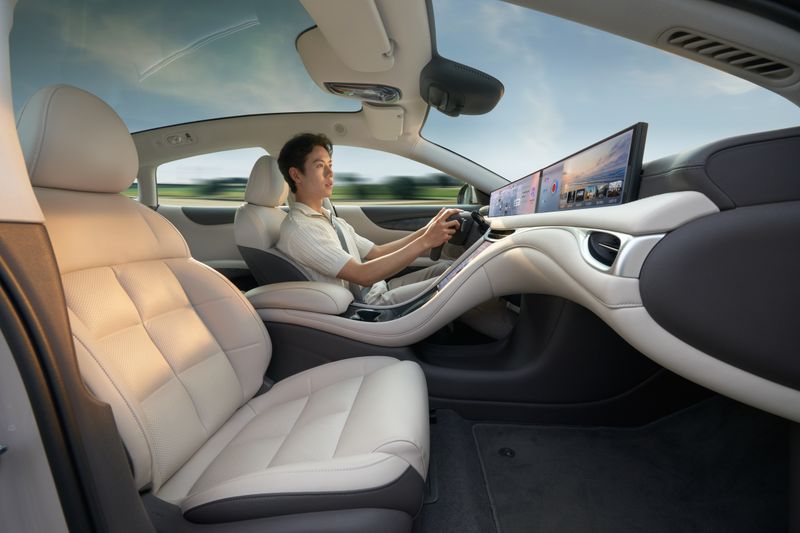
Interior of the NIO ET7 luxury electric sedan, showcasing the panoramic screen and minimalist design characteristic of modern EV interiors.
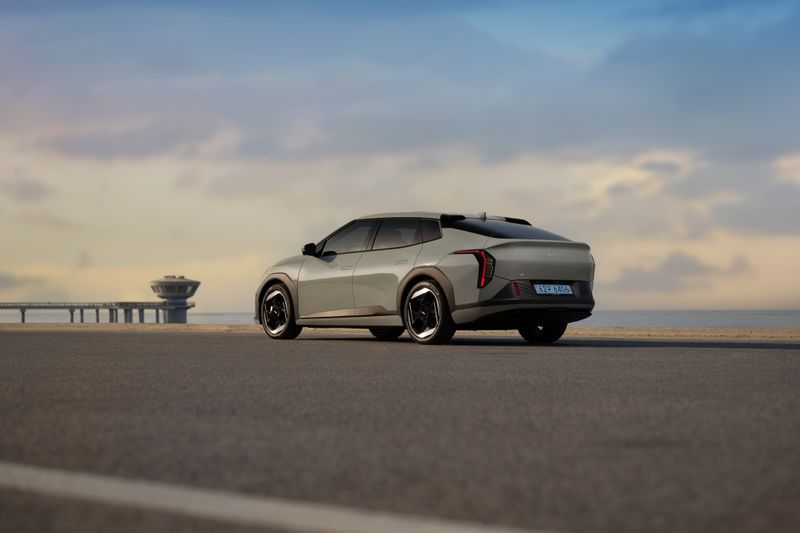
Audi activesphere concept vehicle, representing the future direction of electric vehicle design with aerodynamic styling and concept car proportions.
For the latest EV category coverage, see /category/ev.
Earlier coverage
For readers following the EV category, earlier posts this month covered European market share trends and Chinese EV policy shifts. The leapmotor delivery record from July 2026 demonstrated Chinese EV makers expanding overseas presence, while the Volkswagen ID. policy revisions in Germany reflected regional incentive shifts.
Keywords: electric vehicle, EV sales, Benchmark Mineral Intelligence, ICCT, SMMT, Chinese EV exports, sustainable transportation
creator: "Tech Desk"