Global battery energy storage capacity is on track to surge nearly sixfold by 2030, jumping from 224.8 gigawatts (GW) at the end of 2025 to roughly 1,300 GW, according to a fresh report from London-based research firm GlobalData. The expansion — clocking a 42% compound annual growth rate — is being fueled by plunging lithium-ion battery costs, booming renewable energy deployment, and surging power demand from AI data centers.
But the headline number masks a deeper story: the geography of battery manufacturing is shifting. While China and the US together held almost 75% of installed storage capacity at the end of 2025, Europe is now scrambling to build its own battery supply chain from the ground up. Two announcements this week — Eni Storage Systems breaking ground on an LFP gigafactory in southern Italy and Chinese firm Hithium landing an €81 million Spanish government grant — suggest the continent is finally making real headway.
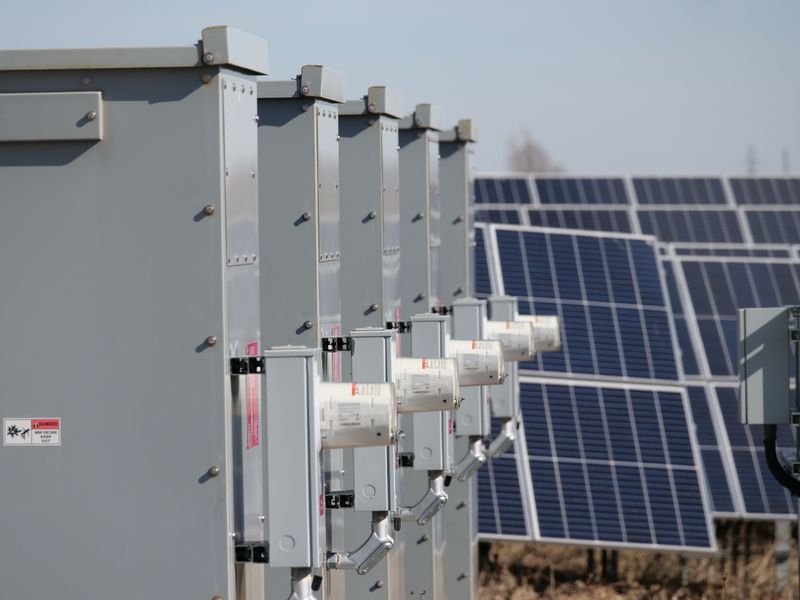
A Booming Market on a Global Scale
GlobalData's new report, "Strategic Intelligence: Batteries in Power (2026)," paints a picture of an industry hitting an inflection point. Battery storage is no longer just a niche tool for grid smoothing — it's becoming system-critical infrastructure.
The United States closed 2025 with a record 57.6 GWh of new storage additions, bringing its total cumulative grid-scale capacity to 137 GWh. The momentum carried into 2026: first-quarter installations hit 9.7 GWh, a 32% year-over-year jump and the largest Q1 on record for the US sector. Utility-scale projects accounted for more than 75% of that volume. The US Energy Information Administration now projects 24 GW of utility-scale batteries will come online this year alone, with Texas taking 53% of the buildout, followed by California at 14% and Arizona at 13%.
Australia tells a similar story. The National Electricity Market (NEM) added more than 2.7 GW of battery capacity in the past three months alone, pushing total commissioned capacity past 9 GW. Western Australia's Wholesale Electricity Market has added more than 1 GW in the past year. Another 39.6 GW of capacity is moving through the connection pipeline, from application to commissioning — a figure that signals sustained growth through the rest of the decade.
"The global power sector is increasingly standardising on four-hour battery energy storage systems rather than two-hour designs," said Rehaan Shiledar, power analyst at GlobalData. "Higher shares of solar and wind create longer daily mismatches between generation and demand. It makes multi-hour shifting — especially moving midday solar into the evening peak — more valuable to reduce curtailment and provide reliable capacity during steep net-load ramps."
Co-located solar-plus-storage plants are quickly becoming the default project template. Sharing a single interconnection slashes both cost and schedule risk, and the battery captures curtailed solar generation that would otherwise be wasted, delivering it into higher-price evening hours.
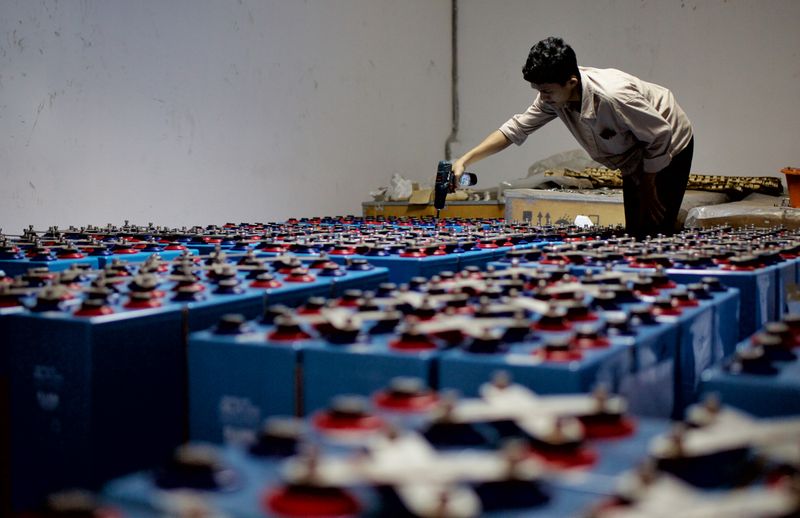
Europe's Battery Manufacturing Push: Eni and Hithium Lead the Charge
Europe's battery manufacturing sector has had a rough few years. Northvolt filed for Chapter 11 bankruptcy protection. Freyr scrapped its Georgia factory plans and pivoted to solar. Morrow followed Northvolt into insolvency. Against that troubled history, the news out of Italy and Spain this week carries real weight.
Eni Storage Systems — the storage arm of Italy's oil-and-gas major — has broken ground on a lithium iron phosphate (LFP) battery gigafactory in Brindisi, Italy. The plant will produce LFP cells primarily for battery energy storage system (BESS) applications. Italy's Minister of Enterprises and Made in Italy, Adolfo Urso, attended the ground-breaking ceremony at a site that once housed decommissioned polymer storage facilities.
The project pairs an LFP cell manufacturing line with a BESS assembly plant. The assembly side will use modules from a joint venture partner, Seri Industrial, which runs a separate facility in Teverola. A second phase will add LFP cathode active material production and battery recycling facilities on the same Brindisi site. In total, the project targets 16 GWh per year of capacity by 2030, split evenly between Brindisi and Teverola.
"This investment will establish a local value chain capable of generating employment and strengthening strategic autonomy from non-EU markets, while reducing emissions without compromising competitiveness," said Giuseppe Ricci, Eni's COO for industrial transformation.
Eni also announced this week an agreement to acquire a 25% stake in a Chile lithium project being developed by EnergyX, with a total phased investment of US$225 million — a further signal that the company is vertically integrating into raw-material supply.
Over in Spain, China-based BESS OEM Hithium has won an €81 million (US$92 million) grant from the Spanish government for a battery and BESS gigafactory in Navarre. The award comes through the RENOVAL 2 scheme, managed by the Institute for Diversification and Energy Saving (IDAE). Hithium's grant is by far the largest of 40 clean-energy manufacturing projects selected, accounting for half of the €162 million total package.
Hithium signed an agreement with the regional government of Navarre in April this year to develop, build, and operate the plant, in a ceremony attended by Spain's prime minister. While the company hasn't disclosed the factory's exact capacity or firm timelines, the €405 million total investment points to a substantial facility.
The 4-Hour Storage Standard Is Reshaping Procurement
One of the most notable structural shifts highlighted by GlobalData is the move from two-hour to four-hour battery systems as the baseline for grid storage. This isn't a technical footnote — it's reshaping how utilities, regulators, and project developers think about procurement.
In California, programs under the California Public Utilities Commission have effectively made four-hour duration the minimum standard for new storage contracts. Similar trends are appearing in the UK, where projects are shifting from frequency-response services toward bulk energy shifting, and in the Middle East, where tenders increasingly contract multi-hour storage for dispatchable evening solar output.
Shiledar put it simply: "Energy shifting has become the fulcrum of the battery storage value proposition, recasting batteries from ancillary grid-support tools into system-critical infrastructure."
The implications for the lithium-ion supply chain are far-reaching. Four-hour systems require roughly twice the battery cells per project compared with two-hour designs, meaning the demand for LFP and nickel-manganese-cobalt (NMC) cells will be far higher than earlier market models predicted. That's good news for the gigafactories now coming online in Europe, though it also means the competition for raw materials — lithium, cobalt, nickel, graphite — will stay intense.
What This Means for the Energy Transition
The sixfold growth forecast from GlobalData aligns broadly with projections from other analysts. BloombergNEF, the International Energy Agency, and McKinsey have all published similar outlooks over the past 12 months, pointing to the same drivers: falling costs, policy support, and the sheer volume of variable renewable generation coming onto grids worldwide.
For Indonesia and Southeast Asia, the implications are worth watching closely. The region has abundant nickel reserves — a key battery metal — and several countries, including Indonesia itself, are developing downstream processing capacity for battery-grade materials. As global storage deployment accelerates, demand for those materials will only grow. At the same time, falling battery costs make solar-plus-storage more affordable for the archipelago's remote islands and off-grid communities, where diesel generators remain the default power source.
The battery storage boom is still in its early innings. With 1,300 GW of deployed capacity projected by 2030, the industry is set to become one of the defining infrastructure stories of the decade — and the race to build the factories that supply it is just getting started.
For more on battery technology developments, check out our Battery Tech coverage and EV section.