Introduction
For the better part of 2026, the robotics and autonomous systems sector has been defined by a clash between viral spectacle and industrial reality. We saw humanoid robots shattering 100-meter sprint records in Beijing, a surge of investor capital into embodied AI startups, and a dizzying series of high-profile IPOs that promised to rewrite the manual of industrial labor. But as the third quarter of 2026 comes to a close, that narrative is cooling. Unitree, once the poster child for the humanoid revolution, has seen its share price slide significantly from its explosive August debut, sparking a broader re-evaluation of valuation bubbles in the humanoid space.

Yet, while the speculative frenzy recedes, the underlying technical foundation is maturing in ways that may ultimately matter more. New "cerebellum" control chips from firms like QBit Semiconductor are beginning to solve the low-latency motor control bottleneck, while the defense sector is pivoting away from simple drone hardware toward reliable, scalable AI autonomy. The industry is entering a new phase: one defined not by how fast a robot can run, but by how reliably it can integrate into structured industrial and logistical workflows.
QBit's "Cerebellum" Chip and the Control Bottleneck
One of the primary limits for both bipedal robots and high-speed drones has been the latency of the control loop. Most humanoid systems rely on heavy compute clusters housed in the torso, which often struggle to coordinate the high-frequency motor adjustments required for stable locomotion, especially when faced with unexpected environmental perturbations. QBit Semiconductor's announcement on September 15, 2026, regarding its new QB88XX series, addresses this by integrating a dedicated "cerebellum" control unit.
The architecture essentially offloads the motor-control primitives from the main vision/trajectory processors, treating locomotion as a hard-real-time sensor-actuator task. By integrating the control logic directly onto the silicon, QBit claims to have reduced motor-loop latency by an order of magnitude, allowing robots to adjust their stance or flight profile in microseconds rather than milliseconds. This is not just a spec-sheet improvement; it is a fundamental requirement for operating in unstructured environments. For a drone navigating between hospital buildings, or a humanoid maneuvering through a crowded warehouse, the ability to react to a sudden gust of wind or a misplaced item without pausing to re-calculate global pathing is the difference between a demonstration and a functional tool. If successful, such specialized "robot-brain" chips could become as critical to the embodied AI supply chain as HBM memory is to the current GPU-based training sector.
The Defense Pivot: Reliability Over Spectacle
While industrial robotics grapples with the transition from lab-spec to factory-spec, the defense sector is undergoing a parallel shift. Intelligence reports and market updates from September 14, 2026, suggest a massive upcoming defense spending wave built around AI-powered drones. But the discourse has shifted: the goal is no longer simply to demonstrate a fully autonomous platform, but to make that autonomy reliable, affordable, and deployable at scale.
This pivot is driven by the reality of conflict zones where electronic warfare, terrain density, and low-cost anti-air systems make long-range, expensive platforms highly vulnerable. The new wave of defense investment is flowing into resilient communication links, decentralized swarming logic, and AI systems capable of executing missions even when GPS or command links are compromised. This is the industrialization of the drone. It means manufacturing processes that can churn out thousands of units monthly, flight-control stacks that don't crash when faced with moderate interference, and sensor suites that provide useful data without requiring heavy human oversight. The defense sector's demand for high-reliability autonomy is effectively forcing a "hardened" standard upon the commercial drone industry, which will eventually trickle down to civilian logistics and infrastructure inspection.
Market Realism: The Unitree Reality Check
The market performance of robotics leaders like Unitree serves as a barometer for this broader transition. After soaring more than five-fold in their Shanghai trading debut in August, Unitree shares have retreated as investors begin to ask tougher questions about margins, unit manufacturing costs, and the true addressable market for domestic versus industrial humanoids. The slump reflects a realization that the technology, while advanced, remains in a "pilot" stage.
The procurement data from the 49 state-owned enterprises that engaged in World Robot Competition procurement days in late August points toward where the immediate revenue lies: structured, repeatable industrial tasks. Utilities, logistics operators, and manufacturing giants are not buying humanoids to replace a receptionist; they are buying them to scan inventory, handle hazardous material transports, and perform maintenance checks in tight spaces where safety risks to humans are high. This shift in the buyer base from speculative retail or research markets to conservative, high-volume industrial operators is the necessary path for long-term sustainability. It forces manufacturers to prioritize Mean Time Between Failures (MTBF) and operational unit economics over viral social media impact.
The Synthesis of Autonomy and Hardware
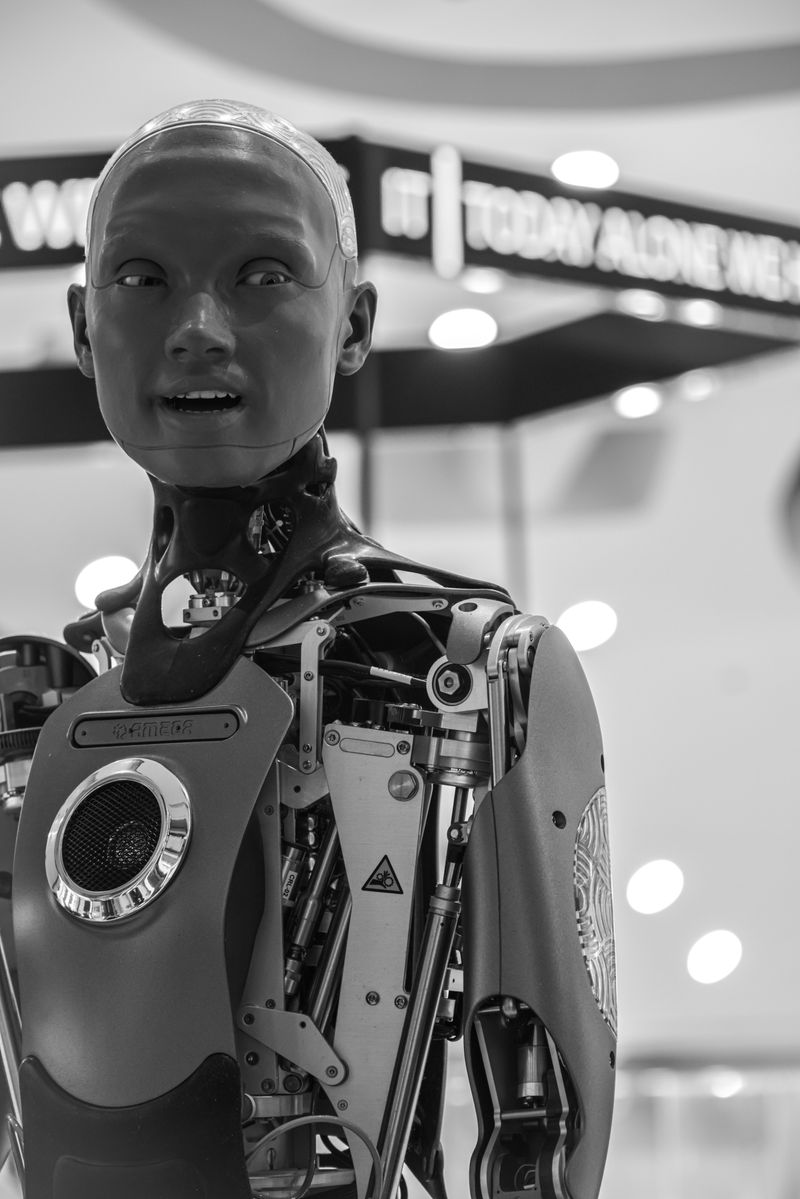
What binds these disparate developments—specialized chips, defense-hardened autonomy, and the market-led shift to industrial utility—is a growing consensus that the "robotics revolution" will be built from the ground up, one modular breakthrough at a time. The era of the "all-in-one" humanoid demo is giving way to a more pragmatic engineering focus on specialized subsystems: precision motor control, reliable communication, low-power thermal dissipation, and long-cycle battery endurance.
As we move toward 2027, the success of the robotics industry will likely be decided not by which company can build the most impressive humanoid, but by which can provide the most resilient and predictable service layer for existing supply chains. In healthcare logistics, the Apian-Synnovis collaboration in the UK demonstrates that a successful drone network is 90% software integration and regulatory liaison and only 10% flight platform. In the humanoid space, the success stories will be companies that can maintain a 5,000-hour uptime standard in a dusty warehouse environment, not those that can perform a backflip in a sterile competition hall.
Conclusion
The Robotics & Drones sector is not entering a decline; it is exiting a period of unrealistic expectations and entering a phase of industrial utility. The recent market corrections are a healthy sign that the industry is being judged by the same metrics as other capital-intensive hardware sectors: addressable market, supply chain scalability, and genuine ROI. With specialized hardware like QBit’s cerebellum chip, hardening defense standards for autonomous systems, and a clearer pipeline from the industrial buyer base, the path forward is clearer than it was even six months ago. We are watching the transition from "what is possible" to "what is profitable." That shift will be uneven, and more IPO corrections are likely, but for the engineering teams building the hardware and software stacks that actually work in the real world, the future is arriving not with a sudden revolution, but with the steady, measured pace of commercial adoption.