From Flower Pots to Cruise Missiles: How a Kyiv Furniture Designer Turned Fire Point Into Ukraine's Drone Powerhouse
Iryna Terekh spent the spring of 2022 making benches and flower pots in Kyiv. When Russian troops pulled back from Bucha, she found a bullet hole in her car's rear bumper and decided she was done with decorative concrete. Three years later she runs Fire Point, the private company behind most of Ukraine's long-range drone strikes, and her climb started with a single manufacturing fix: she cut the time it takes to build one drone wing from six days to two and a half hours.
The Wall Street Journal profiled Terekh over the weekend, tracing that route from near-Bucha to the top of a defense company that now claims more than 7,000 employees. The wing decision sits at the center of the story. Fire Point handed her a long-range drone design, and she judged it unsuited to volume production. Her answer was a different way of building the wing — a process change rooted in her materials background rather than any aerospace training. The aircraft that resulted became the FP-1, the workhorse of Ukraine's campaign against Russian oil refineries. DroneXL traced the same arc in its analysis published Sunday.
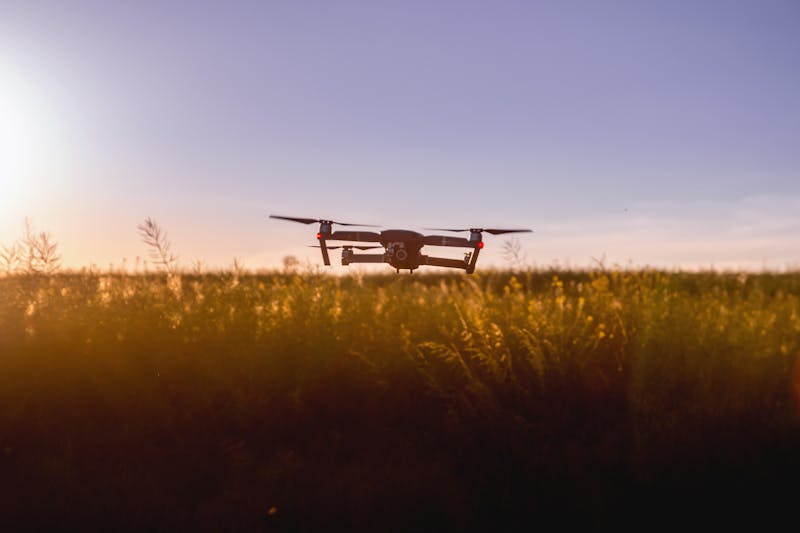
This is a story about scale, and the numbers move fast. Fire Point built around 200 drones in its first year. It says it now produces hundreds of FP-1 and FP-2 units a day, and Terekh told CNBC on August 8 that hitting a target of more than 100,000 drones for the 2026 calendar year "looks realistic." The headcount tells the same story: roughly 3,700 employees in March, 6,000 by late July, past 7,000 in early August. Every one of those figures comes from the company itself — the last time an outsider watched the line run was an Associated Press factory tour in August 2025, which recorded about 100 units a day at roughly $55,000 each.
A Concrete and Furniture Background Solved the Wing Bottleneck
Terekh trained as an architect and ran a company that made outdoor furniture and architectural concrete before the war. Fire Point co-founder Denys Shtilerman hired her as production director in 2023, after he had spent late 2022 buying drones for the Ukrainian military through a nonprofit and growing frustrated with what they cost. He wanted someone who could turn prototypes into serial output. She wanted more than that: she spent nights reading Soviet-era missile manuals and hired a rocket scientist in his nineties as an adviser, according to her account to the Journal.
The result was the FP-1, built from plywood and carbon fiber. Nobody would call it a clever aircraft. It is a manufacturable one, and in this war manufacturable beat clever. The 2.5-hour wing cycle converts a workable design into something a country can field at scale, and it came from a person who spent her career thinking about molds and curing times rather than how an airframe behaves in the air.
"I would never have gotten involved with weapons if my country wasn't invaded," Terekh told the Journal.
She was confirmed as chief executive in March 2026, succeeding co-founder Yehor Skalyha while keeping the chief technology officer role. She has said Fire Point does not choose targets inside Russia — the military does that — and she has publicly disputed Russian claims of civilian casualties from Ukrainian long-range strikes.
The Flamingo's Specs Tell Two Different Stories
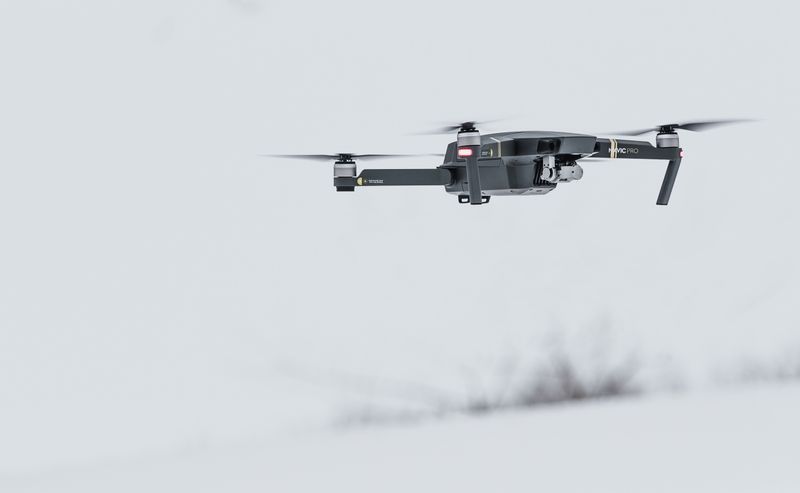
Public specifications for the FP-5 Flamingo cruise missile list a range of 1,864 miles (3,000 km) and a warhead of about 2,535 pounds (1,150 kg). Terekh told The Guardian in July that the real range is closer to 1,118 miles (1,800 km). Both numbers are still in circulation, and the gap says something about how this industry markets itself mid-war.
The FP-1's range moved in the other direction. The baseline drone flew 994 miles (1,600 km). Fire Point published upgraded specifications in July putting the deep-strike version at 2,113 miles (3,400 km) with a 132-pound (60 kg) warhead, achieved by adding a fuel tank into a redesigned wing. That upgraded figure matches the 2,100 miles the Journal cites. President Volodymyr Zelenskyy said on June 20 that the improved FP-1 had struck the Tyumen refinery, more than 1,240 miles (2,000 km) from Ukraine's border.
Terekh puts the Flamingo's production cost at roughly $600,000 per unit against a U.S. Tomahawk at about $3.5 million. The missile's name came from a test-launch accident: prototypes were painted in bright colors so debris would be easy to recover, and after a pink one flew, male staff joked about what happens when a woman runs a defense company. The joke stuck to the missile.
Ukraine's long-range fleet now runs well past Fire Point's catalog — the Sichen strike drone is a separate program — but the FP-1 remains the volume workhorse, and the company says its drones account for roughly 60 percent of Ukraine's long-range strikes into Russia.
Ukraine's Anti-Corruption Bureau Is Still Reviewing the Contracts
None of this growth has escaped scrutiny at home. Ukraine's National Anti-Corruption Bureau opened criminal proceeding No. 52025000000000048 on February 3, 2025, examining whether state officials and drone manufacturers colluded to inflate production costs in defense contracts. Six producers sit under review, and Fire Point's contracts from August 2023 through November 2024 are inside the file.
The Kyiv Independent first reported the inquiry in August 2025, citing sources who described questions about inflated component costs, overstated delivery numbers, or both. The New York Times followed in October with an audit finding: procurement officers calculated that the FP-1 could be built for less than the $58,000 per unit Fire Point quoted in December 2024, an assessment that should have triggered mandatory renegotiation by Ukraine's Defense Procurement Agency and did not. Contracts went out roughly $16.7 million above the cheaper option. The audit document itself has not been published.
The ownership questions are messier. Shtilerman told a parliamentary commission on May 13 that Timur Mindich, the Kvartal 95 co-owner now a suspect in the Midas corruption case, tried to buy half of Fire Point for $1 billion between spring 2024 and August 2025, and that Mindich was never an owner or beneficiary. Terekh has explained that Shtilerman himself stayed off the public ownership record for a long stretch because he held Russian citizenship and his family remained in Russia after the invasion. Skalyha transferred close to 100 percent of the shares to him in November 2025.
NABU's most recent public statement is a written reply dated May 14, 2026, sent to Fire Point's lawyer and published by Shtilerman. It confirms that no notice of suspicion has been served on the company's leadership, that no indictment has been drafted, and that Fire Point has not been entered in the state register as an entity against which criminal measures may apply. Under Ukrainian procedure, that means the investigation runs against the fact of an offense rather than against named individuals.
The Commercial Cost Has Been Real Anyway
Ukraine's Antimonopoly Committee returned EDGE Group's application to buy a 30 percent stake on January 14, 2026 — a deal that implied a $2.5 billion valuation and would have brought in about $760 million. Shtilerman told lawmakers in May that the company has moved past it, having turned down an investment bank's March approach built on a $5.8 billion valuation. Fire Point also commissioned its own outside pricing audit, and on November 12, 2025 it created an advisory board and named former U.S. Secretary of State Mike Pompeo to it — an advisory seat, not a board of directors seat, executives told the Associated Press.
Terekh told CNBC that a hold-up in European funding is capping Flamingo output right now. The company is waiting on a European loan, and production is not running at full power until it lands. She has compared European bureaucracy to the security threat posed by Russian forces, arguing that the same people, money, and factories would not work in any other European country because of the weight of regulations.
Nobody has been charged, and nobody has been cleared either. That is a genuinely uncomfortable place for Ukraine's largest private arms supplier to sit while European governments decide how much to hand it. Watch whether that European money moves before winter, when Ukraine's campaign against Russian refining and Russia's campaign against the Ukrainian grid both peak.
The transferable lesson sits in the wing process. Most Western drone programs are busy optimizing airframes, sensor stacks, and autonomy stacks. The company currently reshaping a war got its decisive win from someone who understood how material behaves in a mold. A process change is not an invoice. Even if a Ukrainian court eventually rules that the state was charged too much for these drones, the wing still comes off the jig in two and a half hours.
Read more from our Robotics & Drones section, or revisit our earlier coverage of how drone economics are redrawing air defense.