Form Energy Closes $750M Series G to Double Its Iron-Air Battery Plant as Hyperscalers Buy 100-Hour Storage
Form Energy has closed a $750 million Series G round led by T. Rowe Price, money the company will pour into roughly doubling its iron-air battery factory in Weirton, West Virginia. The August 12 close pushes the startup's total equity raised past $2 billion and hands it the capital to chase a contract backlog that has quadrupled in under eight months.
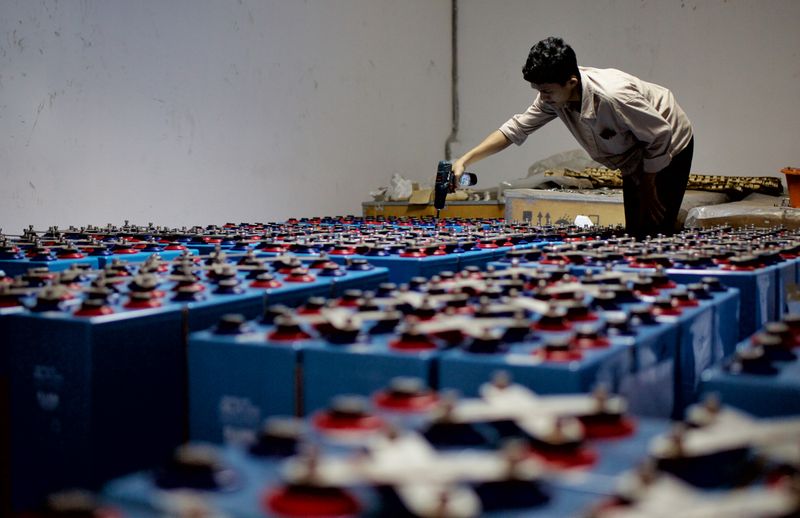
The round pulled in a long list of new and returning backers. Sequoia Capital, Janus Henderson, Franklin Templeton, and PEAK6 Investments joined for the first time, while existing investors including Prelude Ventures, Engine Ventures, TPG Rise Climate, Breakthrough Energy Ventures, Coatue, GE Vernova, and the family foundation of Dustin Moskovitz and Cari Tuna all came back for more. Morgan Stanley acted as sole placement agent.
The plant that gets the money
Most of the proceeds head to Form Factory 1, the company's iron-air battery plant in Weirton. The facility covers roughly one million square feet today, and Form wants to take it to about two million. The plant started shipping batteries in 2025, and the company now employs around 1,000 people across its three sites: about 450 in Weirton, 250 in Somerville, Massachusetts, and 200 in Berkeley, California.
The company also filled two C-suite seats alongside the raise. Navneet Govil joined as chief financial officer after a long stint at SoftBank Investment Advisers, where he helped oversee finance across the Vision Funds' global portfolio. Wes Sloan signed on as chief operating officer after running Panasonic Energy's battery manufacturing operations in Nevada, with earlier leadership roles at Rolls-Royce.
Weirton is an unusual home for a battery startup. The town sits on the Ohio River in the northern panhandle of West Virginia, a steel town that has spent decades replacing shuttered mills with whatever industry would take the space. Form moved into a former steel facility and turned it into one of the largest battery plants in the United States. The choice was partly practical — the building shell, the power supply, and the skilled workforce were already there — and partly symbolic, a bet that the energy transition can rebuild the kinds of communities that powered the last one.
Why a battery that turns iron into rust
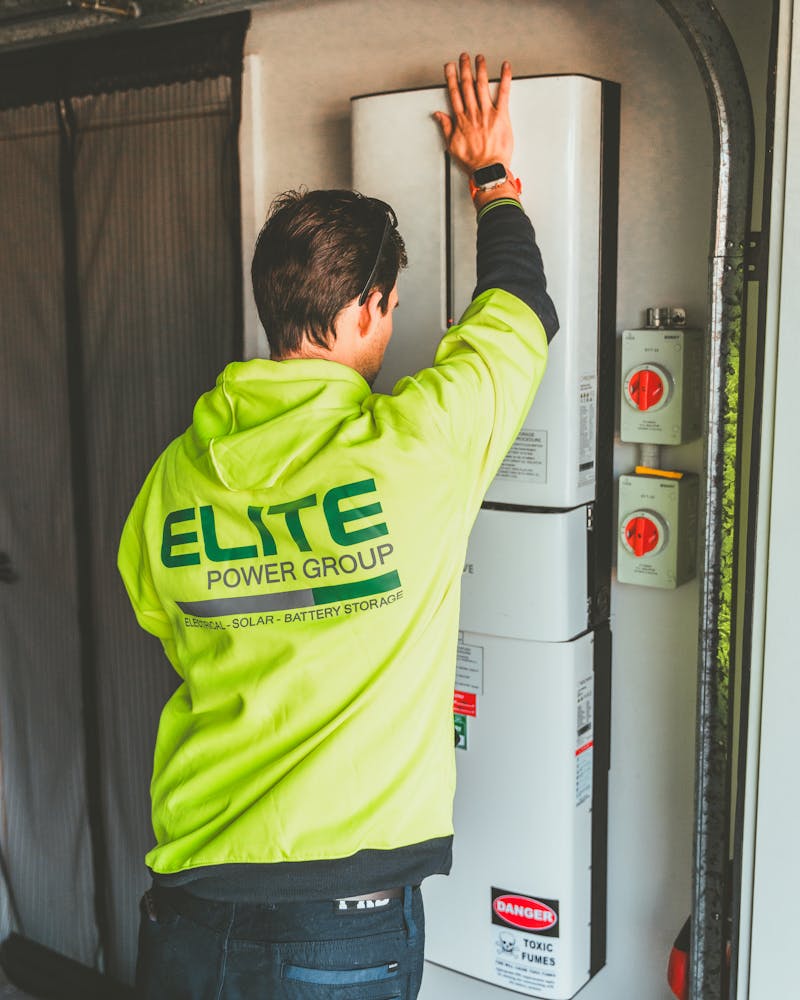
Form's chemistry stands apart from the lithium-ion packs that dominate the market. The battery runs on iron, water, and air, and it discharges for up to 100 hours — long enough to carry a grid through a multi-day weather event or a stretch of weak wind. The trade-off is physical: the system weighs far more per kilowatt than a lithium pack, which makes it useless for cars but fine for grid sites with space to spare.
The cost profile is the point. Iron is cheap and abundant, and the company avoids the lithium, cobalt, and nickel supply chain that drives lithium-ion pricing. Roughly 80% of Form's materials come from U.S. suppliers, with the balance from Europe and Asia. That domestic sourcing has become a selling point as Washington pushes to cut reliance on Chinese battery supply chains.
The chemistry itself is almost embarrassingly simple to describe. Inside a Form battery, iron is oxidized as the cell discharges and reduced as it charges. In plain terms, the battery turns iron into rust when it delivers power, then runs the reaction in reverse when it recharges, turning the rust back into iron. The approach has been studied for decades in labs, but Form is the first company to take it to factory scale, and the Weirton plant now produces the systems in volume.
Hyperscalers reshaped the order book
Form's backlog now stands at about 80 gigawatt-hours of contracted storage, up from roughly 20 GWh at the start of the year. The largest single deal belongs to Google, which is building a 30 GWh Form battery tied to a Minnesota data center — a system TechCrunch valued at about $1 billion. Crusoe Energy agreed in March to buy 12 GWh, and utilities Xcel Energy and FuturEnergy Ireland hold additional agreements.
The math behind those contracts is simple. U.S. data centers are expected to roughly quadruple their electricity use by 2035, and hyperscalers need firm, dispatchable power faster than new gas plants can be permitted and built. Form's 100-hour batteries can sit through days of low renewable output, which is why Google and Crusoe alone account for 42 GWh of the order book.
Grid-scale storage is booming across the board, not just in the long-duration niche. The U.S. installed 9.7 GWh of energy storage in the first quarter of 2026, up 32% year over year and the best first quarter on record, according to the Solar Energy Industries Association. Nearly all of that was lithium-ion sized for two to four hours of discharge. Form's 80 GWh backlog is roughly two years of the entire national install rate in a chemistry that almost nobody has run at grid scale.
SEIA's latest outlook, prepared by Benchmark Mineral Intelligence, forecasts 613 GWh of cumulative U.S. storage deployment by 2030. The trade group's interim president, Darren Van't Hof, said data centers have emerged as a driving force behind storage deployment, with utilities and hyperscalers tapping batteries to get online faster, back up critical processes, and smooth the power-quality problems that come with fluctuating computing loads.
The delivery gap nobody has closed yet
Demand is not the open question — delivery is. Form began shipping from Weirton in 2025, and most contracted systems land in 2027 or later. Doubling a one million square foot factory takes years, and the company's own figures are unaudited: the 80 GWh backlog comes from Form's count, not an independent tally, and no third party has verified the 80% domestic-materials claim.
The concentration risk is real. Google holds 30 of the 80 GWh, so a single hyperscaler pausing data center capex would reprice the whole plan. Northvolt, the European battery maker that raised billions against a crowded order book, entered bankruptcy in 2025 with its flagship plant far below planned output. Form's order book is healthier — customers have signed contracts, not just letters of intent — but the industry has seen this movie before.
There is also a question of how often a 100-hour battery actually gets called. Most grids need multi-hour storage for a handful of stress events a year, and the rest of the time the asset sits with a low depth of discharge. Utilities that buy iron-air for resilience rather than daily arbitrage are paying for insurance, which is a harder business case to defend to regulators than a lithium pack earning revenue every day. Form's answer is that the insurance premium is small enough, per kilowatt-hour, that the economics work anyway.
What happens next
The Series G gives Form room to build before revenue catches up. The company reports commercial agreements with Xcel Energy, Google, Crusoe, and FuturEnergy Ireland, and it says most of its contracted capacity lands in 2027 and beyond. The next few years will show whether iron-air can move from a promising chemistry with a giant order book to a technology that actually delivers gigawatt-hours into the ground.
For the broader battery market, the message is that long-duration storage has found its first real buyers. Utilities spent a decade treating 100-hour storage as a decarbonization tool with no near-term customer; hyperscalers now sign contracts faster than any utility procurement cycle can move. Form's raise is a bet that the trend outlasts any single order.
The company's own numbers frame the ambition: $2 billion in equity, an 80 GWh backlog, a factory doubling in size, and a chemistry that trades weight for cost and duration. Whether that adds up depends on the one thing money can't buy — the next two years of factory output.
Why this matters for the grid
The storage industry is watching Weirton closely because iron-air answers a question lithium-ion cannot: what runs the grid when the wind drops for three days straight? A 100-hour battery covers that window; a four-hour pack does not. As renewables climb past 90% of new U.S. generating capacity this year, per the Energy Information Administration, the gap between what lithium can store and what grids need will keep widening.
Form's $750 million bet is not the only one. Long-duration startups across the iron, carbon, and zinc chemistries are pulling in nine-figure rounds as investors hunt for the chemistry that breaks the four-hour ceiling. Forbes noted this week that funds are surging toward makers of batteries that store power for days, with iron-based and carbon-based chemistries competing for the same market. For now, Form has the biggest order book, the biggest factory, and the most committed buyers. The next two years decide whether that lead holds.
Sources: Form Energy press release, TechCrunch coverage, mGrid analysis, SEIA storage outlook via Utility Dive.
More battery industry coverage: Battery Tech and EV.