Ford Names Its $28,350 Electric Pickup Truck Fathom, First Model on a New Low-Cost Platform
Ford has finally given its affordable electric pickup truck a name, and the price it is leading with tells you everything about the strategy. The new model will be called the Fathom, with a starting price of $28,350 that lands just under the $30,000 mark Ford has chased since the company first talked openly about the project in 2025. Fold in the destination and delivery fee and the number works out to $29,945. Ford confirmed the price during a briefing on Thursday, and preorders are scheduled to open early in 2027.
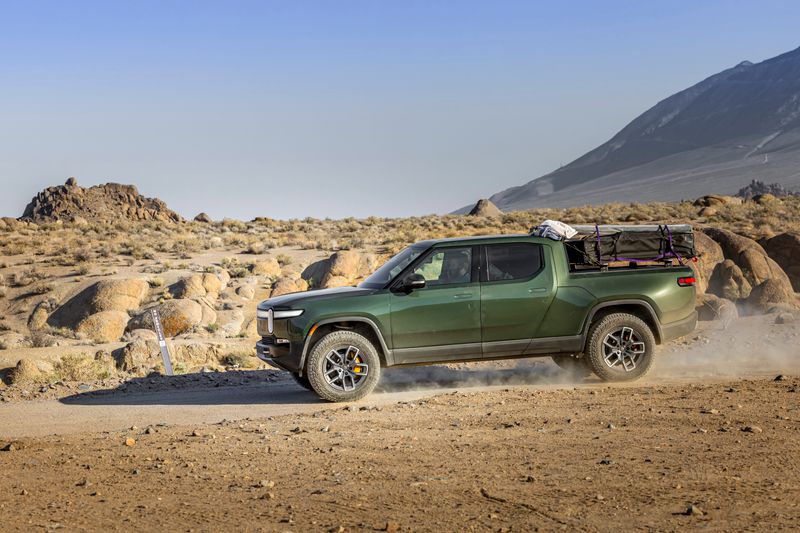
A truck built by a skunkworks team, far from Detroit
The Fathom is the first vehicle to ride on Ford's Universal EV platform, shortened to "UEV" inside the company. That single architecture is meant to underpin a family of small electric models for years, not just this one pickup. Ford has already said the truck will be assembled in Louisville, Kentucky, with deliveries beginning in the fall of 2027. It will not reveal the finished design until early next year.
The truck came through an unusual path. It grew out of a closely held skunkworks group that former Tesla executive Alan Clarke was asked to lead, and the team has pulled in engineers from Rivian and Tesla as well as from Apple's now-defunct car project. They have worked largely in isolation in the Los Angeles area, deliberately separated from the rest of the company, with a mandate to rethink how a small electric vehicle gets made.
The engineering goal is squarely about cost. The platform leans on a process Ford calls "unicasting," converting what would once have been dozens of separate stamped parts into a handful of cast pieces. That trims weight and assembly time, though it also changes the repair business, the same tradeoff that Tesla's gigacasting has already opened up. Ford says it designed the structure so crash repairs stay within reach of ordinary body shops.
Cut weight, clean up the aerodynamics, and you can shrink the battery without killing the range. Batteries are the single most expensive element in any electric car, so taking mass out of the body does real work on the price. The base Fathom will carry a standard-range lithium iron phosphate pack. Ford has not yet named a range figure, but the initial model will clear 200 miles on a charge and stay under 300.
What $28,000 actually buys
At that price the Fathom is a five-seat, crew-cab pickup that Ford sizes close to the Maverick, its affordable gasoline and hybrid small truck. The interior, Ford argues, carries more space than a Toyota RAV4. You get a large high-resolution touchscreen, a digital car key, and support for both Apple CarPlay and Android Auto. Apple Maps is built into the operating system, part of a partnership Ford announced back in July.
One thing buyers will not get is Apple's newest CarPlay Ultra, which Ford says the system does not support. It will, however, get bidirectional power, a function worth calling out. Like the bigger F-150 Lightning and the hybrid F-150, the Fathom can flow electricity back out of its battery, enough to power tools or keep essentials running at home during an outage.
Every truck also ships "BlueCruise-capable," meaning the radar and camera hardware is installed even when the subscription is not. Turning on the hands-free driver assistance is a separate cost. Ford says the next version of BlueCruise should eventually manage supervised driving from point A to point B, with eyes-off driving expected somewhere around 2028.

A market that has punished expensive electric trucks
The choice of a truck body is itself a gamble. Full-size battery pickups have not sold in the volume the industry once expected. The best quarter for the F-150 Lightning moved barely more than 10,000 units, and the Tesla Cybertruck, after a rush when it first launched, has cooled off sharply. The market has told us the staying buyers are not necessarily the ones who spend a six-figure sticker.
Ford is betting the money moves to a lower price instead. The average price of a new car in the United States now sits around $50,000, which means a battery truck under $30,000 is close to alone in the category. The most direct rival is the Slate pickup, backed by Jeff Bezos, which starts at $24,950 and swings to a much plainer spec. Ford argues its truck brings far more for roughly $3,000 more.
There are no two ways about the scale. Building the UEV truck in a real plant, with financing that normal buyers can actually use, and a battery standard-range LFP from the bottom-up, gives Ford a chance to move volume where the older trucks remained a niche. Ford will have to prove its assumptions about what a small electric truck customer truly wants, which is not a luxury number on a windscreen.
The timing also matters. Ford has been cautious about its electric spending since it cut back some earlier plans, and the Fathom arrives at a moment when the broader market has cooled. Global EV sales are still climbing, but the pace has slowed: the International Energy Agency has measured US growth sliding from 40 percent in 2023 to roughly 10 percent in 2024. Affordability, industry analysts keep saying, is now the lever most likely to win over the next wave of buyers, not raw range or towing bragging rights. A five-seat truck at $28,350, with a usable battery and the option to export power, is aimed straight at that calculus.
A "Model T moment," the company hopes
Ford boss Jim Farley has called the truck a possible "Model T moment" for the company, a phrase that sounds almost too grand for a small pickup. The Fathom is affordable, but it is also a bet that US buyers will turn to a proper electric truck once the price is right. Farley has been open that Americans have gone cold on the expensive ones, and that cheap models can restart the habit.
The name is unusual for a company that keeps reaching into its own memory. Ford has spent recent seasons reviving the Bronco, the Maverick, the Mustang Mach-E and the F-150 Lightning, all of which borrow from older products. Fathom is entirely new for the automaker. Ford says it chose the word to capture a state of mind rather than a specification: an understanding of the person who would choose such a truck, their day, their challenges, their budget.
It is a long road from Thursday's pricing announcement to the autumn of 2027. Ford cannot show you the finished truck yet, and it has not confirmed a range, a tow rating, or the full list of options. What it has committed to is a price point that undercuts nearly all other options in the electric market, a plant in Louisville, and a promise that the engineering removes the kind of compromise baked into adaptions like the F-150 Lightning, which carried a large battery and a high sticker as a body-on-frame adaptation of the gas truck.
Five seats, an LFP battery, bidirectional power, a digital key and a $28,350 sticker: the Fathom is the clearest sign yet that Ford wants its affordable electric chapter to begin with a small and useful one. The betting window opens early in 2027, with the sales year following months later.
Ford laid out the Fathom's name and pricing in a Thursday briefing covered by TechCrunch, CNET and US News & World Report, all of which reported the same opening number. The truck's platform marks the start of a wider push inside the automaker that we have also written about in our EV coverage, including this report on Leapmotor's record deliveries and its Indonesia assembly push: Leapmotor breaks 100,000 monthly deliveries.