Figure's Humanoid Climbed a Ladder on Its Own — and CEO Says Wheeled Robots Are Finished
Figure AI has been preaching the same sermon for two years: the human world is built for human bodies, so the machines that work in it ought to look like one. On August 1st, founder and CEO Brett Adcock posted a video he hopes settles the argument. The company's Figure 03 humanoid stepped up to an industrial-style ladder in a lab, gripped the metal rungs, and methodically hoisted itself upward with no joystick, no script, and no human standing by to catch it.
"F.03 can now climb a ladder, fully autonomous," Adcock wrote.
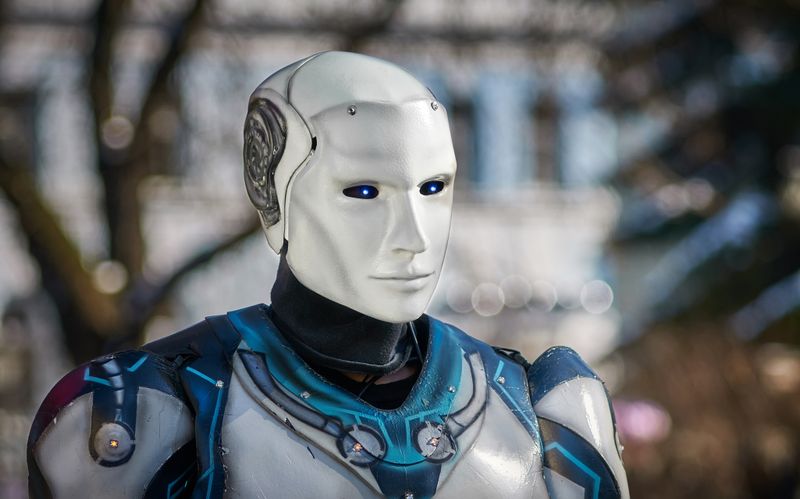
The footage is the latest marker in a year where Figure has gone from shipping prototypes to running a factory that cranks out a robot an hour. But the clip also landed at the center of a sharp fight the industry has been having with itself about how these machines should get around at all. Figure bets on two legs. A growing pack of rivals sells wheels. Adcock used the ladder demo to call that whole camp a dead end.
Why climbing a ladder is genuinely hard
Ladders are a nightmare for robots because they marry every hard problem in locomotion at once. A machine has to see the rungs, read its own joint positions, feel contact through its hands and feet, and shift weight continuously while its center of mass rides close to the edge of a fall. There is no flat, predictable surface to lean on. Roboticists call the skill "loco-manipulation" — walking, reaching, and balancing fused into a single continuous action rather than separate scripts bolted together.
Figure says the trick runs on Helix, its in-house AI stack. A second-generation architecture, Helix 02, added a dedicated low-level network the team calls "System 0," which ticks at 1 kilohertz to manage balance, contact forces, and physical coordination underneath the higher-level planning that decides where the robot means to go. A smarter twist came recently: System 0 is now conditioned on camera perception. Until the last upgrade, the low-level controller reasoned only about the robot's own body — joint state, base motion, and proprioception. It could walk across flat ground comfortably, but stairs, ramps, and rough terrain demanded hand-tuned mode switches or a human operator.
That is why the ladder clip matters. Figure pushed images from the head cameras through a stereo model that lifts them into a 3D picture of the environment, and fed that into the same controller that handles balance. The result is a robot that can see the structure it is about to step on and adjust in real time, instead of relying on a human to flip a switch when the terrain gets interesting.
None of that makes the current climb pretty. In the footage the ascent is steady and deliberate, each rung taken carefully, nothing like a firefighter sprinting up a truck. That drew swift mockery online. One user replied to Adcock's video, "Fire fighters do it in seconds lol." Adcock answered in two words: "This will get just as fast."
The "utter dead end" jab at wheeled robots
Adcock did not let the milestone pass quietly. On August 2nd he quote-tweeted a comment from user Mark Jeffrey, who pointed out that wheeled robots are stumped by stairs and ladders while humanoids are not, and that the world is filled with both. Adcock's verdict was blunt: "Wheeled robots are an utter dead end." Adcock posted the original clip on his X account, and our Robotics and Drones coverage has tracked the wider shift as humanoids moved from prototypes toward real deployments.
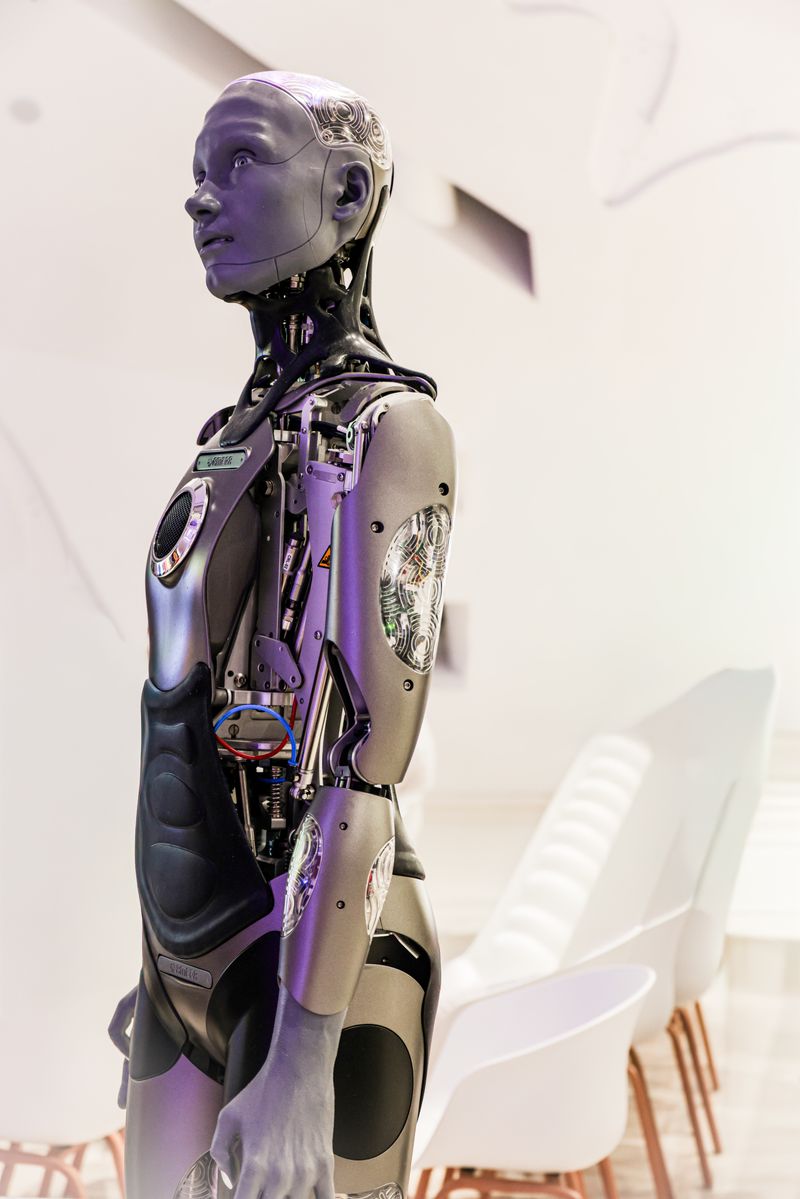
The rhetoric is pointed at a real divide in the sector. Figure and rivals like 1X are all-in on walking bipeds. Others, such as Sunday Robotics with its wheeled Memo household robot, argue wheels are cheaper, safer, and good enough for most indoor work. The two philosophies rest on different bets about how much of the world a general-purpose machine actually has to move through. If a robot stays in warehouses and kitchens, a base with wheels can be sturdy and inexpensive. If it has to follow a human everywhere — up scaffolding, through doorways, across stairs — legs look unavoidable.
Adcock's argument is nakedly strategic too. Figure has raised at a reported valuation around $39 billion, and it needs to justify that number with a story about machines that can do anything a human worker can. A humanoid that climbs a ladder can, in theory, reach the flat concrete floor of a logistics hall and the elevated scaffolding of a construction site with the same hardware. That is the pitch: one platform, every environment.
The factory behind the hype
The ladder demo did not come out of nowhere. Figure has spent 2026 scaling manufacturing at BotQ, its high-volume plant, and the numbers it released in April describe a company that moved past the prototype stage. Production rose from one Figure 03 per day to one per hour — roughly a 24-fold throughput jump in under 120 days — and the company says it has delivered more than 350 third-generation robots. The manufacturing line runs custom execution software across more than 150 networked workstations, with upward of 50 in-process inspection points per build.
Quality metrics are starting to look real. End-of-line first-pass yield now sits above 80 percent and is improving weekly. The battery line reports a 99.3 percent first-pass yield and has shipped over 500 packs. Figure has produced more than 9,000 actuators across more than 10 distinct part numbers. Every robot goes through over 80 functional verification tests before sign-off, including "burn-in" sessions where machines squat, shoulder-press, and jog through thousands of cycles to shake out early failures.
That fleet matters for reasons beyond revenue. Every deployed robot generates data that feeds Helix back at headquarters, and the company argues the volume of operating hours is what produces new capability. Along the way Figure built a fleet-management system that coordinates robots across use cases and tracks health and location in real time, plus an over-the-air update pipeline that pushes new behaviors to every robot at once. In one demonstration cited by the company, a fleet ran a continuous autonomous sorting marathon past 200 hours, processing nearly 250,000 packages without a hardware failure.
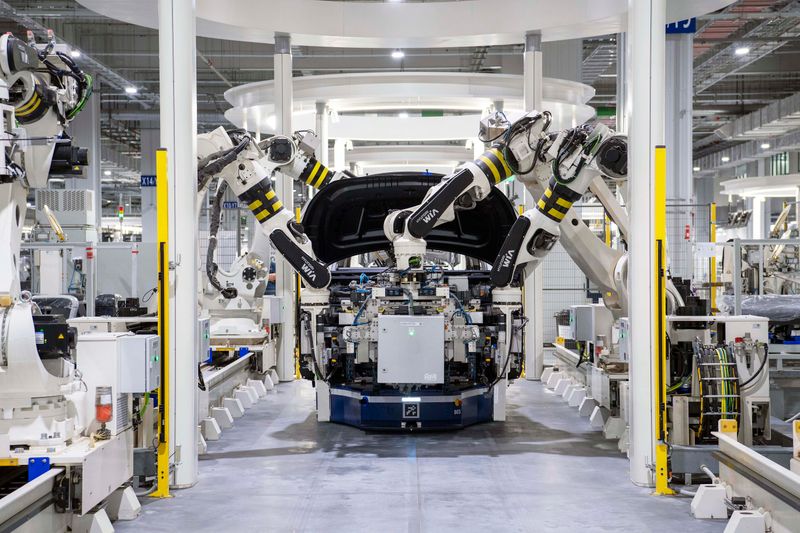
Some of that capability is already landing in paying deployments. BMW has used Figure's machines at its huge Spartanburg, South Carolina plant, where the Figure 03 took over parts sequencing in logistics after an earlier Figure 02 pilot. The auto sector remains the most concrete near-term customer for humanoids doing repetitive material-handling jobs, even as Figure eyes residential housework as the longer game.
What to watch now
The ladder climb is one step, quite literally, in a longer campaign. Three things are worth tracking. Speed is the first: the current careful ascent has to get orders of magnitude faster before a construction supervisor treats it as productive, and Adcock's promise of "just as fast" is unproven at this point. Reliability is second — a robot that can climb but occasionally falls is a liability in a real workplace, so the bar is not "can do it in a video" but "does it do it for months without dropping." Deployment breadth is third: Figure's pitch depends on following humans into diverse environments, and right now most of its visible work is still warehouses and labs.
For the field as a whole, the demo reopens a useful conversation about form factors. The wheeled-vs-bipedal debate will not be settled by one clip, and each camp has evidence on its side. But every time a humanoid clears a barrier a wheeled machine cannot, the case for legs gets a little stronger and the price of betting on wheels gets a little higher. Sunday Robotics and similar firms will make their own counter-arguments; the market, not the rhetoric, will decide.
Figure's near-term challenge is proving the ladder trick is repeatable and fast enough to matter economically, not just impressive enough to share online. If it pulls that off, the "dead end" jab at wheeled rivals starts to look like a prediction instead of a taunt. If it stalls, the robots-in-seconds crowd gets the last word. Either way, humanoids just cleared a bar they had not cleared before — and the industry is watching to see whether they can climb it again, and again.
Figure may still be a long way from matching human agility, but the direction is unmistakable. A machine that reconstructs its environment in 3D from its own eyes and uses that picture to balance on a ladder is behaving less like a pre-programmed automaton and more like a worker learning on the job. That is the real story behind the video, and the race to turn it into a dependable, fast, and safe product is what the next year of humanoid robotics — and the surprisingly heated argument over whether those robots should need legs at all — is going to be about.