A single telecom operator just proved that the next generation of low-cost cellular IoT can run on a live 5G network today. e& UAE, the flagship carrier of the e& group, said on Thursday it had completed the first live-network test of enhanced Reduced Capability, or eRedCap, technology anywhere in the world. The trial, run on its commercial 5G Standalone network, is meant to show utilities, manufacturers and smart-city operators that they can move millions of connected devices off aging LTE hardware without waiting for new spectrum or a network rebuild.
The announcement matters because most of the IoT industry still runs on LTE. Smart meters, fleet trackers and industrial sensors were built around Cat-1 and Cat-1bis modules, and they have worked well for a decade. But LTE is a sunset technology. Operators want to refarm that spectrum for 5G, and enterprises do not want to be forced onto expensive full-capability 5G modems just to keep a gas meter talking. eRedCap sits in the middle: a stripped-down 5G radio that matches LTE on cost, coverage and battery life while running natively on 5G Standalone.
What eRedCap actually changes
RedCap was standardized in 3GPP Release 17 as the 5G answer to NB-IoT and LTE-M. It gave wearables and industrial sensors a way onto 5G Standalone networks with simplified radios that draw less power. eRedCap, part of Release 18, pushes the idea further. Peak symmetrical data rates are capped at 10 Mbps, and the radio uses a narrower 5 MHz channel. That sounds like a downgrade, but it is exactly what the device class needs. A water meter does not stream video; it reports a reading.
The narrow channel is where the battery gains come from. According to e& UAE, a device on RedCap can expect one to three years of battery life. The same device on eRedCap stretches to five to ten years, which puts it in the territory of Low-Power Wide-Area technologies. Abdulrahman Al Humaidan, senior vice president of access network development at e& UAE, makes the pitch in plain terms: the value of eRedCap is bringing everyday IoT applications into the 5G era at the right cost, power profile and coverage.
In the live test, e& UAE said its engineers pushed throughput up to 10 Mbps on eRedCap devices while using that 5 MHz slice of NR-FDD spectrum. A data transmission unit was wired into the commercial network to verify the services end to end.
Who this is built for
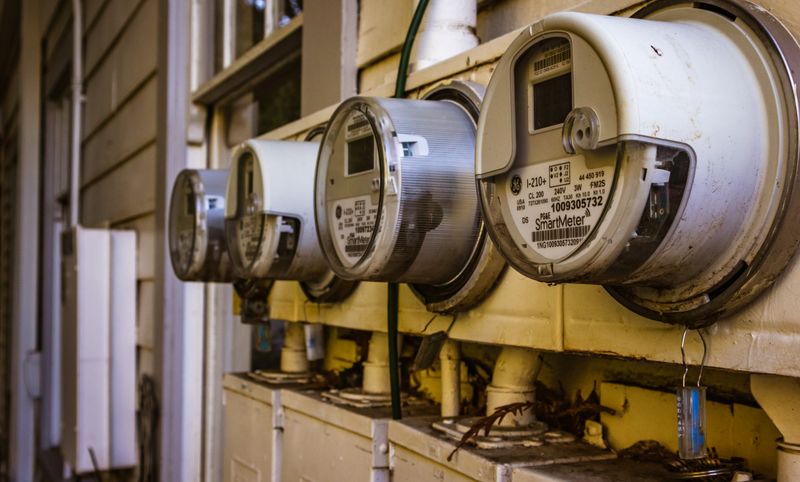
The target list reads like a catalog of unglamorous, high-volume connectivity. Smart utility meters, industrial sensors and controllers, asset and fleet tracking, payment terminals, building management systems, security devices and selected wearables. These are the connections that do not need gigabit speeds but do need years of unattended operation and a modem that costs less than the device it sits inside.
For operators, the appeal is consolidation. Instead of keeping LTE-based IoT running alongside 5G, they can progressively move use cases onto 5G Standalone and eventually refarm the LTE spectrum. For enterprises, it means one technology path, simpler device lifecycle management and the same security and service assurance tools they get on any 5G SA deployment. Al Humaidan framed the result as a credible path for utilities, manufacturers and logistics providers to scale connected devices while the industry waits out the long transition beyond LTE.
The market has already started moving
e& UAE's test did not happen in a vacuum. The Global mobile Suppliers Association, which tracks operator commitments, counted 42 operators across 27 countries actively investing in RedCap in April this year, up from 30 operators in 21 countries a year earlier. Its State of the Market report for April 2026 lists 392 operators with launched 5G networks and 95 with commercial 5G Standalone services, a 42 percent jump in SA launches since the first quarter of 2025. Standalone is the foundation RedCap needs, so that curve matters.
Commercial products have been shipping since 2024. China Mobile, China Telecom and China Unicom have led the way in China, joined by T-Mobile US and AT&T in North America, with Deutsche Telekom, Telefonica, SoftBank, M1, MasOrange, e& and Rogers among the operators making commitments. On the silicon side, Qualcomm's Snapdragon X35 and MediaTek platforms are feeding modules from Quectel, Fibocom and Telit Cinterion. ABI Research expects around 80 million cumulative RedCap module shipments between 2024 and 2029, with eRedCap taking the majority of later volumes. Ericsson's Mobility Report and GSMA Intelligence see broadband and critical IoT connections reaching 4.3 billion by 2030 as 2G and 3G sunsets push devices toward 4G and 5G.
What is still in the way
The road is not entirely smooth. Full 5G Standalone coverage is still expanding, and in many regions it is not yet the default. Device pricing has to fall further before eRedCap modules beat the incumbent LTE parts on total cost, and LTE is not going to vanish overnight. Some niches will stick with Cat-1 hardware for years. GSA's own analysts note those hurdles but expect RedCap to dominate the mid-tier of IoT over the next few years, with eRedCap driving the next wave of simplification once volumes build.
For readers following the broader shift in connected devices, eRedCap is worth watching for one reason: it is the first version of 5G that a utility accountant can justify. The economics line up with what operators and enterprises already have installed, which is why carriers like e& are pushing it onto live networks rather than leaving it in a standards lab. The test on Thursday was a small step in radio terms, but it marks the point where 5G-native IoT stops being a roadmap item and starts being a procurement choice. More deployments will follow this year as Release 18 devices reach the market and operators look for ways to keep their IoT revenue growing while LTE winds down.
Why the timing matters
The e& result lands at a moment when operators are hunting for the next source of IoT growth. The first wave of cellular IoT ran on 2G and 3G, and those networks are shutting down in most markets. The second wave moved to LTE, and it is still the workhorse, but the module economics have flattened. RedCap and eRedCap give carriers a third wave to sell: a native-5G product with a battery story that competes with LPWA. That is why GSA counts more than 40 operators investing in the technology barely two years after the first commercial products appeared.
It is also why the chip and module supply chain has mobilized. Qualcomm positioned its Snapdragon X35 as a RedCap modem from day one, and MediaTek has followed with platforms designed for the same mid-tier slot. Quectel, Fibocom and Telit Cinterion all carry RedCap modules in their catalogs, and certification bodies have been processing new device types at a steady clip. When a new radio standard gets that kind of supply-chain response, the deployments usually follow within a couple of quarters. Operators in China have already connected thousands of cameras and sensors in smart-city programs, and T-Mobile US shipped a RedCap hotspot through the TCL brand as an early commercial product. Samsung and Hyundai ran one of the first private-network RedCap deployments at the Hyundai plant in Ulsan, South Korea, covering vehicle inspection and factory automation.
For enterprises the practical question is simpler: what does a smart meter cost to keep connected for the next decade? On LTE the answer is a modem that will eventually need a forklift upgrade. On eRedCap the answer is a 5G-native module with five to ten years of battery life and a path through network slicing and the rest of the 5G-Advanced toolbox. e& UAE is betting that answer wins contracts in the Gulf, where its parent group runs networks across the Middle East, Asia and Africa. If the economics hold up in Dubai's meter fleets, competitors will copy the playbook quickly, because nothing about eRedCap is proprietary. It is a published 3GPP standard, and any operator with 5G Standalone can replicate the trial.
More coverage of connected devices and smart infrastructure
This article was compiled from the IoT Now report, the Developing Telecoms report and the GSA viewpoint on RedCap.