The global drone industry kicked off the final week of July 2026 with a trio of deals that show just how fast the market is evolving. A British startup locked down £4 million to inspect wind turbines autonomously. A Florida-based manufacturer launched an agriculture division for its heavy-lift drones. And Archer Aviation, fresh off its Farnborough airshow debut, unveiled a commercial autonomous VTOL built alongside defense contractor Anduril. Taken together, the three moves paint a picture of an industry that has moved past the experimental phase and into full commercial scaling.
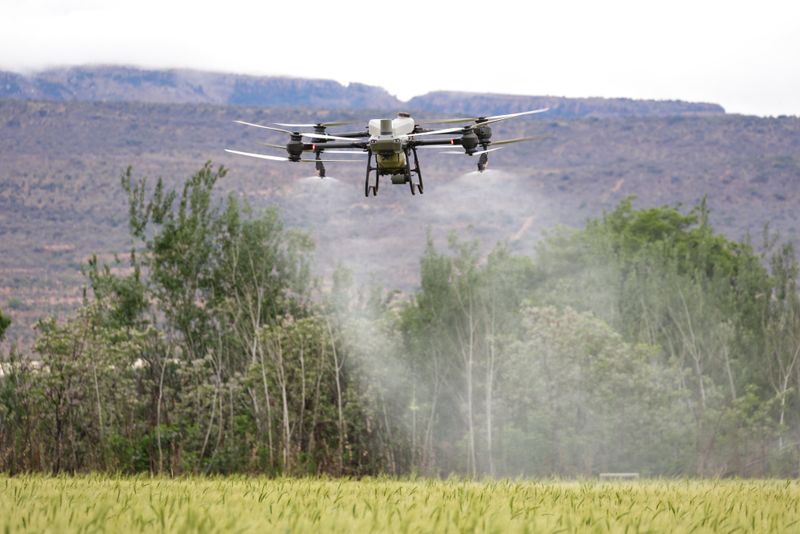
Perceptual Robotics Banks £4 Million for Wind Turbine Inspections
Bristol-based Perceptual Robotics has raised more than £4 million (about $5.3 million) so far in 2026 to expand its autonomous wind turbine inspection platform. The company announced the milestone on July 24. The round combines checks from returning investors Loggerhead Ventures and One Planet Capital, a new investment from Greek impact fund Investing for Purpose, and co-funded support from Innovate UK — the UK's national innovation agency.
Perceptual Robotics makes autonomous drones and AI software purpose-built for managing wind turbine blades. Its Dhalion DOT system and EVE mini-drone capture blade imagery in the field, then classify damage severity using a trained AI stack. The platform produces repair-ready reports and prioritizes fixes using what the company calls a Repair Now Ratio — a scoring system that tells operators which blades need attention first.
The company's tech is already deployed across Europe, North America, and Latin America. Perceptual Robotics drones inspect turbines from the forests of northern Sweden to Caribbean coastlines, covering some of the biggest turbines now in operation. The company says it operates in more than 18 countries and has processed more than 1 million images through its AI pipeline.
"This funding is a vote of confidence in the work our team has put in over the last few years, and in the direction we're taking the business," said Kostas Karachalios, chief executive of Perceptual Robotics, in a statement. "It gives us the resources to move faster on the products our customers are asking for."
Perceptual Robotics plans to use the fresh capital to speed up product releases, deepen its offshore inspection capabilities, and keep expanding internationally. The platform's development has been shaped by direct input from wind farm operators, service providers, and blade specialists — a feedback loop that's built directly into the company's autonomous inspection systems.
Powerus Launches Agriculture Division With Heavy-Lift Drones
On the same day, Florida-based Powerus announced it was launching a new agriculture division under its Kaizen Aerospace subsidiary. The company — which manufactures heavy-lift drones for both defense and commercial markets — has been quietly building toward this move since its founding in 2025.
Powerus's Dragon H1000 is the centerpiece of the new agriculture push. The eight-rotor UAV can carry payloads ranging from 100 to 1,000 pounds, making it one of the most capable heavy-lift drones built in the United States. Powerus co-founder and President Brett Velicovich told DroneLife that the company's U.S. manufacturing base in Charlotte, North Carolina gives it a clear edge in a market dominated by Chinese suppliers.
"These are aircraft that're manufactured in the United States. Typically, folks have had to reach out to China to be able to get anything that helps them save money," Velicovich said.
The agriculture division comes with two big partnerships. First, Powerus signed a deal with Sprig Aerospace, a veteran-owned Kentucky startup that builds next-generation aerial-application payloads and advanced agricultural analytics tools. Sprig will serve as the distributor and marketing partner for Powerus's xFold series of drones in the U.S. market, and has agreed to standardize its commercial spraying fleet around Powerus aircraft.
Second, Kaizen Aerospace signed a distribution agreement with New Zealand-based Aerospread Technologies worth an estimated $60 million over five years. Aerospread, a major manufacturer of agricultural aerial application equipment, will become the exclusive agent for Kaizen's heavy-lift xFold Dragon UAVs across Australia and New Zealand. Aerospread currently operates a fleet of fixed-wing aircraft for crop spraying, but sees drone technology as the next step for efficiency.
"That's what a number of agriculture companies need to start doing," Velicovich said. "They need to be able to remain competitive by constantly improving and adopting new technology, new software."
The Dragon H1000 has also cleared an important regulatory step: the FAA issued Sprig a special airworthiness certificate in the experimental category, plus a certificate of waiver for research-and-development flight operations. That lets Powerus and Sprig continue refining the platform as it moves toward full commercial deployment.
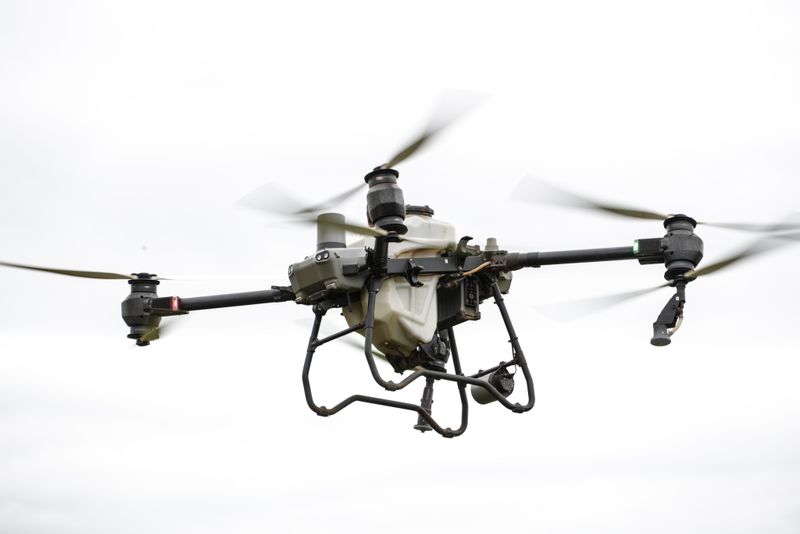
Archer and Anduril Launch Halo — a Commercial Autonomous VTOL
While Powerus and Perceptual Robotics work in the sub-1,000-pound drone segment, Archer Aviation went much bigger. At the Farnborough International Airshow on July 22, the company unveiled Halo, the commercial variant of a dual-use autonomous VTOL aircraft it developed alongside Anduril Industries.
Halo shares its airframe, hybrid-electric powertrain, and core systems with Thunder — a defense variant that Anduril revealed a day earlier. The clean-sheet design uses a series hybrid-electric powertrain paired with dual optimum-speed tiltrotors. Archer says the configuration delivers long range, high speed, heavy modular payload, full autonomy, and vertical takeoff and landing — a combination the company claims does not exist in any other unmanned aircraft today.
The platform builds on eight years of eVTOL development and flight testing that Archer originally advanced through its Midnight passenger eVTOL program. The tiltrotor design lets the aircraft vary rotor RPM to stay efficient at cruise speeds while keeping noise low for suburban operations. Archer says the platform is designed for low-cost, high-volume production using commercial supply chains, building on the manufacturing base developed with Stellantis in Covington, Georgia. The aircraft can also pack into a standard shipping container for ground, air, rail, or sea transport.
Archer named Marubeni Aerospace Corporation as Halo's first strategic launch partner. Marubeni is the aerospace arm of Marubeni Corporation, one of Japan's largest trading companies. The partnership will focus on market research, use case identification, and future introduction of the aircraft in Japan.
Satoru Nakagawa, president and chief executive of Marubeni Aerospace, said Halo's unmanned, autonomous flight capability addresses the cost and scheduling constraints that come with piloted cargo operations. "Combined with its excellent range, payload capacity and VTOL capability, [it] make it a highly suitable solution that we are pleased to introduce and support for our customers as a first strategic partner," he said.
What This Means for the Drone Industry
The three announcements aren't directly connected, but they share a common thread: each represents a different slice of the drone market that is finally reaching commercial maturity. Perceptual Robotics shows that specialized inspection drones can generate real recurring revenue from the renewable energy sector. Powerus proves that American-made heavy-lift drones can compete on price and payload with Chinese alternatives — especially in agriculture, one of the fastest-growing drone segments globally. And Archer's Halo demonstrates that the technology and manufacturing base built for passenger eVTOLs can be adapted for autonomous cargo missions that don't need a human on board.
For investors, the takeaway is that drone companies are no longer just selling hardware. Perceptual Robotics charges for inspections and AI damage analysis. Powerus sells aircraft but also distribution rights and spray-system integration. Archer is positioning Halo as a logistics platform, not just a flying machine. The business models are diversifying as fast as the aircraft themselves.
Perceptual Robotics will open up more markets offshore. Powerus expects its Australian and New Zealand distribution to ramp up through 2027. Archer expects more Halo launch partners by the end of this year. What changed? The technology works, the regulations are catching up, and customers — from wind farm operators to crop dusters — are ready to buy.
For more on the drone and robotics space, check out our Robotics and Drones coverage. You can also read about AI developments affecting autonomous systems and IoT integration in industrial drones.