Donut Lab's Solid-State Battery Hits 409 Wh/kg in Independent Test
A Finnish-Estonian startup's contested solid-state battery claim just cleared a major credibility hurdle. Donut Lab published independent test results showing its battery achieved 409 Wh/kg energy density, settling months of skepticism but leaving production timelines unresolved.
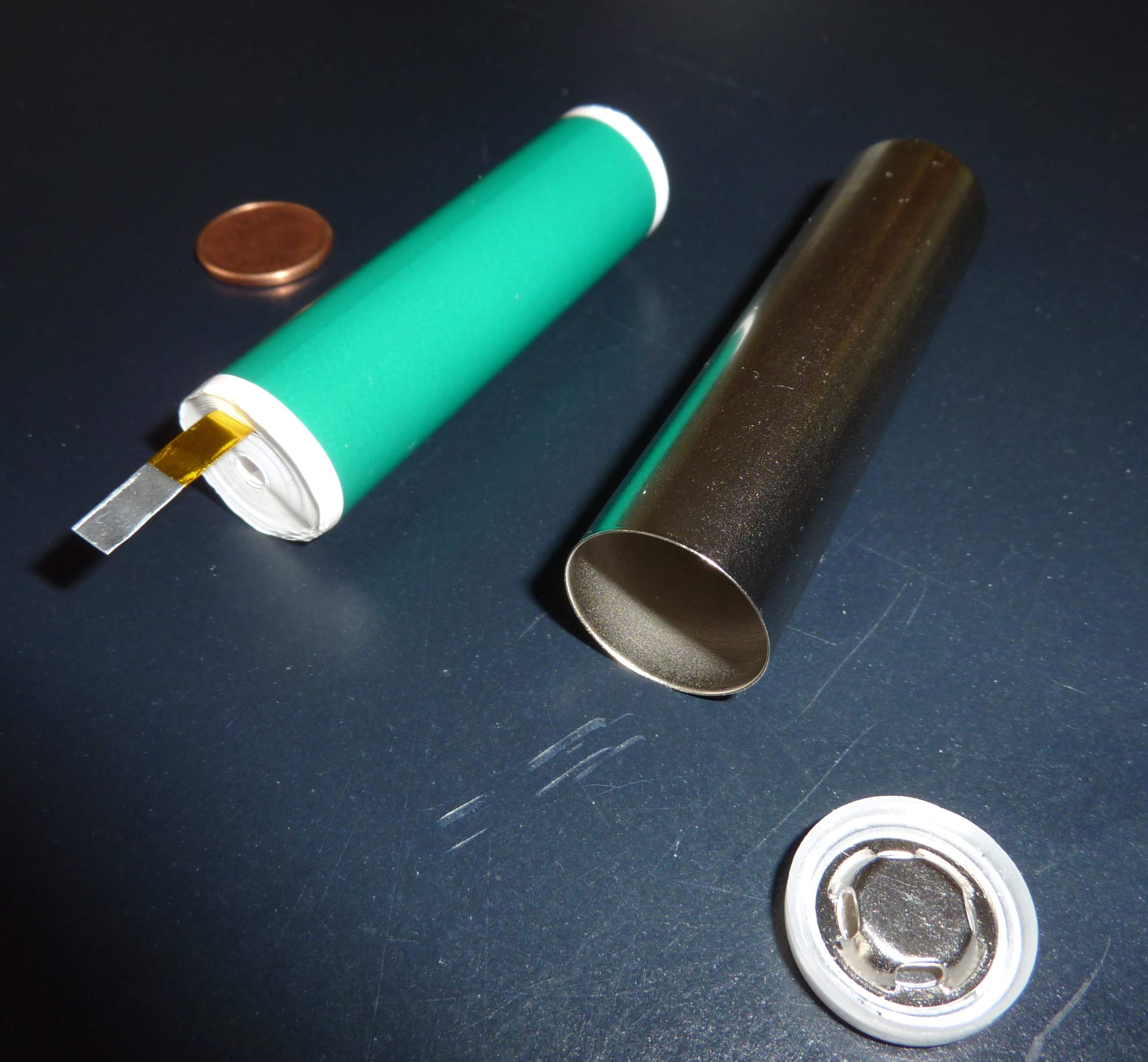
VTT Technical Research Centre of Finland measured a single Donut Lab cell—designated V1.5, sample DL6—and discharged it across its full 2.3–4.25V range at 0.1C and 25°C. The result: 409.3 Wh/kg gravimetric density and 804.7 Wh/L volumetric density.
The test validates Donut Lab's performance claims but doesn't resolve its biggest problem. The company promised production EVs running its battery by Q1 2026. It's now September, and no such vehicle exists.
Two Stories, One Battery
Coverage split sharply. CleanTechnica called the test "stunning performance" and argued disassembly footage proves solid-state construction. The outlet pointed to bipolar architecture as incontrovertible evidence—cells stacked directly within a single package without mechanical isolation between layers.
Electrek countered that 409 Wh/kg sits within advanced lithium-ion range and doesn't require solid-state chemistry at all. The publication noted that absent cycle-life data and production vehicles, credibility remains damaged.
The energy density figure itself isn't extraordinary. Amprius ships a conventional liquid-electrolyte silicon-anode cell rated at 450 Wh/kg. Commercial high-nickel cells from LG Energy Solution and Samsung SDI sit around 250–300 Wh/kg. QuantumScape, Toyota, and Samsung SDI target 350–450 Wh/kg with their solid-state pilots.
What set Donut Lab apart wasn't the number—it was the January claim that this technology was shipping in a production motorcycle within weeks. That's what warranted attention. Lab achievements are common. Production at scale is rare.
The company unveiled its battery at CES in January, billing it as "the world's first solid state battery that is ready for use in OEM vehicle manufacturing." Verge Motorcycles would be "the world's first production vehicle to feature this breakthrough technology," with "first deliveries in Q1 2026."
That claim—a solid-state cell not five years out, but shipping in a real vehicle within months—is the only reason the announcement drew coverage. Battery breakthrough announcements flood the industry weekly. Production-ready claims are different.

Bipolar Construction as Solid-State Proof
Donut Lab supporters point to bipolar architecture as proof the battery uses solid electrolyte. In bipolar construction, cells stack directly within a single package. Current flows through a thin depth over a large area, reducing resistance. Different layer counts produce different external voltages.
A liquid electrolyte can't maintain that isolation. Ions would shuttle freely between cells within the same package, shorting the stack. Bipolar operation requires a solid electrolyte that stays in place between cathode and anode.
Disassembly videos show repeated internal layers with no mechanical separation. Each layer connects electrically by direct stacking. CleanTechnica argues this construction is impossible with liquid electrolyte NMC chemistry, especially given the battery survived 100°C operation in earlier tests.
The bipolar design offers practical advantages. Fewer modules are needed in a pack. External conductors are reduced. The ratio of active material increases, lowering costs per kilowatt-hour. Energy density rises at both battery and pack level, even compared to cell-to-pack technology that skips the module assembly step.
Critics remain unconvinced. High energy density alone proves nothing about electrolyte type. A silicon-anode cell with conventional liquid electrolyte can hit similar numbers. Without cycle-life data showing the battery survives thousands of charge-discharge cycles, the commercial viability question remains open.
Process Innovation May Matter More
Beyond the chemistry debate, Donut Lab's manufacturing process drew less attention but could prove more disruptive. The company uses nanopaste silk-screen printing sourced from CT-coatings, a method that may eliminate sealed vacuum chambers and toxic solvent recovery systems required by legacy lithium-ion plants.
Legacy battery manufacturing relies on slurry coating processes. Electrode material mixes with toxic, flammable solvents like NMP. The slurry coats current collectors in large sealed rooms. Vapor recovery systems capture the solvents. The process demands high capital expenditure for containment and environmental controls.
Donut Lab says its batteries skip formation—the expensive final step where cells undergo first full charge to form the solid electrolyte interface layer. Batteries sit in warehousing racks for up to a week during formation. Space requirements are massive. Formation is the most capital-intensive part of conventional battery manufacturing.
A 1 GWh legacy factory costs around a billion dollars. Printed solid-state manufacturing without formation and containment rooms could cost an order of magnitude less, according to industry estimates. Combined with cheaper materials than NMC and widely available inputs, the process threatens established players with huge sunk costs that could become stranded assets.
If the printing method scales, it represents a fundamental shift in battery economics. Several companies now explore solid-state printing methods. Sakuu, based in California, pursues additive manufacturing for solid-state cells. The approach could democratize battery production by lowering entry barriers.
What's Still Missing
Two performance claims remain unverified: cycle life and -30°C energy retention. Those matter for commercial viability. A battery with high energy density but poor cold-weather performance or short lifespan won't displace existing technology.
Automotive applications demand batteries survive 1,500–3,000 cycles with minimal capacity fade. Grid storage demands 4,000–10,000 cycles. Consumer electronics need 500–1,000 cycles. Donut Lab hasn't published cycle-life data.
Cold-weather performance matters equally. Batteries lose capacity at low temperatures. Internal resistance rises. Charging becomes difficult or impossible below certain thresholds. Electric vehicles in northern climates lose 30–40% of range in winter with conventional lithium-ion. Solid-state batteries promise better cold performance, but that claim requires testing.
The production timeline matters more. Verge Motorcycles was supposed to ship Donut Lab batteries in Q1 2026. Company videos later revealed those "production" motorcycles were pre-production units used to refine manufacturing. CEO Marko Lehtimäki admitted in Finnish media the tested cell "is not even the cell that's going to be shipped to customers."
That's a credibility problem test results can't fix. Independent measurements confirm the battery works. They don't confirm it scales to mass production, meets cost targets, or survives automotive durability standards. The gap between lab performance and volume manufacturing has killed many battery startups.
Competing Technologies Press Forward
While Donut Lab defends its claims, sodium-ion batteries moved from lab to field deployment. CATL launched its TENER Sodium Energy Storage System in June—the first field-validated sodium-ion BESS, offering 15,000-cycle lifespan and 30-year durability for grid storage.
Sodium-ion chemistry trades energy density for other advantages. CATL's system uses abundant sodium instead of scarce lithium. The batteries don't rely on cobalt or nickel. They're safer—thermal runaway risk is lower. Cost per kilowatt-hour drops significantly.
ESS Tech introduced Bridge in July, a 1.2-MWh modular sodium-ion platform targeting data centers and utilities. The system uses Alsym's non-flammable NFPP chemistry. No lithium, no cobalt, no nickel. The cells operate in a wider temperature range without active cooling.
Sodium-ion systems won't power long-range EVs. Energy density sits around 150–160 Wh/kg, roughly half what high-nickel lithium-ion delivers. But grid storage and backup power don't need 400 Wh/kg. They need reliability, low cost per cycle, long calendar life, and safety. Sodium-ion delivers on those metrics.
Hyundai separately confirmed plans to deploy mid-nickel NCM cells to cut EV battery costs 30% by optimizing cathode chemistry. The approach doesn't wait for solid-state breakthroughs. It extracts more performance from existing lithium-ion technology through incremental chemistry improvements.
The battery industry isn't standing still waiting for solid-state to arrive. This story extends our ongoing Battery Tech coverage of chemistry transitions and grid-scale storage. Multiple paths forward are being pursued simultaneously. Some optimize existing chemistries. Others explore entirely different chemistries for specific applications. The winner might not be a single technology but a portfolio matched to use cases.
The Verdict Remains Incomplete
Donut Lab cleared one bar: independent measurement. The 409 Wh/kg figure is real and verified by a respected testing lab. Bipolar construction suggests solid-state architecture, though critics say it's not definitive proof of the electrolyte type.
The company failed a bigger test. It promised production-ready technology and didn't deliver. Breakthrough battery announcements flood the industry monthly. What matters is whether the breakthrough leaves the lab, survives manufacturing scale-up, hits cost targets, and ships in real products customers can buy.
VTT's measurement matters. It confirms the cell performs as claimed under test conditions. But one test doesn't answer the questions investors, automakers, and customers need answered. Can the battery be manufactured at scale? Does it survive thousands of cycles? Does it work in Minnesota winters? What's the cost per kilowatt-hour at volume?
Until Donut Lab batteries power vehicles customers can buy, the credibility gap remains. Independent testing closed one chapter of the controversy. It opened another: when does a tested battery become a product?