Chinese EV Brands Take a Record 14.2% of Western Europe's Battery-Electric Market — and the Tariff Fight Is Only Starting
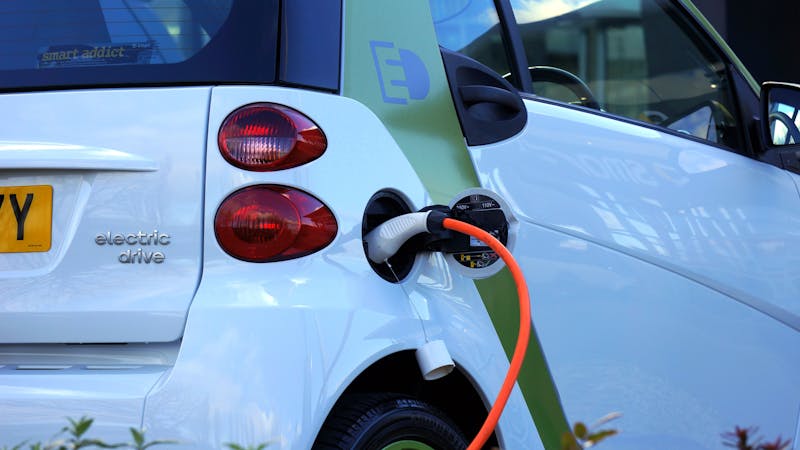
Chinese carmakers sold a record share of Europe's battery-electric cars in the first five months of 2026, and the numbers are putting trade policy back under the microscope.
New data from Schmidt Automotive Research, a Germany-based consultancy that tracks registrations across the 18 largest Western European markets, shows Chinese brands accounted for 14.2% of all battery-electric vehicle (BEV) sales between January and May. That works out to 171,800 cars — roughly one in every seven EVs sold in the region. A year earlier, the same group of brands held under ten percent.
The surge lands at a delicate moment. European manufacturers are being pushed by stricter emissions rules to sell more electric cars of their own, and they face Chinese rivals arriving with cheaper models, bigger lineups, and — in some countries — subsidies that European brands cannot touch.
UK and Italy open the door
The UK has become the single biggest entry point for Chinese EVs, because London has refused to follow Brussels in adding anti-subsidy duties. British buyers took about 26% of all Chinese-brand BEV registrations across the 18 markets tracked by Schmidt. Italy sits close behind at roughly 20%, although analysts there point to an unusual story.
Much of Italy's spike traces to one model: Leapmotor's tiny T03. The company pushed thousands of the cheap city cars into the country to ride a government purchase-subsidy scheme, and at one stage the T03 retailed for as little as €5,000 after the incentive. Schmidt founder Matthias Schmidt calls the Italian figure an "anomaly" — a subsidy-driven burst rather than organic demand.
Elsewhere, the pattern is broader. BYD, Chery, SAIC, and Xpeng have all built out European sales operations, and the sheer number of nameplates tells part of the story. Chinese manufacturers have sold more than 120 distinct models in Europe this year, against roughly 100 from European brands. No single model dominates; only one Chinese car — Leapmotor's T03 — finished inside the top 20 most-registered EVs of the period, and BYD's Dolphin Surf was the next-best performer at around 14,000 units.
Tariffs are not stopping the flow
All of this is happening with duties already in place. The EU applies up to 35.3% in extra countervailing duties on BEVs from some Chinese manufacturers, stacked on top of the standard 10% import tariff. Sales have climbed anyway, which is precisely why industry groups in Europe are calling for quotas and higher barriers, and why the debate over "dumping" state-subsidised vehicles keeps resurfacing.
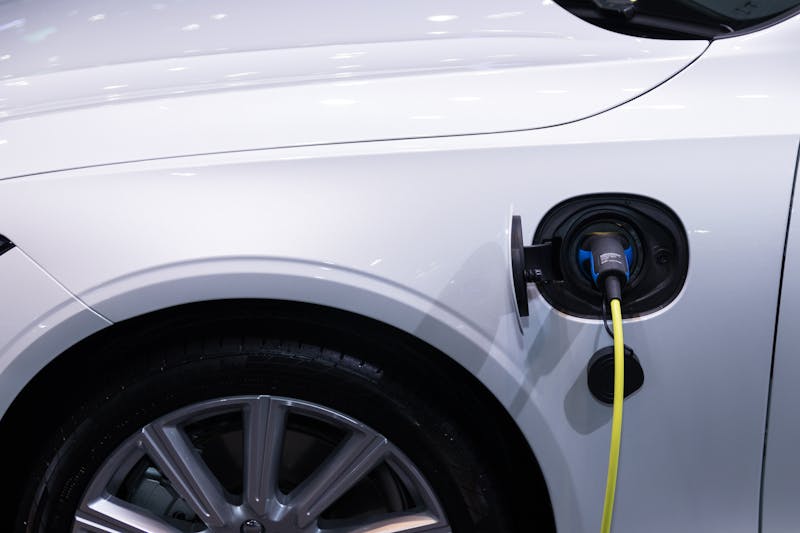
Volkswagen chief executive Oliver Blume added his voice last month, saying European plug-in hybrids are uncompetitive against Chinese equivalents and calling for action. German newspaper Handelsblatt has reported the European Commission is looking at extending the levies to PHEVs, which currently dodge the extra duties because the anti-subsidy measures were written around pure EVs.
That loophole is the next battleground. Schmidt predicts Chinese makers will pivot toward plug-in hybrids over the next year to keep exploiting it, since hybrids are still exempt from the additional tariffs. "I think they are hitting a wall when it comes to pure electric models," he told The Guardian. "They will prioritise PHEVs over the next 12 months given hybrids are omitted from extra tariffs placed on BEVs only."
The tariff pressure is not new, but the record sales figures give the debate fresh ammunition. European automakers have argued for years that Chinese rivals benefit from state support at home, from cheap credit to land grants and export incentives, and that flooding the EU market with subsidised cars threatens jobs in the bloc's industrial heartland. The counter-argument, heard just as often inside the industry, is that tariffs push up prices for buyers and slow the very transition European governments say they want to accelerate. Both positions now have a new data point to point at: 171,800 Chinese-brand BEVs registered in five months, at prices European incumbents have struggled to match.
There is also a UK-specific twist. Because London has not matched Brussels with extra duties, British dealers have become a funnel for Chinese electric cars, and the Institution of Engineering and Technology reported the UK took a 26% share of Chinese EV imports across the 18 largest Western European markets. Some industry figures in Britain want the government to reconsider its hands-off stance; others argue cheap EVs are exactly what UK buyers need to meet the country's own 2030 new-car sales rules. The political argument is unresolved, but the traffic through UK ports is not in dispute.
Tesla's rebound complicates the picture
The other headline from the Schmidt data is Tesla's recovery. Registrations of the American brand's cars rose about 60% year-on-year across the period, helped by cheaper Standard versions of the Model 3 and Model Y. The Model Y was the best-selling single model in Europe during the stretch, according to the consultancy. Schmidt's numbers put Tesla's regional market share at 2.6% in the second quarter, up from 1.7% a year earlier, even as the combined share of all US brands slipped to 6.5%.
Tesla's bounce-back matters for two reasons. It pulls buyers back to a US brand after a bruising 2025, when the company's political entanglements cost it sales in several European markets. And it adds pressure on European incumbents — VW, Stellantis, Renault, BMW — who are now fighting Chinese imports on the cheap end and a resurgent Tesla on the volume end at the same time.
The market itself keeps growing. Schmidt forecasts total European EV sales of about 3.07 million units in 2026, which would put battery-electric cars at roughly one in four new registrations, a 25.1% share. The consultancy expects EVs to pass 40% of new-car sales by 2030, supported by sustained fuel prices, local factory production from Chinese firms coming online, and a wave of cheaper compact EVs from European manufacturers.
Local production is the next chapter
The strategic response on both sides is shifting from shipping to building. Chinese makers are increasingly localising: Leapmotor has deepened its ties with Stellantis, including using a Spanish plant for EU production, and Geely announced plans in July to buy a 34% stake in a Ford plant in Spain for €221 million to speed up its localisation. BYD launched two Denza luxury models in Europe this spring and has said it wants roughly 3,000 of its fast-charging stations across the region by March next year.
The numbers behind the Chinese push are worth holding onto. BYD, China's market leader, delivered 91,500 units in the second quarter and took a 2.8% share of Western European sales — enough to pass Tesla and the SAIC-owned British badge MG in the same period. The South China Morning Post, which also ran the Schmidt figures, noted the combined Chinese share of new-car sales across the 18 countries reached 10.7% in the second quarter, up from 5.7% a year earlier.
Local assembly changes the tariff math entirely. Cars built inside the EU sidestep the anti-subsidy duties, which is one reason Schmidt argues pure-BEV exports from China may have peaked for now. "Given shipping capacity remains limited, more PHEVs means fewer BEVs, which have likely peaked for now," he said. "BEVs will take priority again once local EU production comes online."
For European policymakers, the record 14.2% is a warning shot. The share climbed nearly five percentage points in a single year even with tariffs in force, and the next twelve months will show whether the PHEV loophole gets closed — and whether local factories let Chinese brands keep their momentum either way.
The verdict from the data is simple: the Chinese EV push into Europe is not a passing wave. It is a structural shift in the market, and the policy tools used so far have only slowed it down.
Related coverage
- EV category — more on electric vehicle sales, policy, and market shifts
- Battery Tech — battery supply and technology news
- Semiconductors — chips and supply chains behind the EV boom