CATL Signs Second Sodium-Ion Storage Deal in Europe Within a Week as China's New Battery Tax Gives Sodium a Policy Edge
CATL has signed its second sodium-ion energy storage agreement in Europe in as many weeks, this time with Eastern European renewable energy company Solarpro for 2 gigawatt-hours of Tener Sodium storage systems. The deal comes just days after China announced a consumption tax overhaul that exempts sodium-ion and solid-state batteries from levies applied to conventional lithium-ion cells — a double boost for the emerging chemistry.
The Solarpro agreement covers deployment of central and eastern Europe's first large-scale sodium-ion energy storage project, which the companies say will begin construction this year. CATL unveiled the Tener Sodium system on June 22, calling it the industry's first field-validated sodium-ion battery energy storage solution. Each unit packs more than 30 megawatt-hours of capacity and supports discharge durations from one to eight hours.
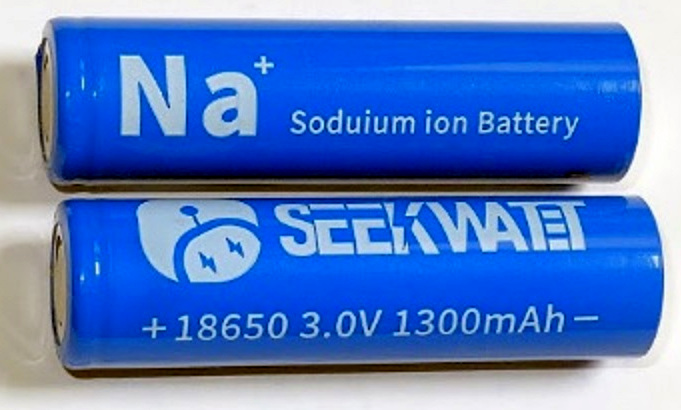
The Tener Sodium system's 15,000-cycle life and 25-to-30-year service window make it a direct competitor to lithium-ion iron phosphate (LFP) storage systems that currently dominate the grid-scale market. CATL says the system retains 92% of its capacity at minus 20 degrees Celsius, an important performance spec for deployment in Eastern European countries like Lithuania, where winter temperatures routinely drop to minus 15 to minus 20 degrees.
This isn't CATL's only play in Europe this month. Last week the company signed a memorandum of understanding with Dutch energy firm Alfen to deploy 5 GWh of sodium-ion storage in western Europe starting in 2027. Between the two deals, CATL has locked in 7 GWh of European sodium-ion offtake in the span of ten days — a pace that surprised industry watchers and suggests the technology has cleared the commercial threshold.
Why Sodium Is Suddenly Everywhere
Sodium-ion isn't new — researchers have tinkered with it since the 1970s — but three things changed in 2025 and 2026 to make it commercially viable. First, CATL cracked the cycle-life problem, pushing Tener Sodium past 15,000 cycles in field trials. Second, lithium carbonate prices swung from $80,000 per ton in late 2022 to below $10,000 by mid-2025, then back up to $18,000 this quarter, spooking buyers who want stable supply costs. Third, the Chinese government made an explicit policy choice to tax lithium and exempt sodium, tilting the economics in sodium's favor.
The supply-chain logic is hard to argue with. Sodium is the sixth most abundant element in the Earth's crust and is extracted from common sea salt. There's no geopolitical concentration risk — China controls roughly 70% of lithium refining but sodium refining is a non-issue because you can source it anywhere. For European buyers already nervous about supply-chain dependence on China, that matters. Even though the cells are still made in China's Fujian factory, the raw material won't be weaponized the way lithium and rare earths have been.
China's Battery Tax Rewrites the Economics
On July 18, China announced it would reinstate a consumption tax on lithium-ion batteries while exempting sodium-ion and solid-state technologies, according to reporting from Caixin Global. The policy shift is part of Beijing's broader strategy to redirect incentives away from an oversupplied, margin-squeezed lithium battery sector and toward next-generation power sources.
The math changes fast when your competitor pays a consumption tax and you don't. Lithium battery makers in China now face higher manufacturing costs at a time when overcapacity has already pushed factory-gate prices down 40% from 2023 peaks. Sodium-ion enjoys a raw-material cost advantage — sodium is roughly 1,000 times more abundant than lithium in the Earth's crust and extraction costs are negligible — and now it dodges the tax too.
Industry analysts at BloombergNEF estimate sodium-ion batteries could claim 10% of the global stationary storage market by 2029, up from effectively zero in 2024. CATL founder Robin Zeng has been more bullish, saying sodium-ion could eventually replace 30% to 40% of existing battery demand. If the tax policy holds, that transition may happen faster than even the optimists expect.
CATL is putting real money behind the bet. The company announced a 5 billion yuan ($736 million) investment to build 40 GWh of sodium-ion production capacity in Fujian province. Initial deliveries start in China this September, with the company expecting shipments to reach 1 GWh by the end of 2026. Global commercial deliveries begin in June 2027. CATL says the Fujian factory will be one of the largest dedicated sodium-ion cell production sites in the world when it reaches full capacity.
The Tener Sodium system is mechanically compatible with lithium-ion system dimensions, meaning utilities can swap between the two chemistries without redesigning their installation. That compatibility lowers the switching cost for operators who want to test sodium-ion without committing to an entirely new infrastructure stack — a design choice that CATL made deliberately to accelerate adoption.
Solarpro Isn't a Newcomer to CATL's Ecosystem
CATL and Solarpro have been working together since 2024, when they deployed a 150 MWh EnerC+ liquid-cooled energy storage system in Bulgaria. In May of this year, a 602 MWh Tener lithium-ion system built jointly by the two companies came online in Bulgaria, boosting the country's total grid storage capacity by 10%. That existing relationship gave Solarpro firsthand experience with CATL's hardware quality, commissioning timelines, and after-sale support.
That track record greased the skids for the sodium-ion deal. Solarpro knows CATL's systems, knows the approval timelines in Eastern European markets, and has a pipeline of renewable projects that benefit from long-duration storage. Eastern Europe's grid is undergoing a rapid solar buildout — Bulgaria alone added 1.2 GW of solar capacity in 2025 — and storage is the missing piece that turns intermittent generation into dispatchable power.
The Bulgarian connection is also strategically interesting. Bulgaria sits at the intersection of European Union energy policy and non-EU Balkan markets. A successful sodium-ion deployment there could open doors to Romania, Greece, Serbia, and further east into Ukraine's reconstruction effort, which will need massive amounts of grid storage as the country rebuilds its energy infrastructure.

The broader context: global energy storage installations are growing faster than most forecasters predicted. The International Energy Agency reported in early 2026 that utility-scale battery storage makes up roughly 80% of all new battery capacity additions, and that number is climbing. Europe alone added 10.1 GWh of new grid storage in 2025, and the pace is accelerating as renewable penetration crosses the 50% threshold in several member states. Spain and Germany are both on track to double their battery storage fleets in 2026.
Sodium-ion's lower energy density — roughly 120 to 140 watt-hours per kilogram compared to LFP's 160 to 180 — matters less in stationary storage, where physical footprint is cheap. What counts is cycle life, safety, and upfront cost per kilowatt-hour. On all three, sodium-ion is either competitive or ahead. The batteries don't enter thermal runaway the way lithium-ion cells can, and they operate across a wider temperature window without requiring active cooling or heating. That translates to lower balance-of-system costs for project developers.
Residential Sodium Ion Joins the Mix
While CATL focuses on utility-scale, a smaller California startup called UNIGRID is bringing sodium-ion to homes. The company shipped the first units of its Na+Casa residential battery in early July, with initial installations in Europe. The 9.25 kilowatt-hour wall-mounted system is designed to last 25 years, matching the lifespan of a typical rooftop solar array.
UNIGRID says the battery eliminates the risk of thermal propagation — the chain reaction that lets battery fires jump from one cell to another in a catastrophic failure. While modern lithium-ion home batteries already include multiple layers of safety protection, the sodium-ion chemistry provides inherent safety that doesn't rely on active management systems. The battery operates in temperatures from minus 40 to 60 degrees Celsius, making it useful in climates where lithium-ion batteries lose capacity or need thermal conditioning.
UNIGRID is currently producing 200 megawatt-hours worth of cells per year. The company plans to boost that to 2 gigawatt-hours annually in 2027 through manufacturing partnerships in China, South Korea, and Japan. US installations are expected by the end of 2026, pending certification from North American safety authorities. The residential market is smaller than grid storage — roughly 15 GWh installed globally in 2025 — but it's growing at 40% per year and sodium-ion's safety pitch could be the differentiator that wins over homeowners.
What Comes Next
CATL expects at least 10,000 to 20,000 electric vehicles to carry its sodium-ion cells this year, according to company executives. The automotive push is further along than many realize: Chinese EV makers including BYD have already announced sodium-ion battery packs for entry-level models, and at least two mass-production vehicles with sodium-ion cells are expected on the road before year-end. The lower energy density is less of a drawback in small urban EVs where range expectations are modest, and the cost savings are passed directly to consumers.
For grid storage, the pipeline is even fuller. CATL's HyperStrong supply agreement from April covers 60 GWh over three years and remains the industry's largest sodium-ion commitment by a wide margin. Add the two European deals from July — 5 GWh for Alfen, 2 GWh for Solarpro — and Tener Sodium production capacity is effectively sold out through late 2027 before the factory in Fujian even breaks ground.
The tax incentive from Beijing seals the direction. China's message is unambiguous: lithium-ion has reached industrial maturity and no longer needs consumer-tax exemptions. Sodium-ion and solid-state are the priority technologies for the next decade. For a battery industry that already controls 80% of global cell manufacturing, that signal carries weight well beyond China's borders.
Grid operators in Europe, India, and Southeast Asia are watching closely. If sodium-ion delivers on its 25-year lifespan at the prices CATL is quoting — reportedly 15 to 20 percent below equivalent LFP systems on a levelized cost basis — the technology could become the default choice for new storage projects within five years. The Solarpro deal is the latest proof that the transition is already underway, and the policy tailwind from Beijing suggests it will accelerate from here.
Battery Tech · EV · Semiconductors
Sources: CnEVPost — CATL Solarpro sodium-ion deal, Caixin Global — China battery tax, Electrek — UNIGRID sodium-ion home battery, CATL Tener Sodium launch