China's battery maker CATL reported a better-than-expected first-half net profit of 43.28 billion yuan ($6.38 billion), up 42% from a year earlier, as its energy storage business nearly doubled in revenue and electric-vehicle battery shipments kept climbing despite a slowing domestic car market.
The company's total revenue hit 276.92 billion yuan during the first six months of 2026, a 54.8% jump from the same period last year. Second-quarter net profit alone reached 22.5 billion yuan, beating analyst estimates and pushing the stock to a two-month high on the Shenzhen exchange.
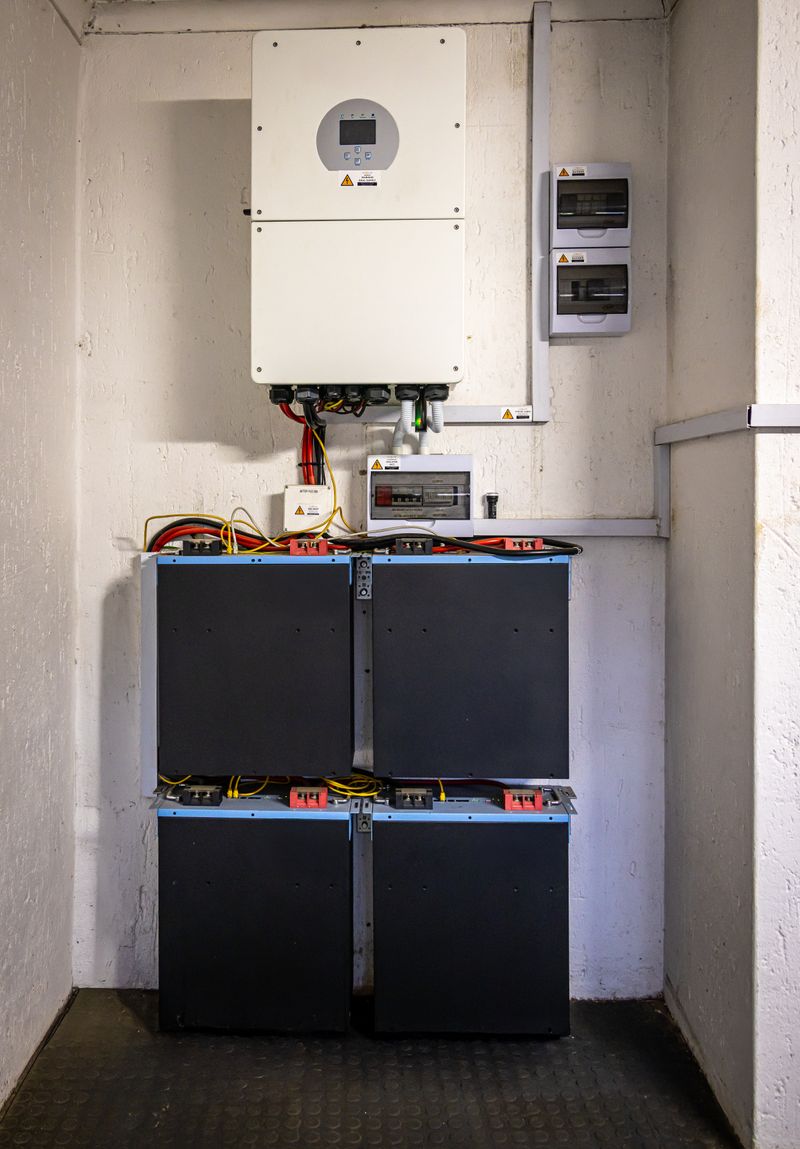
Energy storage battery revenue surged 87.5% to 53.26 billion yuan, now making up 19.2% of total revenue. CATL says its storage battery shipments ranked first globally for the period, citing data from Chinese research firm ICCSino. The segment's gross margin came in at 23.96%, down 1.56 percentage points but still above the company's EV battery margin.
"A record first half confirms that energy storage is becoming a second engine for CATL, not just an add-on to its EV battery business," said Li Chen, an analyst at Shanghai-based New Energy Research. "Storage is growing faster and earning better margins than the core EV business right now."
How CATL's EV Battery Business Held Up
CATL's electric-vehicle battery division remains the biggest revenue driver, bringing in 192.12 billion yuan, up 46% year-on-year. The company said its share of global EV battery usage reached 40.2% in the first five months of 2026, gaining 2.2 percentage points from the same period last year.
That growth came despite a price war in China's EV market that has squeezed suppliers across the board. CATL's EV battery gross margin fell 1.78 percentage points to 20.63%, reflecting the pricing pressure that has become the norm in the world's biggest auto market.
Battery materials, recycling, and mineral resources delivered 18.81 billion yuan in revenue, up 67.2%, with gross margin rising 5.81 percentage points to 27.04%. The company processed more than 525 GWh of battery system capacity during the half, operating its production lines at 94.86% utilization — close to full capacity.
Energy Storage Is the Growth Story
The 87.5% storage revenue jump is the headline number, but the pipeline data tells the bigger story. CATL ended the period with 525 GWh of battery system capacity in operation and 764 GWh under construction. First-half output hit 498 GWh, meaning the company is already running near capacity and needs the new lines to keep pace with demand.
Overseas revenue rose 42.4% to 87.13 billion yuan, representing 31.5% of total sales. The international business earned a 29.97% gross margin, well above the 21.16% CATL makes at home, underlining the higher profitability of serving automakers and storage developers outside China.
The company is expanding localized production in Hungary, Spain, Indonesia, and Germany, aiming to bypass trade barriers and shorten delivery times for overseas customers. Research and development spending climbed 12.7% to 11.38 billion yuan during the reporting period.
CATL Announces Record Share Buyback
Alongside the earnings, CATL proposed a buyback of between 20 billion yuan and 40 billion yuan of its Shenzhen-listed shares — the largest single repurchase program ever announced in China's A-share market. The shares will be canceled to reduce registered capital, subject to shareholder approval.
The company also proposed an interim cash dividend of 14.11 yuan per 10 shares, for a total distribution of roughly 6.49 billion yuan, equivalent to 15% of first-half net profit.
China's New Battery Tax Reshapes the Playing Field
The earnings report landed just days before one of the biggest policy shifts for China's battery industry in over a decade. Starting September 1, 2026, Beijing will impose a 2% consumption tax on lithium-ion batteries — the first time the industry has been taxed in 11 years. The rate rises to 4% in September 2027.
Sodium-ion batteries, solid-state cells, and fuel cells are exempt through the end of 2028, a clear signal that Beijing wants to redirect investment toward next-generation chemistries while collecting revenue from a lithium-ion industry it spent a decade building.
The 2% tax adds roughly 400 to 1,200 yuan ($60 to $180) to the cost of a battery-electric car, according to Sina Auto estimates. On a 150,000-yuan vehicle, that's 0.3% to 0.8% of the sticker price — not enough to change buying behavior, analysts say, but the direction of travel matters.
"Beijing is drawing a clear line between what it considers mature and what still needs protection," said Ren Wei, a policy analyst at the China Energy Storage Alliance. "Lithium-ion is now a cash cow, not a seedling. The proceeds from taxing it will fund the next generation of chemistries."
A second, quieter policy change may have a bigger impact. VAT export rebates on batteries were cut from 9% to 6% in April 2026 and go to zero on January 1, 2027, removing the subsidy that let Chinese-made lithium-ion cells undercut competitors in export markets. China produced 1,068.9 GWh of EV and energy-storage batteries in the first six months of 2026, up 53.3% year-on-year, and exported $48.7 billion worth of lithium batteries alone during the period, according to Reuters.
What the Tax Means for Global Battery Markets
The end of China's lithium-ion tax holiday comes at a moment when battery prices have already been falling sharply. Lithium-ion battery pack prices dropped in all regions and for all applications in 2025-2026, especially for energy storage systems where LFP chemistry dominates. The IEA reports that LFP batteries now account for around 90% of grid storage deployments.
For global automakers and storage developers that buy Chinese cells, the tax adds a small cost at a time when battery oversupply has been pushing prices down. CATL's 42% profit jump, despite the margin compression in EV batteries, shows the scale advantage that makes even a 2% tax manageable for the largest producer.
"CATL operates at a scale where a 2% tax is a rounding error," Li Chen said. "The same can't be said for smaller producers. This tax will accelerate consolidation, pushing capacity toward the top three or four players that have the volume to absorb it."
The combined message from CATL's earnings and the new tax regime is clear: lithium-ion battery production has reached industrial maturity. China's battery major is now large enough, and profitable enough, to pay taxes, issue record buybacks, build half a trillion yuan in new capacity, and fund the next generation of battery chemistry — all at the same time. To learn more about the battery technology sector, check out our Battery Tech coverage.