The world's largest battery maker has crossed the threshold from lab to assembly line. Contemporary Amperex Technology Co. Ltd (CATL) has begun mass production of its Naxtra sodium-ion battery, the first cell of its chemistry slated for passenger cars with a pure-electric range of up to 600 kilometres. The launch vehicle is a Changan sedan that rolled off the line in Yakeshi, Inner Mongolia, last month -- a milestone that moves sodium-ion from promise to product.
According to Gao Huan, CTO of CATL's China E-car business, the arrival of sodium-ion technology marks the beginning of a dual-chemistry era. Sodium and lithium will complement each other rather than compete, he said at the Changan SDA Intelligence Milestone Release in February. CATL will supply Naxtra across Changan's full portfolio including Avatr, Deepal, Qiyuan, and UNI brands. The company plans more than 3,000 Choco-Swap battery-swap stations across 140 Chinese cities by year-end, with over 600 in the colder north where sodium-ion's cold-weather edge matters most.
Why sodium-ion matters now
Lithium-iron-phosphate (LFP) batteries have dominated the affordable EV segment, but lithium carbonate prices swung wildly in 2022-2024 and supply chains remain geographically concentrated. Sodium is abundant in seawater and rock salt, and CATL says Naxtra is 30 to 40 percent cheaper to produce than equivalent LFP packs. The trade-off has always been energy density: Naxtra delivers up to 175 Wh/kg at the cell level, versus 180-200 Wh/kg for typical LFP. But CATL's cell-to-pack architecture and an intelligent battery management system close much of that gap at the pack level, and the company projects 500-600 km range for pure-electric variants as the supply chain matures.
The cold-weather numbers are the real differentiator. Naxtra delivers nearly triple the discharge power of equivalent LFP at -30°C and retains over 90 percent capacity at -40°C. In crushing, drilling, and sawing tests the battery stayed smoke- and fire-free, a safety profile that could simplify pack engineering and reduce warranty costs. For northern Europe, Canada, and China's northeast, that is a selling point no LFP cell can match.
Wu Kai, CATL's chief scientist, said earlier manufacturing bottlenecks have eased and mass production can now begin. The sodium-ion batteries are destined for passenger vehicles, commercial vehicles, battery-swapping networks, the national grid, and stationary energy storage. That breadth of application is intentional: sodium-ion's lower energy density matters less in grid storage and swapping stations where volume and weight are less constrained than in a sedan's floorpan.
A decade of R&D pays off
CATL began sodium-ion research in 2016, investing nearly 10 billion renminbi and building a team of more than 300 engineers including 20 PhDs. They ran nearly 300,000 test cells before the first production batch. The Naxtra cell uses a Prussian-white cathode material and a hard-carbon anode -- both drop-in compatible with existing lithium-ion electrode coating lines. That manufacturing compatibility is why CATL can scale fast: the same roll-to-roll coaters, dryers, and slitting machines that make LFP electrodes can make sodium-ion electrodes with only recipe changes.
The Changan partnership also solves the demand side. Changan sold 2.68 million vehicles in 2024 and has committed to equipping its entire new-energy lineup with sodium-ion options. Precedence Research estimates the global sodium-ion market will grow from $1.39 billion in 2025 to $6.83 billion by 2034. CATL's 46.6 percent share of China's battery market gives it the scale to drive that growth.
Beyond Changan, CATL has detailed development of lithium-air battery technology, which deploys a lithium negative electrode and atmospheric oxygen as the positive reactant. The open-cell architecture draws oxygen directly from the atmosphere rather than relying on a heavy chemical host inside a sealed pack. The reaction produces lithium peroxide, which analysts say could maximize energy density beyond even solid-state batteries. Some predict lithium-air cells could ultimately become the true successor to LFP batteries. The attraction is that, in addition to reducing weight, it should also be substantially cheaper to produce aside from the cost of sourcing lithium.
Manufacturing at scale: the roll-to-roll advantage
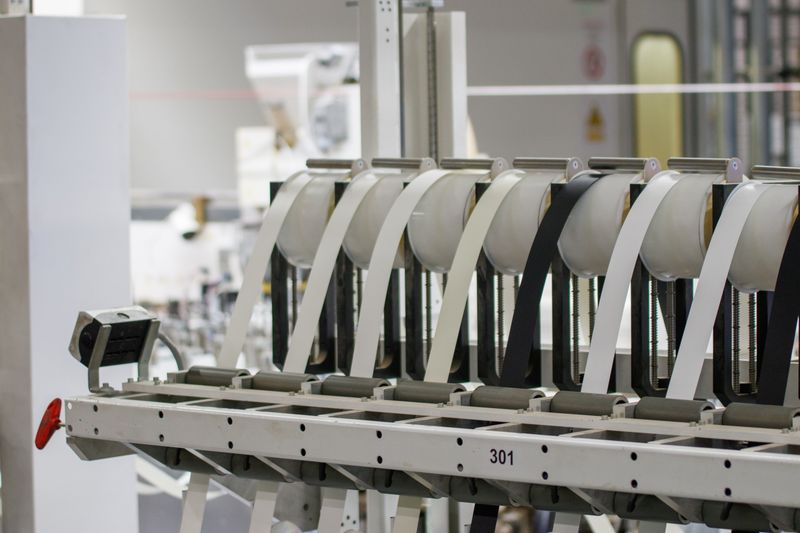
The production line in Yakeshi repurposes CATL's existing LFP electrode coating infrastructure. A 1.4-meter-wide coater runs at 80 meters per minute, laying down Prussian-white cathode slurry on aluminium foil and hard-carbon anode slurry on copper foil. After drying, slitting, and stacking, the cells enter a formation cycle that takes 14 days -- shorter than the 21 days typical for NMC chemistries because sodium-ion's voltage window is narrower and less prone to side reactions. CATL says yield rates on the pilot line exceeded 98 percent, a figure that would be considered mature for any lithium-ion chemistry.
The cell-to-pack design eliminates the module layer, saving 15 percent in pack weight and 20 percent in assembly cost. Thermal management uses a direct-liquid-cooling plate that contacts each cell's broad face, a layout made possible because sodium-ion cells run cooler under load. CATL's intelligent BMS monitors each cell's voltage, temperature, and impedance in real time, adjusting charge current dynamically to extend cycle life. The company targets 3,000 cycles to 80 percent capacity for automotive packs and 6,000 cycles for stationary storage -- numbers that match or beat current LFP warranties.
Supply-chain localization is another lever. Sodium carbonate precursor costs roughly one-tenth of lithium carbonate per tonne, and hard-carbon anode precursor can be sourced from biomass waste such as coconut shells or wood chips. CATL has qualified three domestic hard-carbon suppliers and two Prussian-white cathode suppliers, all within 500 kilometres of the Yakeshi plant. That short logistics chain insulates production from the shipping disruptions that plagued lithium raw materials in 2022.
How sodium-ion fits the broader storage picture
Grid-scale storage is the second major market for Naxtra. China's 15th Five-Year Plan puts battery storage at the centre of its renewable energy strategy, and sodium-ion's cost advantage over LFP makes it a natural fit for multi-hour duration projects where energy density is secondary to dollars per kilowatt-hour. CATL's 3,000-plus swap stations also double as distributed storage nodes -- each station holds dozens of charged packs that can feed power back to the grid during peak demand. The company says its swap network will cover 140 cities by year-end, creating a virtual power plant with gigawatt-scale flexibility.
In Europe, where winter temperatures regularly drop below -20°C, sodium-ion could solve the range-loss problem that has slowed EV adoption in Scandinavia and the Baltic states. A Naxtra pack that keeps 90 percent capacity at -40°C means a 400-km WLTP car still delivers 360 km in deep winter -- comparable to what a 500-km LFP car delivers at -10°C. That parity without the LFP price premium is the commercial hook.
The International Energy Agency's 2026 Global EV Outlook reports that EV battery deployment reached 1.2 terawatt-hours in 2025, with LFP claiming more than 55 percent market share. Sodium-ion's entry could reshape that split as automakers seek chemistry diversity. CATL's own analysis suggests sodium-ion could capture 20 to 30 percent of the stationary storage market by 2030, and 10 to 15 percent of the EV battery market in cold-climate regions. Those are not niche numbers -- they represent terawatt-hours of annual demand.
What this means for buyers
Drivers in cold climates will notice the difference first. A Naxtra-equipped EV that holds 90 percent of its range at -40°C means no more winter range anxiety. The swap-station rollout means a flat battery becomes a five-minute stop rather than a 40-minute charge. And the cost saving -- eventually passed through to sticker price -- could make sub-$25,000 EVs viable without subsidies.
For the industry, the signal is clear: sodium-ion is no longer a science project. It is a commercial product with a customer, a factory, and a roadmap. Rivals BYD, SVOLT, and Farasis have their own sodium programs, but CATL's combination of volume, swap infrastructure, and OEM commitment sets the pace. The dual-chemistry era Gao described has arrived.
According to CATL's official release, the first Changan models with Naxtra will reach Chinese showrooms by mid-2026. Global exports will follow as swap-station networks expand. Read the CATL announcement. For more on how sodium-ion fits the broader storage picture, see our Battery Tech coverage.
Keywords: sodium-ion, CATL, Naxtra, battery, EV, Changan, cold-weather, energy-density, mass-production