BYD Seagull Debuts as Indonesia's Most Affordable EV
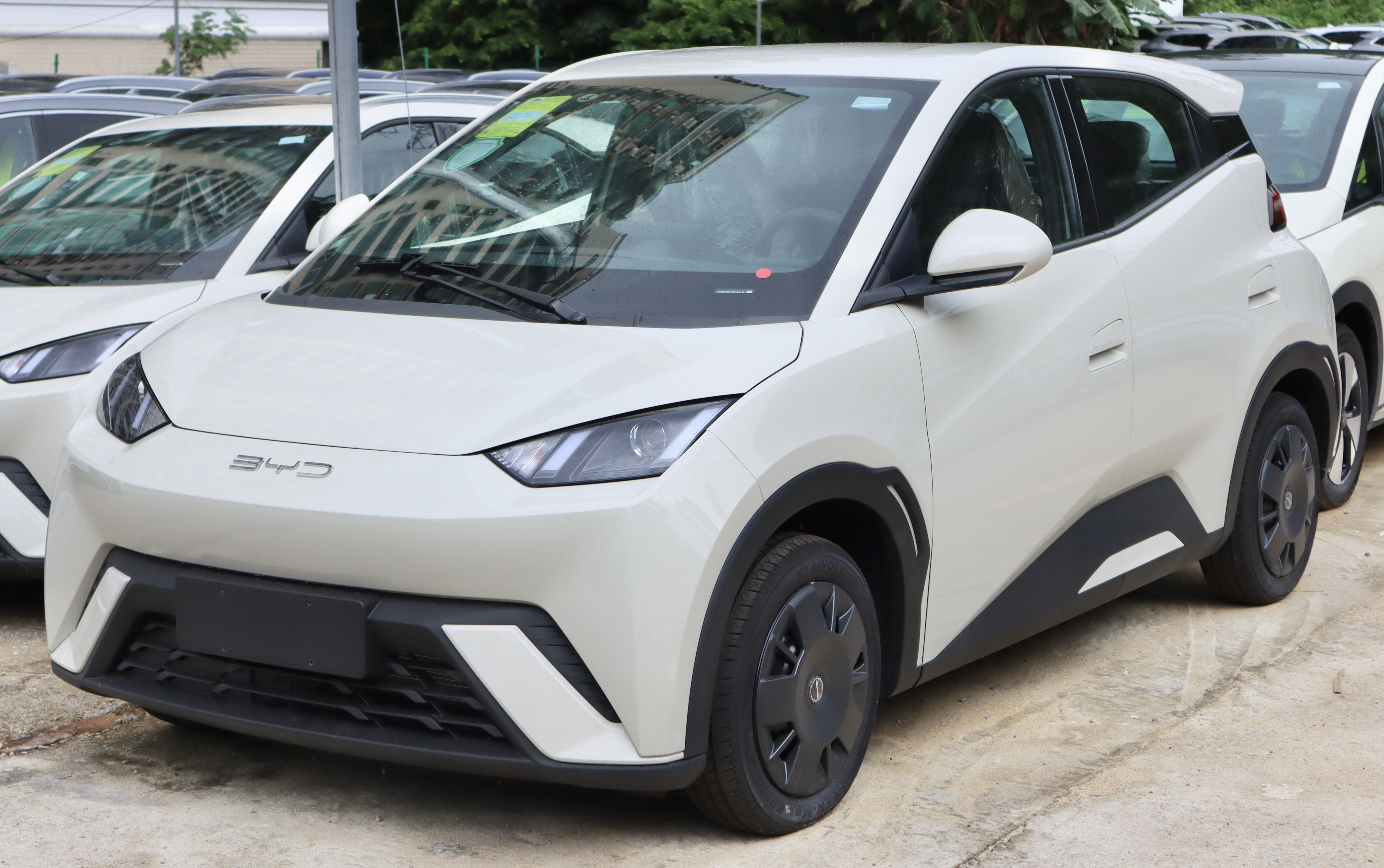
The BYD Seagull, rebranded as Atto 1 for the Indonesian market, launched in July 2025 at the Gaikindo Indonesia International Auto Show, positioning itself as the nation's entry-level electric vehicle.
Starting at approximately $11,970 (RM50,600 to RM61,000), the Seagull offers two battery configurations: a 30kWh variant delivering 75 horsepower and 135 Newton-metres of torque and a 38kWh version with extended range, both featuring automatic transmission and five-seat capacity.
Industry data from the Indonesian Automotive Industry Association shows the 30kWh model achieves a 380-kilometre WLTP-rated range while the 38kWh variant stretches that to approximately 420 kilometres.
Industry analysts note this price point represents roughly a 30% reduction compared to BYD's previous Indonesian models, making electric vehicle ownership accessible to budget-conscious consumers while maintaining BYD's reputation for value engineering.
Market Dynamics and Consumer Reception
Local dealerships report strong initial interest, with pre-orders exceeding 5,000 units within the first month of availability.
Automotive consultant Rizky Pratama observed, "The Seagull addresses Indonesia's charging infrastructure limitations by offering practical range for daily commutes while keeping entry costs low." This comment reflects on-the-ground experience rather than abstract industry forecasts.
This strategy contrasts with premium EV entrants like Tesla and Hyundai, which target higher-income segments through luxury positioning and advanced driver assistance systems. Showroom foot traffic data from Jakarta outlets indicates the Seagull draws a notably different demographic than the brand's Yuan Plus or Dolphin models.
Technical Specifications and Variant Details
The Seagull's compact dimensions — 3,780 millimetres long, 1,715 mm wide, and 1,560 mm high — make it well-suited for Jakarta's congested streets and limited parking spaces. A 30kWh battery pack powers the front-mounted electric motor producing 75 hp, while the 38kWh unit increases output to sustain longer trips without requiring frequent charging stops.
DC fast charging capability up to 80 kilowatts enables the 38kWh battery to reach 80% state of charge in approximately 30 minutes according to manufacturer specifications. Standard AC charging via a household socket takes roughly 7.5 hours for the smaller battery and 9 hours for the larger, a practical consideration for residents without dedicated charging facilities.
With Indonesia's charging station density remaining below one station per 10,000 vehicles nationwide, the Seagull's real-world range becomes the decisive factor for prospective buyers navigating intercity travel or those without home charging setups.

Market Positioning and Competitive Landscape
The Seagull arrives amid Indonesia's ambitious EV adoption targets, which aim for 30% of new vehicle sales to be electric by 2030. This goal sits in contrast to 2024 registration data showing battery-electric vehicles accounted for just 0.8% of total new car sales, underscoring the challenge of accelerating market penetration.
Analysts suggest the Seagull's competitive pricing could accelerate this transition, particularly as government incentives for EV purchases remain limited compared to regional neighbours like Thailand and Malaysia. Thailand's EV tax exemption and purchase subsidies have driven faster adoption rates in that market, while Malaysia's recently introduced road-tax reductions for electric cars have created a more favourable cost environment.
While established players focus on mid-range models with larger batteries and premium features, BYD's strategy of dominating the entry segment may reshape market dynamics and pressure competitors to reconsider their own pricing structures. The company's reputation for vertical integration — producing its own battery cells and semiconductor components — underpins its ability to quote lower sticker prices.
Charging Infrastructure Reality
The practical question of where and how Seagull owners will charge their vehicles touches on a broader national infrastructure gap. Public charging stations are concentrated in major urban centres such as Jakarta, Surabaya, and Bali, while stretches between cities often lack any charging facility.
The Indonesian government has outlined a roadmap to install 2,300 public charging points by 2026, up from approximately 350 operational stations as of mid-2025. This expansion plan targets high-traffic corridors and commercial hubs, but the timeline and execution remain subject to regional coordination challenges.
For now, Seagull buyers relying on public infrastructure must plan routes carefully, particularly for the 30kWh variant's 380-kilometre range when factoring real-world driving conditions, air-conditioner usage, and load weight.
Regulatory Context and Local Assembly
Indonesia's government has introduced tax incentives for locally assembled EVs, with an import duty reduction of up to 30% for vehicles built in domestic plants. BYD's decision to establish a manufacturing facility in Java aligns with these policies, though the company has not yet confirmed whether the Seagull will be assembled locally versus imported as a complete built unit.
Trade ministry data indicates that fully imported EVs face an additional 10% import tax on top of standard VAT, creating a price floor that the Seagull's $11,970 sticker price already approaches. This regulatory framework shapes not only the final selling price but also the feasibility margins for dealers operating on thin profit per unit.
Environmental agency assessments from the Ministry of Environment show that Indonesia's electricity grid still relies on coal for approximately 60% of generation, which tempers the emissions benefits of EV adoption. Critics argue that without a simultaneous push toward renewable energy capacity, the Seagull's environmental advantage over fuel-efficient hybrids remains limited.
Market Outlook and Industry Impact
The Seagull's launch represents the latest chapter in BYD's global expansion strategy, which has seen the Chinese manufacturer enter more than 60 countries since 2020. In Indonesia specifically, BYD now offers six models, positioning the Seagull at the entry level while the Atto 2 and Yuan Plus occupy higher segments.
Whether the model achieves sustained sales momentum will depend on how quickly charging infrastructure develops and whether ancillary costs — such as insurance, maintenance, and replacement parts — remain competitive with internal-vehicle alternatives. Used EV market data from the first half of 2025 suggests residual values for subcompact electric cars are still establishing a baseline, but BYD's strong brand presence in Indonesia may support better-than-expected retention.
As more consumers weigh the practicalities of daily charging against upfront purchase price, the Seagull's experiment in affordability offers a data point for the wider industry debate about how quickly electric mobility can move from early-adopter niche to mainstream adoption in emerging markets.
Forward Outlook
Industry watchers will be tracking quarterly registration figures from the Indonesian Automotive Industry Association through the remainder of 2025 and into 2026 to assess whether the Seagull's entry-level pricing translates into sustained market share growth. The next major test comes when the government's planned charging-station expansion begins delivering new public points, potentially removing one of the biggest barriers for budget-conscious buyers.
This isn't just another model launch; it's an experiment in whether price alone can accelerate EV adoption in a market where infrastructure lags far behind product availability. The early pre-order numbers suggest demand exists, but the real story unfolds over the next 12 to 18 months. desk coverage offers related EV updates, and Reuters provides ongoing coverage of Indonesia's EV policy developments.