BMW and Agility Put Humanoid Robots to Real Factory Work as Tesla's Optimus Waits on the Line
A handful of humanoid robots are now doing documented, repeatable work on active production lines. The programmes with the loudest marketing, though, have shipped the fewest machines. That gap sits at the center of humanoid robotics in mid-2026.
BMW has moved past the demo phase. At its Plant Spartanburg in South Carolina, Figure AI's Figure 02 robot completed an eleven-month pilot that logged more than 1,250 operating hours, loaded over 90,000 sheet-metal parts, and took roughly 1.2 million steps while supporting output of more than 30,000 BMW X3 vehicles. The robot ran ten-hour shifts, Monday through Friday, placing metal parts into welding fixtures to a five-millimetre tolerance, holding above 99 percent placement accuracy per shift and meeting an 84-second cycle time. Figure has since retired the 02 units and shifted its Figure 03 into a logistics sequencing task at the same plant. BMW has also set up a Center of Competence for Physical AI in Production and plans to extend humanoid deployment to its Plant Leipzig from summer 2026.
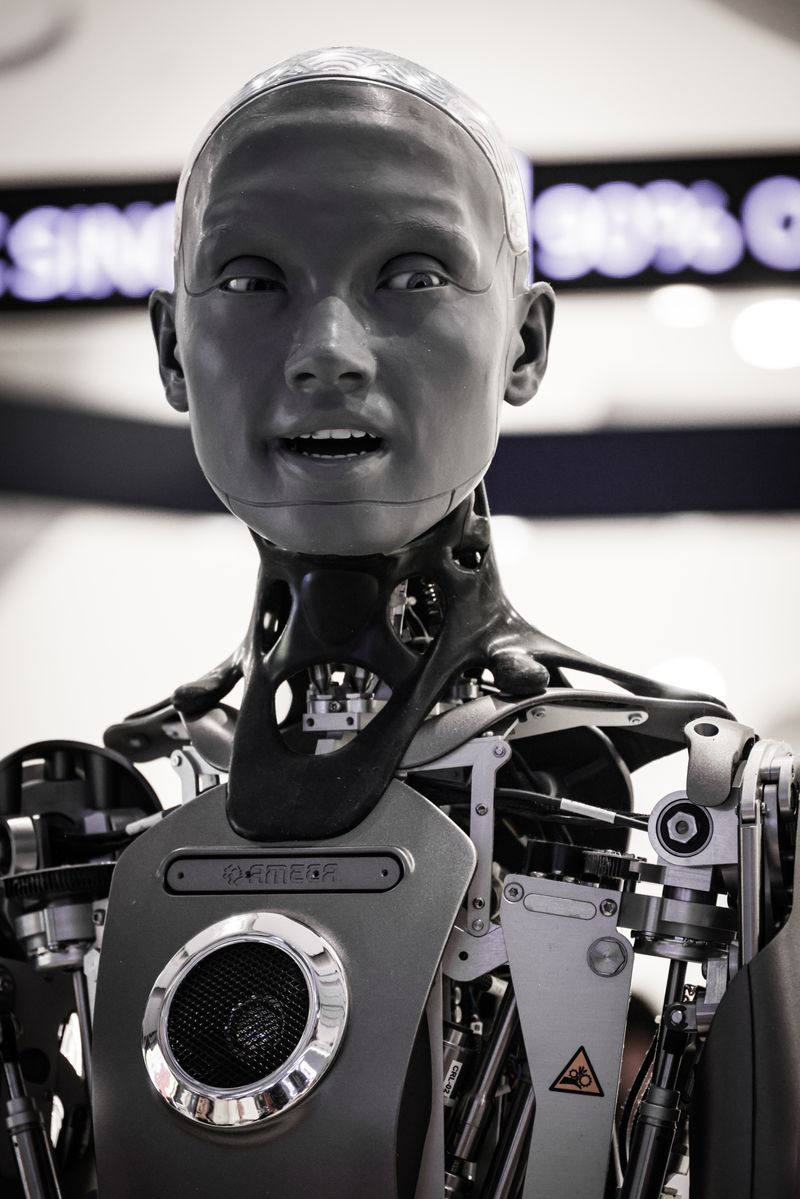
Agility's Digit stacks the hours
Agility Robotics holds the broadest commercial footprint of any humanoid maker. The company says its Digit robot has accumulated more than 65,000 operating hours across nine customer facilities, with GXO, Schaeffler, Toyota Motor Manufacturing Canada and Mercado Libre named as commercial customers. Its RoboFab plant in Salem, Oregon was designed for up to 10,000 Digit units a year at full capacity.
Neither BMW nor Agility is running at the scale its valuation suggests. Figure held a $39 billion private valuation as of September 2025 — higher than Goldman Sachs' projection for the entire humanoid market nine years out. The point is not that the robots fail. It is that a small number of named sites now carry real, measured work, while the headline numbers outrun the hardware on the floor.
Tesla's Optimus: presence, not production
Tesla tells a different story. On the Q4 2025 earnings call on 28 January 2026, Elon Musk said Optimus units were "primarily for learning, not productive tasks" and conceded the programme was "not in usage in our factories in a material way." Tesla had targeted 5,000 Optimus units for internal factory use in 2025. Reporting by The Information in mid-2025 put actual output in the low hundreds — under ten percent of that goal. Contributing factors included China's April 2025 export restrictions on rare-earth magnets and a longer-than-planned Gen 3 hand design.
As of mid-July 2026, the Fremont production line had not started. Musk walked the newly installed line on 1 July and pushed back on suggestions that output had quietly begun. Tesla's Q2 delivery report, published on 2 July, carried no Optimus figures at all. On the Q1 2026 call on 22 April, Musk said production would begin at Fremont in late July or August, four months after the last Model S and X units left that line in early May. He warned the initial rate would be slow and called the year's output impossible to predict, citing 10,000 unique parts across a brand-new line.
Analysts who track Tesla's public statements count eight separate Optimus milestones that slipped or were revised before their original dates. The next hard checkpoint arrives on 22 July 2026, when Tesla reports Q2 results — the first chance since April to hear whether the Fremont ramp is following a new curve.
Unitree wins on volume, not margin
Western coverage often skips the part of the market that actually ships. Unitree Robotics, based in Hangzhou, shipped about 5,500 humanoid units across its line in 2025 — more than Figure has shipped in its history — and targets 10,000 to 20,000 units in 2026. Its G1 humanoid starts near $16,000, roughly a tenth of the price of full-size Western platforms. The company reached unicorn status in June 2025 at a $1.3 billion valuation, in a round led by ByteDance, Alibaba and Tencent, and has since won approval for a STAR Market listing.
Volume is not profit. Unitree's Q1 2026 net profit fell 52 percent year-on-year even as humanoid stocks rose on 10 July, lifted by Optimus procurement headlines and Unitree's IPO approval. The split in strategy is clear: Figure, Agility and Apptronik build purpose-built industrial robots for narrow tasks, while Unitree chases cost and scale.
Why the numbers pull capital
Humanoid-specific startup funding reached about $4.3 billion in 2025, part of more than $8.5 billion that flowed into robotics startups that year — the strongest since 2021. Goldman Sachs projects the humanoid market at $38 billion by 2035; Morgan Stanley projects $152 billion by 2040. Figures that large draw content built for search rank rather than accuracy, and they push company claims past what filings support.
Tesla has never published an Optimus production count, audited or otherwise. Widely shared claims of tens of thousands of deployed units do not survive contact with company statements. Hyundai and Google DeepMind are piloting the Atlas humanoid, with shipments scheduled for 2026 — real progress, but still short of volume.
What plant managers should watch
Serial production of a 10,000-component humanoid has no precedent in manufacturing. Tesla's own Model 3 ramp in 2017 and 2018 took more than eighteen months to reach stable volume with a far simpler product. Missing an aggressive target is not proof of a failed programme.
The honest read for July 2026 is narrower than the headlines. A few robots do real, documented, repetitive work at a small set of named plants. One Chinese maker ships in the thousands at a price no Western rival matches. The largest, most-discussed programme has not sold a single unit and has not started its line.
For readers tracking automation beyond the humanoid race, our Robotics & Drones desk covers warehouse and delivery robotics, and our AI coverage follows the Physical AI software those machines run. The 22 July Tesla call will not settle the field, but it gives investors and plant managers their first fresh data point in months.
Sources: Technology.org's breakdown of verified humanoid deployments (technology.org); Electrek on the delayed Fremont Optimus line (electrek.co); Tesla investor relations for quarterly results (ir.tesla.com).