Beijing's Robot Games Grow Up: 2,056 Humanoids, a Charging Village, and a New Test for Last-Meter Skills
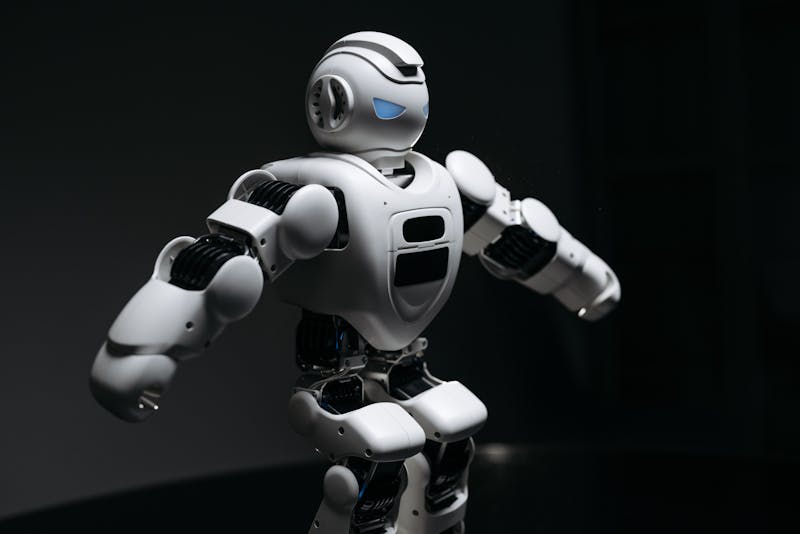
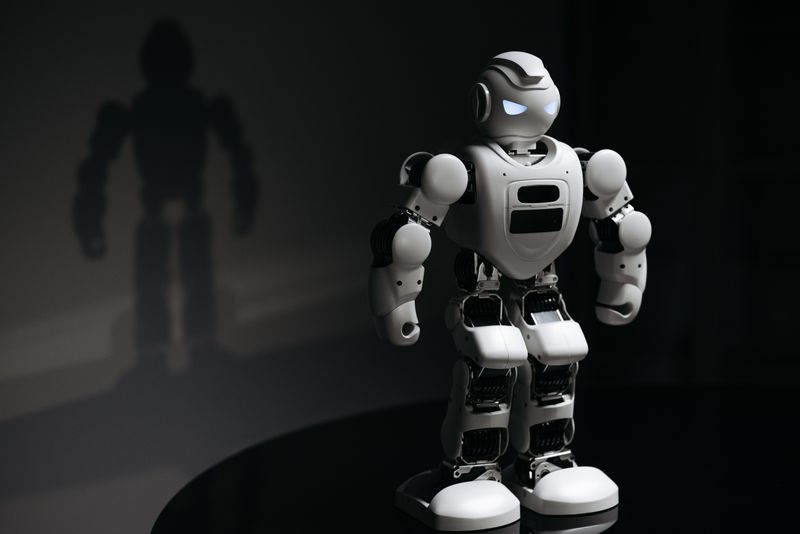
The second World Humanoid Robot Games opens Saturday in Beijing with 2,056 robots from 16 countries, four times the field that showed up for last year's debut. Organizers say the real contest this time is not who walks the fastest, but which machines can actually get work done.
A field four times bigger, and a lot harder to ignore
The numbers come from Jiang Guangzhi, director of the Beijing Municipal Bureau of Economy and Information Technology, who laid them out at a media conference on Thursday. A total of 666 teams will compete from August 22 to August 26, with 16 countries and regions represented across six continents. The first games, held in August 2025, drew 280 teams and just over 500 humanoid robots. This year's entry list is roughly 138 percent bigger on teams and quadruple on robots, which Jiang's office calls the clearest sign that humanoid robotics has moved past the demo stage.
Teams from the United States, Germany and Japan are among those registered, and Brazil has put together a national squad made up of five RoboCup sides. China dominates the domestic headcount: 641 teams and 1,975 robots come from 157 Chinese enterprises and 200 universities and research institutes, including 27 of the country's top universities. The one-week event is scheduled to wrap on August 26.
From finish lines to job sites
The biggest change this year is what the robots are being asked to do. The 2025 games were mostly about locomotion — getting from one end of a course to the other without falling over. This year's program has 51 events in total, split among 30 competitive events, 21 scenario-based contests, and a brand-new dexterous hand category with eight high-precision tasks.
The competitive events now include long jump, weightlifting, tug of war and table tennis, all designed to stress-test motion control, structural design and core components. The scenario events are the ones organizers keep talking about, though. Robots will work in settings modeled on real factories, hotels, homes and logistics centers, with jobs like assembly, housekeeping, emergency response and library book sorting on the schedule. One office challenge gives a robot 20 minutes to load a printer, arrange meeting supplies and operate a paper shredder, with any mistake or delay costing points.
Preliminaries for several scenario events started Sunday, ahead of the official opening. At a working firehouse in Beijing, humanoid robots ran a simulated emergency call, checking for hazards, operating equipment and responding to a mock incident. Teams were also seen in final preparations at the National Speed Skating Oval, where an industrial ecosystem training base hosts the office-scenario side of the competition.
A village for robots
To keep 2,000 machines charged and ready, organizers built what they call the "Robot Home," an on-site support center that works like an athletes' village. According to reports from China Central Television's finance channel, the facility can house more than 1,500 robots at once and charge at least 1,200 batteries, with digital check-in and retrieval that locates any single robot in about 30 seconds.
The charging setup is a small logistics operation of its own. For team events like robot football, the organizing committee often supplies the robot bodies, and the battery station sits a few steps from the field. Batteries are pre-charged in power cabinets, and each compartment has its own power strip, so teams can swap a drained pack for a full one mid-competition. Wang Peng, an associate research fellow at the Beijing Academy of Social Sciences, told the Global Times that managing robots with the same systems used for industrial assets — storage, dispatch, maintenance and safety monitoring — turns the games into a testbed for commercialization rather than a technology fair.
There is also a "Robot Street" for spectators, with robot-run cafes, intelligent retail and virtual reality viewing, plus a 5G and Wi-Fi converged network that organizers say is built to resist interference. The event team has developed what it calls the world's only competition command system designed specifically for robot events, along with an embodied intelligence management platform that can handle robots from different brands and models in a single system.
The hands have it
The new dexterous hand competition is the category organizers expect to matter most commercially. Eight events, all drawn from real industrial and everyday tasks, will test fine manipulation at a level that motion contests cannot reach. AGILINK, the event's officially certified dexterous-hand equipment provider, argues that winning this category certifies a product has cleared the "demonstration-grade" bar and can be sold for real use.
Chen Jing, vice president of the Technology and Strategy Research Institute, said the 51 planned events reflect gains in motion control, perception-based decision-making and fine control. He also framed the games as an incubator of industry consensus. Competition, in his view, first identifies testing methods that Chinese and foreign firms both accept, and those methods can then grow into international standards. Jiang made the same point in blunter terms at the media conference: "Once robots master these 'last-meter' skills, they can turn medals into orders and move directly from the competition arena to real-world workplaces."
Why the games matter beyond the podium
The World Humanoid Robot Games arrive at a moment when China's humanoid industry is scaling hard. Reports cited by the games' organizers project Chinese output of 100,000 humanoid robots in 2026, and the country already accounts for the biggest share of global humanoid shipments. The Beijing event is partly a showcase and partly a sales floor, where a strong result in a scenario event can feed directly into procurement discussions.
The timing also overlaps with a widening policy debate. Washington's Federal Communications Commission said in late July that it would stop authorizing new foreign-made humanoid and quadruped robots, a move aimed squarely at Chinese producers, and Beijing responded in early August with export controls on drones and related technology plus restrictions on six American entities. That back-and-forth, covered on this site when it broke (Robots and Drones Just Got Dragged Into the US-China Trade War), means the games' international entries carry a political charge that last year's edition did not have.
Analysts following the sector say the medals themselves are the least interesting part of the next five days. The questions worth watching are which robots finish real tasks without help, which teams turn competition runs into purchase orders, and whether the event's test methods become the seed of international standards. The Robot Home, the dexterous hand arena and the firehouse scenario all point in the same direction: humanoids are being graded on work now, not on walking.
For readers tracking the wider robotics beat, this site runs daily coverage across Robotics & Drones, and the humanoid trade-war context is explained in the earlier report on the FCC's robot import restrictions and China's countermeasures. The Xinhua news agency's briefing on the participating numbers is worth reading in full, as is the Global Times report on the Robot Home and scenario events. The commercialization story these games are trying to tell — medals into orders, arena into workplace — is the one to follow after the closing ceremony on August 26.
Wang's line about the shift in focus is probably the fairest summary of this year's games. Last year it was about whether a robot could reach the finish line. This year it is about whether it can do the job once it gets there. The 2,056 machines lining up in Beijing are about to find out.
What to watch this week
For anyone following the games, a few storylines will be decided before the closing ceremony. The first is the factory scenario track, where robots have to handle real assembly steps inside a defined window — the events organizers designed around complete business logic rather than isolated tricks. A clean run there says more about deployment readiness than any sprint ever could.
The second is the dexterous hand category, the newcomer that equipment vendors are treating as a certification stage. Eight precision events pulled from industrial and everyday tasks will show which grippers and finger mechanisms survive repetitive, high-accuracy work, and the results are expected to feed directly into procurement conversations with Chinese manufacturers.
The third is simpler: how the international teams fare against the home field. Entry lists from the United States, Germany, Japan and Brazil mean the games are no longer a domestic showcase. Foreign teams competing under China's newly tightened drone export rules, and amid the FCC's robot authorization pause, turn every match into a small test of whether competition can outrun trade friction.
Whatever happens on the podium, the week will add hard data on where humanoids actually stand. That is the reason the games were worth building in the first place.