Battery Tech 2026: China's 2030 Targets, Pricing Trends, and Industry Convergence
Introduction
The global battery industry is entering its most consequential phase yet. With electric vehicle fleets expanding, grid storage demand accelerating, and next-generation chemistries moving from prototype to production, 2026 marks a transition from lab-scale promise to industrial-scale deployment. China's newly unveiled 2030 battery targets, published October 1, 2026, set the strategic direction: capture 60% of the global market share, scale solid-state production, and achieve sodium-ion cost parity with lithium iron phosphate (LFP) by year's end. At the same time, cell prices are falling unevenly, freight costs are reopening regional price gaps, and manufacturers are racing toward vertical integration and transparency standards. This article synthesizes the key developments shaping battery technology today.
China's 2030 Battery Targets: Scale, Solid-State, Sodium-Ion
In a landmark policy move announced on October 1, 2026, the Chinese government unveiled comprehensive targets for the next decade that position the nation as a dominant force in the world's energy storage ecosystem. The plan calls for rapid scaling of multiple battery chemistries — including all-solid-state batteries, sodium-ion systems, and advanced lithium technologies — to meet surging demand from electric vehicles, grid-scale storage, and renewable energy integration.
The scale of China's battery ambitions cannot be overstated. With the world's largest electric vehicle fleet expected to reach 30 million units by 2030, and grid energy storage requirements projected to grow by 500% over the same period, the battery market faces unprecedented pressure. Current global production capacity sits at approximately 1,500 GWh annually, with China commanding about 45% of the total market. The 2030 targets represent a push to capture 60% of the global market share, particularly in high-value segments like solid-state batteries where current Chinese capacity is less than 10% of global output.
China intends to deploy at least 500 gigawatt-hours of solid-state battery capacity for automotive applications by 2030, up from less than 50 GWh today. Solid-state designs replace the liquid electrolyte of conventional lithium-ion cells with ceramic or polymer-based materials, enabling higher energy densities, faster charging times, and significantly reduced fire risk. Challenges remain in scaling manufacturing processes and reducing costs to competitive levels, but early prototypes have demonstrated promising performance metrics, with gravimetric energies exceeding 400 Wh/kg and thermal runaway resistance comparable to or better than current lithium-ion systems.
For sodium-ion, the strategy focuses on achieving cost parity with lithium iron phosphate (LFP) batteries by the end of 2026, followed by widespread adoption in stationary storage and electric bus fleets. Sodium is abundant, inexpensive, and avoids reliance on geopolitically sensitive lithium supply chains. Recent reports indicate that sodium-ion cell prices have dropped below LFP equivalents in several markets, making it an attractive option for mass-market passenger vehicles and energy storage systems as reported by PV Magazine. The Chinese strategy recognizes that no single chemistry will dominate the future. Instead, it advocates for a diversified portfolio where each technology serves specific niches. Learn more about related developments in the Battery Tech category on our platform.
LFP Cell Prices Fall, but Freight Reopens Regional Gaps
Benchmark Mineral Intelligence's Q3 2026 cell price review shows battery cell prices falling across nearly every grade over the quarter, but the route differed sharply by region and chemistry. The 314-amp-hour lithium iron phosphate cell, the workhorse of utility-scale storage, cost $51.62/kWh at the factory gate in China at the end of September, down from $57.75 in July — a 6.5% quarterly decline. In North America, however, cost-insurance-and-freight prices rose 3.3% in September to $61.99/kWh, ending the quarter only 0.4% below where they started. The grade moved above CIF Europe for the first time in the quarter, and its premium over ex-works China widened to roughly 20%, against about 15% for Europe.
The driver is freight. Mounting shipping costs on the China-to-US route contributed to the increase, according to Adam Megginson, a principal price analyst at Benchmark. A cell made in the same factory is now a different product depending on which ocean it crosses, and the American buyer is absorbing the difference. With China's lithium carbonate down 23% in September alone, sliding from above 160,000 yuan to below 120,000 yuan a tonne, another leg of that decline has not yet reached cell quotes — Benchmark expects lagged downward pressure on cell quotations at the start of Q4.
For contrast, nickel-cobalt chemistries declined steadily with no mid-quarter reversal. Benchmark's NCM523 pouch cells ex-works China fell 2.6% in July, 1.6% in August, and 2.8% in September to $84.97/kWh, a quarterly decline of 6.8%. The more diversified cost base of NCM chemistries, split across lithium, nickel, and cobalt, limited the transmission of lithium carbonate's volatility. The global composite picture followed: Benchmark's Lithium Ion Battery Global price fell 4.0% in September to $71.85/kWh, the steepest monthly decline of the quarter, ending 6.7% below June.
Vertical Integration: CATL and Seres Cement the Plant-in-Plant Model
The strategic landscape shifted dramatically October 10 when CATL and Seres signed their landmark agreement in Chongqing. Under the pact, CATL will supply every Aito model with its battery systems, extending an already successful relationship where CATL batteries power 1.2 million vehicles delivered to date. CATL will expand the plant-in-plant model at the Seres Super Factory with an additional 10-12 GWh of annual capacity, pushing total production to over 20 GWh.
CATL's existing operation at the site began mid-2025 with two Cell-to-Pack (CTP 2.0) production lines, marking the company's first use of the "plant-in-plant" principle in Chongqing. The proximity between battery system manufacturing and vehicle assembly is expected to streamline industrial processes and enhance cost competitiveness, according to automotive industry analysis. The agreement includes collaborative supercharging networks and battery services, plus joint market development in Europe, the Middle East, and Central Asia — reflecting the industry shift from local optimization to global portfolio management.
Transparency and the GBA Battery Passport
Complementing the supply-chain story is the Global Battery Alliance (GBA) Battery Passport program's advancement. CATL became the first battery company globally to join all three GBA Battery Passport pilot waves, covering nearly 80% of global production capacity. The program's 2026 pilot results demonstrate CATL's comprehensive ESG data coverage across the entire value chain.
"The GBA Battery Passport Operational Trials provide an effective methodology for monitoring, quantifying and showcasing the ESG performance of the battery value chain," said Dennis Pan, Head of Sustainable Development at CATL. "It helps the industry better address current and future ESG challenges." CATL's participation sets a benchmark for other manufacturers as regulators and buyers demand greater visibility into raw material sourcing, manufacturing emissions, and end-of-life recycling.
Grid Storage Diversification: Flow Batteries and Modular Systems
While traditional lithium-ion systems dominate EV applications, grid storage is embracing chemistry diversification. Containerized flow battery systems like the 1 MW/4 MWh Turner Energy Storage Project in Pullman, WA, owned by Avista Utilities, demonstrate how long-duration storage differs from EV-grade cells. Meanwhile, modular solutions like the Tesvolt TPS-E with 6.24 MWh capacity showcase the industry move toward scalable, standardized energy storage units that can be quickly deployed to address grid stability needs.
Recent research from UC San Diego published in Nature Communications shows a fluorine-free polymer binder that simplifies both battery manufacturing and recycling — an advance that could reduce the environmental impact of traditional lithium-ion batteries while maintaining performance. As stationary storage grows toward hundreds of gigawatt-hours by 2030, such manufacturing and recycling improvements will be just as important as cell chemistry itself.
The Battery Show Detroit: Convergence in Action
The Battery Show Detroit 2026 brings these themes together under one roof. With over 16,000 attendees and 1,300+ exhibitors at Huntington Place, the event showcases how the battery industry is converging around scale, transparency, and diversification — three pillars supporting the transition to cleaner, more resilient energy systems. The show's conference programming spans five tracks: Battery Chemistry, Materials & Cell Innovation; Electrified Vehicle Systems & Powertrain Integration; Battery Manufacturing & Supply Chain Industrialization; Energy Storage & Grid Applications; and Advanced Air Mobility & Electrified Aviation Systems.
Speakers include executives from Panasonic Connect, General Motors, ZEISS Industrial Quality Solutions, and LG Energy Solution. The Executive Summit on October 15 focuses on capital allocation, industrial policy, supply chain resilience, technology bets, and the future competitive landscape of the battery ecosystem — a closed-door forum for C-suite executives and senior industry leaders. For more on related developments in the broader battery landscape, see our battery tech coverage.
Conclusion
As industry leaders gather at The Battery Show Detroit 2026, the message is clear: the battery industry's next phase isn't about which chemistry wins, but about how effectively ecosystems can integrate. CATL's strategic partnership with Seres demonstrates manufacturing scale and proximity, while the GBA Battery Passport represents transparency and accountability. Meanwhile, energy storage innovations from flow batteries to modular Tesvolt systems show that grid applications are evolving beyond traditional lithium-ion dominance.
The convergence of these trends suggests a maturing battery industry ready for scaling. Vertical integration (CATL-Seres), regulatory compliance (GBA Passport), and chemistry diversification (flow batteries) collectively represent the foundation for a more resilient energy storage ecosystem. As the world transitions toward electrification, the decisions made today will shape which battery solutions dominate the next decade.
References
- China Sets 2030 Battery Targets, Backs Sodium-Ion and Solid-State. PV Magazine. October 1, 2026.
- Benchmark Mineral Intelligence Q3 2026 Cell Price Review. Reuters/Benchmark. September 2026.
- CATL signs strategic deal with Seres to expand Aito battery capacity. CnEVPost. October 11, 2026.
- CATL becomes first battery company to join all three GBA Battery Passport pilot waves. Global Battery Alliance. October 12, 2026.
- UC San Diego fluorine-free polymer binder research. Nature Communications. October 2026.
- The Battery Show and EV/Hybrid Tech Expo opens at Huntington Place in Detroit. dbusiness.com. October 12, 2026.
 A diagram of a lithium battery showing the manganese dioxide cathode chemistry, illustrating the layered structure and electrode components central to battery operation.
 A lithium iron phosphate cell block of the type used in stationary battery storage systems.
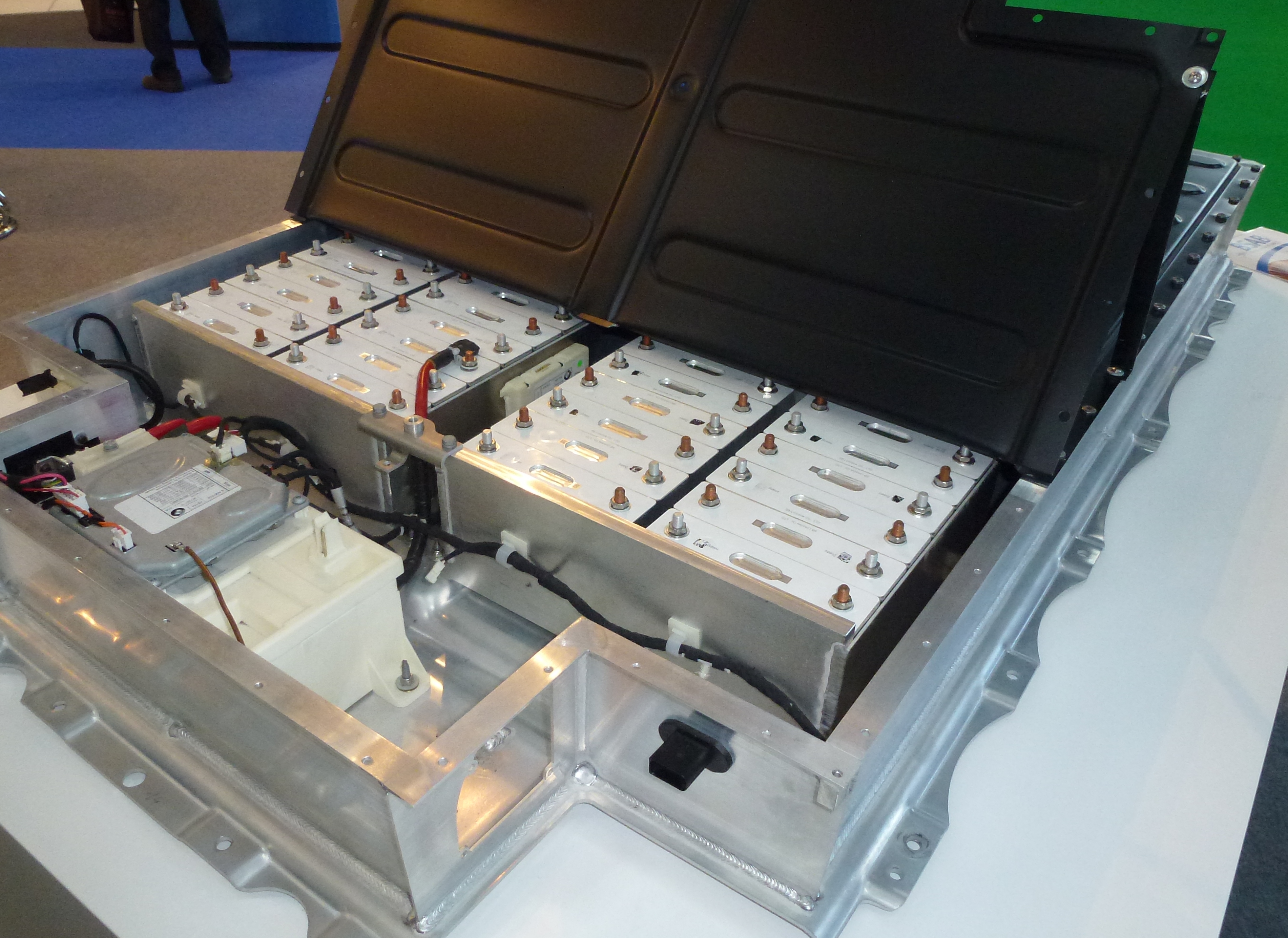 A lithium-ion battery pack of the type assembled into electric vehicle and storage modules.