A young San Francisco startup called Avatar Robotics has raised $6.5 million in seed funding to push forward with an idea it calls the "unlimited workforce": humanoid robots that run in warehouses and factories, steered by remote human operators and increasingly by AI. The round was led by AlleyCorp, with a pre-seed from defy.vc and participation from Headline, Henry Ford III, Refashiond, Paul Vogel, Jack Huffard, and Samuel Udotong.
The pitch targets a problem the company argues is structural rather than cyclical. Warehousing, logistics, and manufacturing keep hitting the same wall: not enough people willing to do physically demanding, repetitive jobs at the pace modern fulfillment demands. Avatar's answer is not to fully replace that staff overnight, but to make labor far more flexible.
A human in the loop, then a learning machine
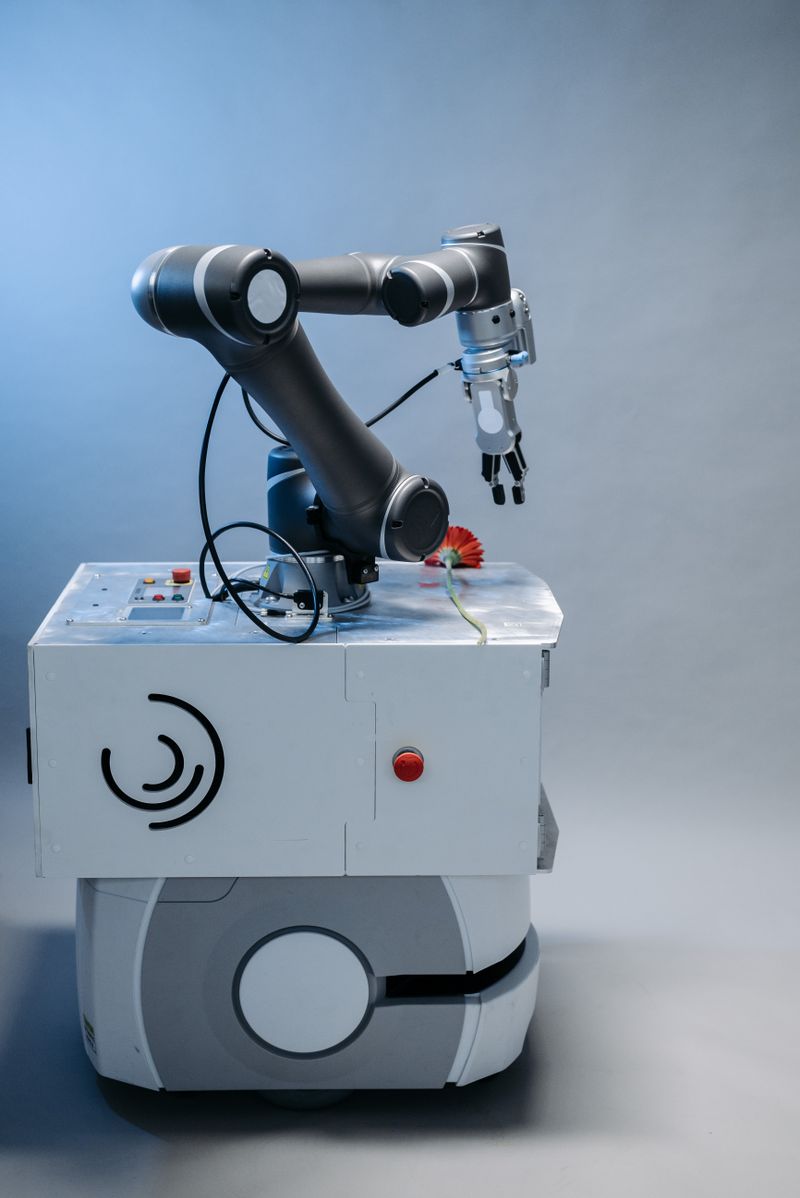
The core idea sits between classic automation and full autonomy. Rather than forcing customers to rewire operations around rigid, expensive machines, Avatar launches with a human-in-the-loop model. A remote operator steps in to guide a robot through a task it has not seen before. Each run generates fresh control data, which the company feeds into what it describes as robotic foundation models. Over time, the same facility should need fewer hands steering the fleet.
Founder and CEO Colin Webb, an MIT graduate who once delivered the commencement address there, frames the bet in plain terms. The United States has a serious labor shortage, he argues, and the warehouses and factories that power daily life are struggling to hire enough workers. Affordable robotics, high-speed connectivity, and AI-driven autonomy have, for the first time, made it realistic to create a new kind of workforce.
Since launching in December 2025, Avatar reports it has packed, sorted, and helped ship more than 900,000 products. That includes work for a leading global beauty retailer, plus a post-pilot expansion with a multibillion-dollar warehouse operator focused on sorting and picking. The company's roots run through self-driving and drone work: Webb previously co-founded an AI startup alongside Nenye Anagbogu, and the two are teaming up again, pulling in engineers from Cruise, Apple, Tesla, and Intuitive Surgical.
Why teleoperation keeps showing up
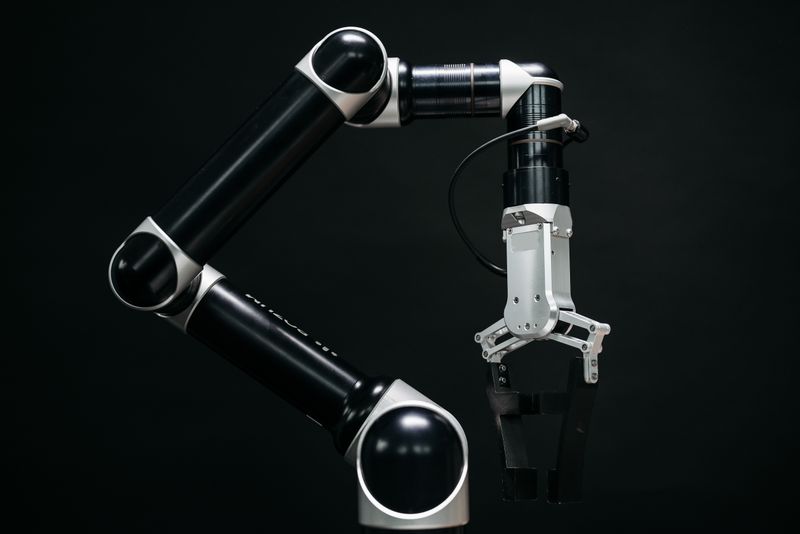
Avatar is far from alone in leaning on remote operators. Teleoperation has quietly become the bridge that lets humanoid developers ship real work before full autonomy arrives. The pattern repeated across the sector in 2026: companies send humanoid prototypes into warehouses, keep a human ready to step in for edge cases, and harvest the demonstration data along the way. Webb argues this is the only responsible path, a sentiment that has echoed across the robotics industry in the past year.
The approach has caught the attention of Avatar's investors. Brannon Jones of AlleyCorp says the startup has built partnerships with its first customers and is already delivering meaningful value in real workflows, because its human-in-the-loop system performs at a level competitive with skilled human operators. He adds that Avatar has also generated large datasets of robot control data at a moment when the industry lacks such repositories, a resource that should inform foundation models and enable a more scalable labor supply.
The founders see a much larger footprint on the horizon. The long-term vision stretches to millions of robots working in warehouses, factories, mines, farms, and future infrastructure projects, so that a business of almost any size can rent industrial-grade labor on demand. A worker in one country could end up controlling fleets of physical systems halfway around the world.
What is different from traditional automation
The sharpest comparison a warehouse operator can draw is to old-style automation: conveyor belts, dedicated palletizers, a fixed robot cell bolted to the floor. Those systems require rigid workflows and expensive upfront integration, exactly what Avatar says it avoids. Its robots are positioned as plug-and-play, leaning on remote operators to get reliable performance from day one instead of months of commissioning.
That positioning matters because the economics of a 900,000-plus-product rollout has to make sense against a tight warehouse labor market. Many large companies have tested humanoids only in short pilots; a few, like Amazon, have moved fleets into working modules. A startup arguing for "unlimited" scale is staking a claim that the technology has moved past the proof-of-concept stage.
Context: the funding wave behind humanoids
Avatar's raise lands in a busy season for robotics investment. Embodied intelligence startups have been closing nine-figure rounds around the world, with a heavy share of the momentum in China. Two emerging Chinese firms, DISCOVER Robotics and PokeBot, each locked in at least $100 million in the final days of early August, according to DealStreetAsia. The broader pattern is clear: capital that once flowed to pure software is now funding physical labor robots, and venture firms that used to steer clear of hardware are jumping in. Avatar's relatively small $6.5 million check matters less for the sum and more for the bet it backs, that the first profitable humanoid workloads will be dull, repetitive warehouse work with a human ready to step in remotely.
The math behind that bet deserves a closer look. A warehouse operator in the United States can point to a tight labor pool, high turnover, and a rising need to move boxes faster as e-commerce keeps growing. DHL and Amazon have both run public trials with humanoid suppliers, and Amazon has talked about using robots in "working modules" rather than one-off demos. Avatar's spin is that it does not ask a customer to install custom cages or reconfigure aisles. Because a remote operator can handle the awkward parts, the first deployment can slot into an existing layout, and the robot improves from there.
There is a real argument that the addressable market is enormous. The U.S. warehouse sector employs millions, and turnover is a perennial pain for operators. But the skepticism runs the other way too. Humanoids still lag the reliability of specialized machines, and a single robot moving pallets is a long way from an operator commanding an entire fleet across a time zone. Whether that gap closes on schedule is worth watching. Avatar's own numbers, roughly 900,000 packaged and shipped products since December, are honest proof of traction, but they are also modest against the volumes a large fulfillment hub moves in a single peak season.
The bottom line
For now, Avatar's story is one of traction, a seed check, and a fleet of robots that keeps learning. The bet is that a human-in-the-loop path produces the data rival labs cannot obtain otherwise. Every packed and sorted SKU becomes training material for the next milestone. If the company manages to turn that into one operator running a full warehouse from afar, it will have delivered exactly what its announcement promised: a workforce with no ceiling.
Avatar announced the raise in a company news release. For more on warehouse robots and driverless logistics, see our Robotics and Drones section.