Warehouse management remains one of the major bottlenecks in modern supply chains. While robots have successfully automated the movement of goods from place to place, maintaining an accurate, real-time map of inventory remains a manual, human-centric chore. Corvus Robotics is looking to change that, deploying autonomous drone fleets that continuously scan shelf space to ensure that a facility always knows exactly what it has and where it sits.
Inventory tracking typically relies on human teams wandering through vast racking aisles with handheld scanners. It is a vital but repetitive task that is prone to human error and creates major productivity drains. Corvus Robotics, a startup operating out of stealth, has developed a drone-based solution designed to work without human supervision. Their system utilizes drones that can fly for weeks on end, performing cycle counts on a rolling basis across facilities that stretch to enormous sizes.
The Technical Challenge of Large-Scale Autonomy
Maintaining a warehouse map is complex because it is never static. Pallets are added, moved, and shipped, constantly altering the geometry of the aisles. A standard SLAM system, which usually relies on static landmarks for loop closure, struggles to localize when the landmarks themselves change on an hourly basis. Corvus Robotics, according to CTO Mohammed Kabir, solves this by incorporating semi-static components into their visual-inertial SLAM stack. The drones identify structural elements—walls, ceilings, and large stationary shelving units—while ignoring the high-turnover inventory items during their initial localization phase.
Autonomous Drones for Warehousing
By leveraging an array of 10 cameras and an autonomy stack built on ROS and PX4, the drones perform dense volumetric mapping and motion planning completely on-board. They do not require external localization infrastructure like beacons or permanent markers, allowing them to scale across massive facilities that may soar 20 meters high. This ability to fly at height is the core value proposition. While a human forklift operator might struggle to safely scan items at the highest tiers, a drone maintains a constant, stable scan rate regardless of altitude.
Efficiency at Scale
Corvus reports that each drone can scan between 200 and 400 pallet positions per hour. This speed is roughly equivalent to a human at ground level, but the performance gap widens drastically as the drone accesses upper storage tiers. In high-density facilities, the drone system can complete a total warehouse audit in a few days—a process that would typically take human teams multiple weeks.
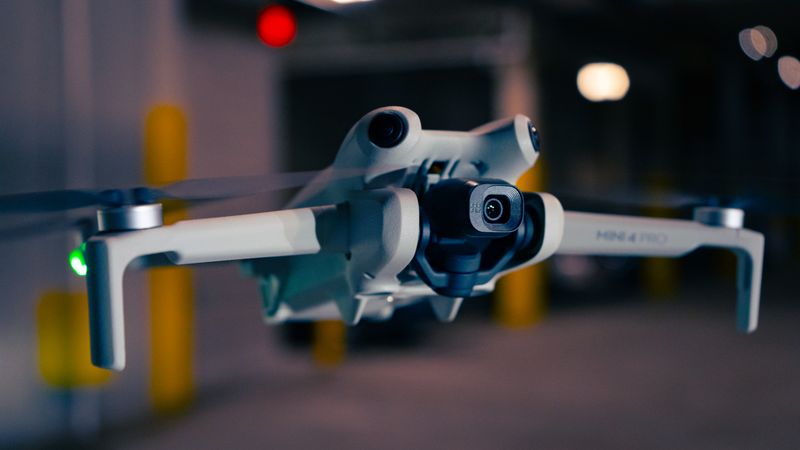
Safety is managed through a combination of on-board collision avoidance and operational policies. The 360-degree vision system allows drones to maneuver around obstacles, and they are programmed to find safe landing zones if an emergency or low-battery event occurs. Jackie Wu, CEO of Corvus Robotics, emphasizes that the most effective way to ensure safety in mixed environments is through clear operational separation: scheduling drone flights during off-hours, particularly the third shift. When drones must fly during human shifts, the company implements strict procedural zones where personnel are notified to keep clear of active scanning aisles.
Rethinking Autonomous Deployment
Full autonomy in this context is defined by continuous, end-to-end operation without a human in the loop. The drones follow scheduled missions, identify items of interest, avoid moving obstacles, land on charging docks, and share telemetry—all without manual oversight. This represents a notable maturation of Level 4 autonomous systems. As logistics operators face increased pressure to shrink their fulfillment windows, automation is moving beyond simple point-to-point transport and toward the intelligent management of data and inventory.
The industry is observing a shift in how these systems are evaluated. Rather than comparing drones directly to human scanning speed, operators are now looking at the value of having a continuous stream of inventory data. A daily, automated count allows companies to react to discrepancies immediately, reducing the cost of stockouts and over-ordering.
The Cost of Inaccuracy
According to the Material Handling Industry association, inventory accuracy rates in traditional warehouses average around 65 percent. Every misplaced pallet or mislabeled bin creates a cascade of inefficiencies, including unnecessary reorders, delayed shipments, and wasted labor hours spent searching for missing items. Annual losses from inventory discrepancies can reach millions for large retailers. The continuous scanning model offered by Corvus directly addresses this by replacing periodic, error-prone counts with constant, automated verification.
Beyond the Drone Itself
The drone fleet is only one component of Corvus' broader warehouse intelligence platform. The system aggregates scan data into a cloud-based dashboard where facility managers can monitor stock levels, receive anomaly alerts, and track operational metrics. Integration with existing warehouse management systems is supported via API, allowing the inventory data to flow directly into ordering and fulfillment workflows.
The data pipeline extends beyond simple barcode or RFID reads. Each drone is equipped with computer vision capabilities that can read text labels, interpret barcode symbologies, and even assess package conditions such as damage or tampering. This multi-modal sensing approach gives facility operators a richer understanding of their inventory than traditional scanners alone.
Regulatory and Operational Considerations
Deploying autonomous drones in occupied warehouses raises regulatory questions. The Federal Aviation Administration's Part 107 rules govern small unmanned aircraft, but indoor operations fall outside that framework. Operators must instead ensure compliance with OSHA workplace safety standards and facility-specific risk assessments. Corvus has conducted extensive safety testing in collaboration with insurance partners to validate that their collision avoidance systems meet industry benchmarks for indoor robotics.
The company has also invested heavily in geofencing technology. Each drone is programmed with no-fly zones corresponding to high-traffic human corridors, break rooms, and loading docks. Real-time position tracking ensures that no drone enters a restricted area, and the system automatically reroutes active missions if temporary personnel are detected in an aisle.
Scaling Across Facilities
Pilot projects are currently running across Global 2000 companies in North America and Europe. Corvus reports that deployment cycles have shortened significantly as their ground crew teams refine the initial site survey process. A typical rollout begins with a geometric and semantic map of the facility, followed by scheduled missions that the drones fly autonomously for weeks at a time.
The scalability question is a critical one. Early adopters have expanded deployments from single warehouses to multi-building campuses, with centralized dashboards managing fleets of 20 or more drones across separate structures. Corvus says the system can handle mixed fleets, including different drone models optimized for various aisle widths and ceiling heights.
The Competitive Field
Corvus is not alone in pursuing autonomous inventory drones. Competitors like FlytBase and Verity Studios have also developed indoor drone solutions, primarily for inventory auditing in large retail and distribution centers. However, Corvus positions itself as a Level 4 autonomy platform, meaning its drones handle recharging, mission planning, and data sharing entirely without human intervention. Other vendors often require manual drone deployment for each scan session.
The differentiation appears to matter in real-world operations. Companies evaluating these systems weigh the labor cost of deploying and retrieving manual drones against the capital investment in fully autonomous fleets. Early data suggests that high-volume facilities see a positive return within 18 months, driven by reduced labor hours and improved inventory accuracy.
Looking Forward
Warehouse operators are placing growing emphasis on continuous operational intelligence. As IEEE Spectrum reports, the successful integration of autonomous drone fleets into large-scale logistics is no longer about replacing human labor, but about empowering facility managers to move from periodic auditing to real-time visibility. With pilot programs maturing into full production deployments, Corvus and its peers are signaling that warehouse logistics of tomorrow is not just automated—it is airborne and continuous.
The shift toward autonomy is reshaping how facility managers approach their most fundamental challenge: knowing where things are. By placing that awareness on an unbroken loop of daily automated verification, autonomous inventory drones are turning the warehouse into a site of real-time operational intelligence.
Keywords: robotics, drones, warehouse automation, logistics, inventory management, artificial intelligence, autonomous systems
Creator: Tech Desk