Australia's EV Boom Passes One in Five New Sales — and the Charging Gap Is the Next Test
Australian drivers are buying electric cars at a pace the industry did not see coming. July's sales data, released on Wednesday, put battery-electric vehicles at 21.7 percent of all new vehicles in the country, the third consecutive month above one in five. The number slipped a little from June's 23.3 percent record, but the direction is clear: after a year of war-driven fuel pain, Australians are switching off the pump in numbers that have surprised even the researchers who study the shift.
The Federal Chamber of Automotive Industry, which compiles the monthly tallies, counted 23,510 battery-electric vehicles sold in July. A year earlier, BEVs claimed roughly one in fourteen new cars. The tripling of the market share, the chamber said, is the direct result of the fuel crisis that has followed renewed conflict in the region — and it kept running even after the financial-year rush that usually drains demand.
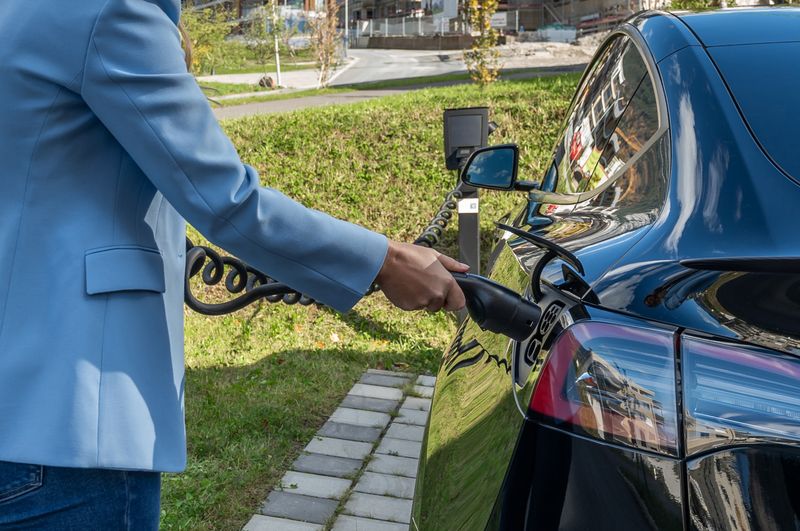
"This is not a blip," says Rebecca Huntley, the social researcher who compiles the Clean Energy Solutions Index, a national survey tracking how Australians feel about the energy shift. Her group's 2026 report found support for electric vehicles climbed six points in a single year, the biggest jump of any of the eleven clean technologies it tracks. "It's incredible what a year in a war will make," Huntley told ABC News. She half-joked that if you wanted a poster figure for Australian EV take-up, "it'd be Donald Trump" — the war he is tied to pushing fuel prices higher and flipping attitudes about the corner servo.
The market has flipped from range worry to running costs
Toyota still holds the top spot for total new-car sales with more than 115,000 units in July, but it is now racing a Chinese challenger. BYD sold more than 60,000 cars last month, closing what used to be an unbridgeable gap in the local rankings. The mix makes the point: buyers are no longer a handful of early adopters willing to accept any inconvenience.
"For the last few years, the question was range anxiety — will the battery last my commute and my weekend?" said Andrea Pellegrini, a researcher at the University of Sydney's Institute of Transport and Logistics Studies. "Now we are going into a phase where the market is becoming more mature. People are less concerned about the waiting time and the driving range. They think it's good value for money once they start driving it."
That is a wholesale change in how Australians weigh a car buying decision. Years ago some politicians argued EVs would "end the weekend" by making it hard to tow a boat or a caravan. That argument looks dated. With petrol above two dollars and diesel heavier again, the reliability story of the combustion engine no longer reads as reliable. Huntley's team found the insecurity around the internal-combustion engine has pushed more people to at least consider an EV — not because they are techno-optimists, but because a war could spike the pump price at any moment.
"Feeling like if something like this happens again — and a lot of people expect it might — it's just not going to affect me as much," she said of the feeling of taking back control.
Home charging versus the rent
Owners who live in a house with rooftop solar have the easiest route to an EV dividend. Margaret Killen, a Tasmanian who drove a diesel for a decade with a sticker promising her next car would be electric, finally made the jump.
"It's been going really well, and I'm really pleased with my purchase," Killen said. "We've got a charger at home, we pop it on when it's low peak or sometimes we have free power hours in Tassie." Her running costs, with solar on the roof, are now a small share of what the diesel used to cost.
That path is not open to everyone. One in nine Australians lives in an apartment, and about three in ten rent. For them, plugging in at home is usually out of their control.
"If you're a renter, it makes it very complicated to have a private charger installed at your property because you do not actually have a say in it," said Pellegrini. "That segment of the market is really crucial, because if people live in apartment units and want to buy an electric vehicle, they currently mostly rely on the public network."
That is exactly where the charging build-out needs to run ahead of the sales curve.
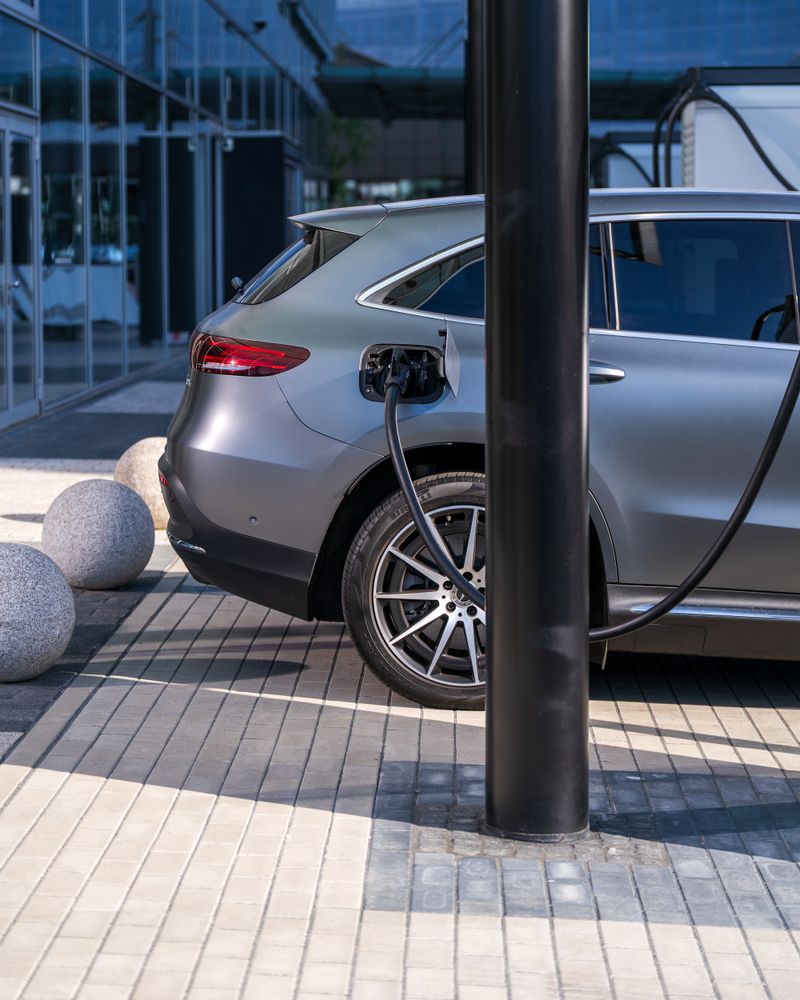
Around the world, the ratio of cars to chargers is the number planners watch most closely. A widely cited rule of thumb says a public network needs about one charger for every ten plug-in vehicles to keep queues short and useful. Australia still sits well inside that comfort zone in the big cities, where a growing share of drivers charge at work or at home. The strain shows up in the regions and in the rental market, where the choice is not between home charging and public charging but between public charging and no convenient option at all.
Charging is the next bottleneck
The Federal Chamber of Automotive Industry is the first to admit it. Chief executive Tony Weber welcomed the record month but pointed to the risk: "Accessible and dependable charging will be critical to maintaining consumer confidence as electric vehicles become a larger part of Australia's new-vehicle fleet."
In short, the cars are arriving faster than the poles that feed them. Public charging infrastructure is being rolled out by state governments, private networks, and retail operators, but the pace varies widely from suburb to suburb. Regional drivers still carry the most anxiety about whether they can top up on a long haul, and fast chargers along the national highway corridors remain thinner than the sales chart suggests. ABC News reported the same hesitancy among renters and apartment dwellers who have no say over a wall box in their building. Urban buyers increasingly treat a plug like a fuel nozzle; the hardest cases are the renters who cannot charge at home and the regional travellers who need the gaps between chargers to stretch further.
A wave building behind Australia
None of this is only an Australian story. The same cross-current of war, fuel and Chinese price pressure is reshaping Southeast Asia. In the second quarter, ASEAN car sales got a lift from the EV boom, with Indonesia's overall market up roughly 34 percent, driven by Chinese brands. BYD alone captured about 5.3 percent of Indonesia's whole vehicle market in the first half of 2026, more than enough to rank it as one of the top sellers, according to Nikkei Asia. Vietnamese maker VinFast helped lift Vietnam's sales, and both nations are closing in on Thailand's front seat in the regional BEV race.
Jakarta's momentum helped Chinese automakers widen their line-up too. At a major auto show in Jakarta at the end of July, one big Chinese brand unveiled a plug-in hybrid, pitching at buyers who worry about charging coverage and long-distance runs — the same tension Australian research found on the street. If global EV sales are climbing generally (see the global sales analysis), the story is now about how fast chargers and home plugs can catch the curve.
The lesson in Australia is the same one the researchers found: with running costs the draw, infrastructure the constraint, and the adoption line climbing, the gap between a home charger and a bare curb-side pole is likely to decide how smoothly that line runs from here.
Related coverage: read more EV market and policy reporting in the EV category, and our take on the underlying battery technology in this week's posts.