Anthropic Hands U.S. K-12 Teachers Free Premium Claude for a Year
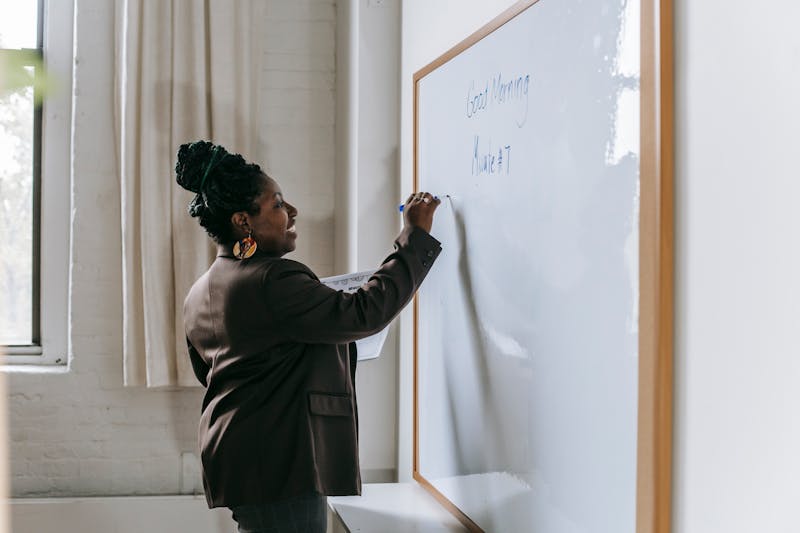
Anthropic said on July 14 it will give every verified K-12 teacher in the United States a full year of premium Claude access at no cost. The program, called Claude for Teachers, is the company's clearest move yet into the classroom, and it drops a paid product into a market already crowded with free and low-cost AI helpers.
Teachers sign up with a school-issued email and a document that proves their role, such as a school ID, contract, pay stub, or certificate. Anyone verified before June 30, 2027 gets twelve months of access. Drew Bent, Anthropic's education lead, told Education Week the team has no revenue targets. "We are focused on impact and improving student learning," he said.
The launch lands as schools across the country wrestle with how to let students use chatbots without cheating or skipping the thinking. Anthropic is betting that the safer bet is to put the tool in teachers' hands first.
Why Anthropic aimed at teachers first
The company leans on a simple problem. Decades of research show that practices like differentiation, mastery-based learning, and small-group instruction reliably lift student achievement. Most teachers lack the time and resources to run them well. Budgets are stretched, classes often run too large to meet each child's needs, and planning spills into evenings. The strain hits under-resourced schools hardest.
Anthropic cites early evidence from Stanford's Scale initiative that the payoff of AI for students is mixed and depends on how the tool is used, while AI aimed at teachers can strengthen instruction and improve outcomes. Claude for Teachers is built to support the craft behind good teaching and give instructors back the one thing they say they run out of: time with students.
What the tool actually does
Claude for Teachers is more than a chat window. It ships with a library of "teaching skills" built with Learning Commons, the new name for the Chan Zuckerberg Initiative's education arm. Those skills plug Claude into academic standards for all 50 states, plus the smaller competencies beneath each standard and the order in which students usually learn them.
When a teacher asks for a lesson plan, the model drafts it against that map instead of guessing. Anthropic points to partners such as OpenSciEd and Illustrative Mathematics' IM v.360 as the curricula Claude can pull from. A teacher can also ask Claude to build a differentiation plan, then generate student-facing materials tuned to different readiness levels in the same room, so a struggling student gets scaffolds while a ready one gets a harder stretch.
The package includes Claude Code and Cowork, the company's agentic features. A teacher can drop a folder of rosters, diagnostic scores, and attendance into a chat and ask Claude to sketch where each student stands. They can also hand off a recurring job, such as scanning the day's exit tickets at 4 p.m. and rewriting the next day's plan to match. Claude runs it while the teacher heads home.
Nine outside tools connect to the platform: ASSISTments, Brisk Teaching, Canva Education, Coteach, Diffit, Eedi, MagicSchool, Snorkl, and TeachFX. Each adds its own classroom function, from auto-scored math problems to feedback on how a teacher talks during a lesson.
Privacy promises and the FERPA question
Anthropic says the teacher data is not used to train its models. Student information falls under a K-12 Data Processing Addendum written to comply with the federal Family Educational Rights and Privacy Act. The tool is for educators only, which fits Claude's existing rule that users be 18 or older.
The company is also working with the American Federation of Teachers on what it calls a "Gold Standard" for safety and privacy in K-12 settings. "It's important that Anthropic is committing to these principles in their new Claude for Teachers \u2014 a tool designed by and for educators," said AFT president Randi Weingarten.
Those promises matter because schools have become a top target for hackers, and parents bristle at any hint that a child's data feeds a commercial model. Anthropic's stance mirrors moves by rivals who also claim classroom data stays out of training sets, yet district leaders still want to see the paperwork before they trust it.
Critics say the difference is thin
Not every observer is convinced the product breaks new ground. Benjamin Riley, founder of the think tank Cognitive Resonance, tested the pre-made lesson-plan prompt and came away unimpressed. "It doesn't look any different than anything I've seen from OpenAI or from Google," he said. "There's really no differentiator here."
Dylan Kane, a middle school math teacher in Leadville, Colorado, questioned whether tying a tool to state standards solves the hard parts of teaching. He noted that knowing the standards matters less than knowing how they build on last year's work and break into manageable steps. Kane, who has tried ChatGPT, Gemini, and Claude, warned that such tools "risk de-skilling newer teachers" even if they help skilled ones a bit.
Mark Racine, a former tech leader for Boston Public Schools, welcomed the competition but criticized Anthropic for "completely skip[ping] over the role of district leaders" who normally vet and approve classroom software. That gap could slow adoption in districts with strict approval processes.
Sandra Liu Huang, president of Learning Commons, pushed back. She argued that large language models produce better results when they can read the Knowledge Graph that maps standards to related skills, rather than guessing at those links. "It's pretty hard for a single teacher to keep all of that straight for every single student," she said.
A crowded field of AI classroom tools
Anthropic is late to a busy room. OpenAI launched ChatGPT for Teachers in November 2025. Google's Gemini and Microsoft's Copilot both offer K-12 versions for schools. Ed-tech firms such as Brisk Teaching, MagicSchool AI, and SchoolAI have sold teacher-facing generators for a couple of years.
What sets Claude for Teachers apart, on paper, is the standards mapping and the open release of its building blocks. Anthropic published the teaching skills as an open-source repository and shared a write-up of how it evaluated them. The company also released an AI Fluency course for PK-12 teachers, co-created with Teach For America and licensed under Creative Commons, so the guidance works across any model.
A pilot with the Detroit Public Schools Community District will study the effect on educator wellbeing and practice. The effort ties into Anthropic's broader partnership with the Gates Foundation to build tools that lift K-12 outcomes. Playlab plans to help a national network of lab schools put the tools to work.
What comes next
The free offer covers individual educators. Anthropic said a version for whole schools and districts is "coming soon," and that districts can use Claude for Nonprofits in the meantime. The company frames the launch as a public good rather than a product launch, which fits a moment when lawmakers and parents are watching how AI enters schools.
For teachers weighing whether to trust another chatbot, the proof will be in the classroom, not the press release. The most useful test may be the Detroit pilot, where researchers can measure whether the tool actually returns time to instructors or simply adds one more screen to manage.
Read the full announcement from Anthropic, and see Education Week's critique of the rollout. More context on AI policy lives in our AI coverage, and the data-privacy angle connects to our cybersecurity reporting.