Amazon Prime Air Expands Drone Delivery to Nearly 500 US Cities by Year-End
Amazon announced Wednesday it will expand its Prime Air drone delivery service to nearly 500 US cities and towns by the end of 2026 — a sixfold jump from the 11 metro areas it serves today. The plan would put tens of millions of customers within range of a delivery drone, a milestone for a project that has survived regulatory delays, staff cuts, and community complaints since Jeff Bezos first showed off a prototype on CBS's 60 Minutes back in 2013.
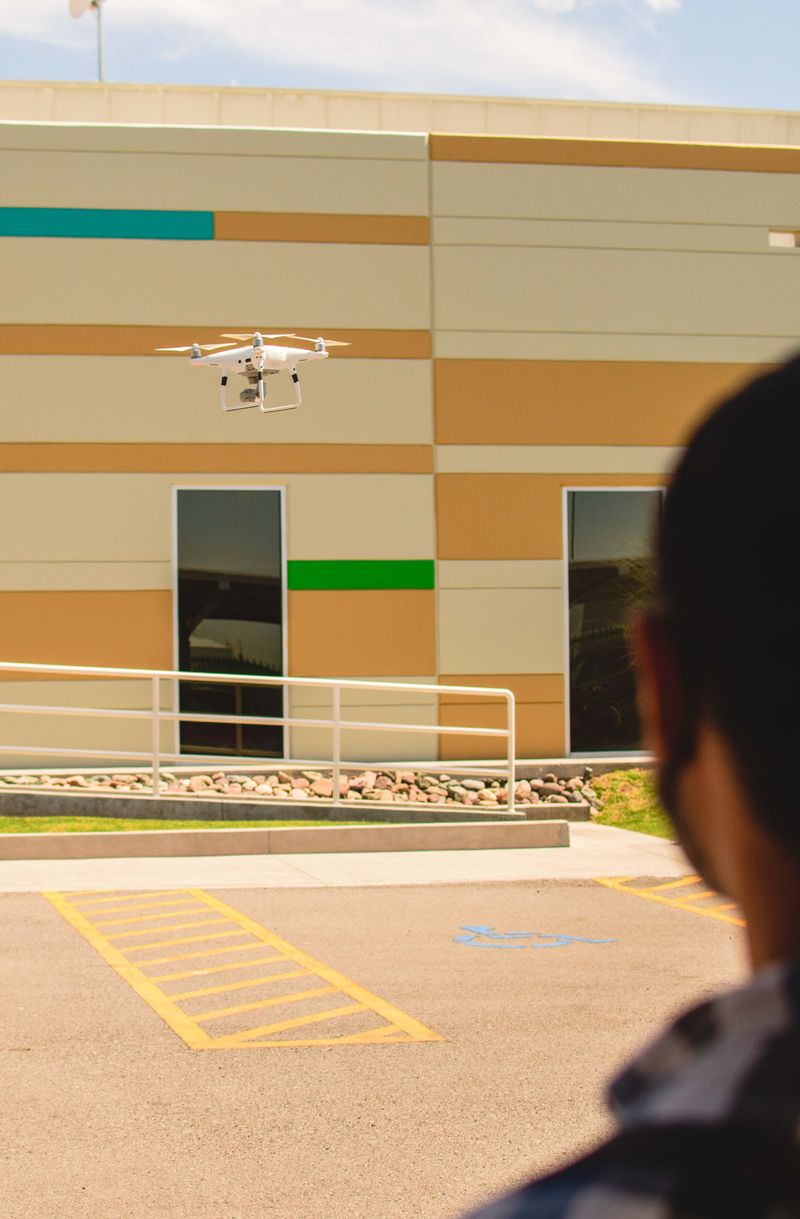
Scaled Deployment After Years of Turbulence
Prime Air's expansion rides on the Federal Aviation Administration's 2024 green light for long-range beyond-visual-line-of-sight operations, as CNBC reported. David Carbon, the division's vice president, told staff in an internal all-hands meeting in March that Prime Air would make 1 million deliveries this year and that Amazon runs "the highest demand drone delivery service in the industry." The company said Wednesday it has already completed hundreds of thousands of deliveries in 2026 and is making thousands per day.
New coverage will reach Chicago, Syracuse, Cleveland, and Atlanta, alongside existing markets in Phoenix, Dallas, Houston, San Antonio, Waco, Tampa, Kansas City, Baton Rouge, Detroit, and Omaha. Amazon's own expansion announcement lists the service areas and ZIP-code eligibility.
The economics are straightforward: packages up to 5 pounds arrive in as little as 30 minutes. Prime members who spend $50 or more get the delivery free; otherwise it costs $2.99, and non-members pay $4.99. Drones work within a 7.5-mile radius of fulfillment sites, which keeps them mostly in suburban neighborhoods with clear landing zones.
MK30 Drone Powers Faster, Quieter Operations
The MK30, Amazon's current delivery drone, carries a payload up to 5 pounds and weighs as much as 83 pounds at takeoff, per Amazon's Prime Air operations page. Amazon claims double the range and half the noise of earlier models. The aircraft descends to about 13 feet before releasing its package, though Carbon says Prime Air is trialing a retractable-tether "gentle delivery option" that lowers items to the ground — a method Wing and Zipline already use — so fragile goods like cartons of eggs survive the trip.
Prime Air has also hooked its drone network into larger robotic sort centers, where more inventory is stored than in the same-day delivery hubs that previously hosted the operation. That integration widens the catalog of drone-eligible items beyond a handful of fast-moving essentials.
Safety Incidents Prompt Algorithm Retraining
The program has hit real turbulence. In October 2025, two Amazon drones collided with a crane in Tolleson, Arizona, damaging equipment and starting a fire. The National Transportation Safety Board and the FAA both opened investigations that remain open. Carbon acknowledged the episode in blunt terms: "We trained our algorithms, we felt pretty good, but we found in the real world the performance just wasn't good enough and let me tell you, that was a humbling experience."
A month later, a Prime Air drone snapped an internet cable while climbing out of a customer's yard in Waco, Texas, drawing another FAA probe. Then in July 2026, a drone crashed into a garden in Darlington, England, after coming into contact with something sticking up above a moving vehicle's roof. The UK's Air Accidents Investigation Branch opened an inquiry; Amazon told the BBC the aircraft operated as designed and landed safely, and nobody was hurt.
Amazon says it has retrained its obstacle-detection systems and tightened flight protocols since the crane collision. The company also notes that each drone generation has cut noise substantially, arguing the aircraft are no louder than an idling delivery truck.
The Competitive Field: Wing and Zipline Already Lead on Volume
Amazon is not alone in the air. Alphabet's Wing crossed 1 million commercial drone deliveries earlier this year and operates in 20 US markets through partnerships with Walmart and DoorDash. Zipline, which runs on four continents, has logged 2 million deliveries. Walmart and Wing recently added seven new markets with a plan to reach more than 40 million American customers by 2027.
Uber and Zipline announced a partnership in August 2026 aiming at 1 million drone deliveries per day by the end of 2029, with first flights planned for later this year on Uber Eats. DoorDash, meanwhile, launched its own in-house drone delivery program in July 2026 after receiving FAA certification, according to Channel News Asia.
Amazon's footprint math is different: roughly 500 cities means tens of millions of customers, which would dwarf any competitor's reach. But every new community requires local regulatory approval, often after council hearings where residents raise noise, privacy, and property-value concerns.

Regulatory and Community Hurdles Remain
An FAA rule that would make longer beyond-line-of-sight flights easier still awaits final approval. Amazon has asked regulators for permission to use a special wireless frequency in some drone tests, saying GPS signals degrade at low altitudes.
Community friction persists. Amazon pulled out of Lockeford, California, and College Station, Texas, after early pilots drew noise complaints. In Auburn Hills, Michigan, residents told CBS Detroit about a constant buzzing overhead and worries about privacy. Josh Lowitz, co-founder of Consumer Intelligence Research Partners, visited Amazon's Prime Air lab in Seattle this week and came away with a measured take on the economics: the company mainly delivers in suburbs because it needs a roughly 10-foot radius to set down safely.
"They're working on battery technology and sound technology, trying to make it better and better," Lowitz told Fortune. "If the delivery range goes from seven miles to 15 miles, they could reach people in rural areas."
Speed as a Strategic Imperative
Amazon's drone push fits a pattern that started with two-day Prime shipping and has since compressed to one-day and same-day delivery across much of the US. The company runs at least 65 sub-same-day centers and has been testing ultrafast delivery under its Amazon Now banner. ShipMatrix data cited by Fortune puts Amazon's daily US package volume near 20 million, which puts even a 1-million-drone-delivery year in perspective: drones remain a rounding error in the network, but the cost structure is the point.
The delivery empire is subsidized by seller fees — nearly a quarter of Amazon's revenue — and by more than 200 million Prime members paying $139 a year. Those funds let Amazon pour money into logistics experiments most retailers can't afford.
Carbon's March line sums up the calculus: "Bottom line is we have yet to reach diminishing returns when it comes to how fast we deliver to our customers." Drone delivery also hedges against labor pressures. New York Mayor Zohran Mamdani is backing a bill that would force Amazon and other firms to treat delivery drivers as employees rather than subcontractors; automation that needs fewer humans per package looks more attractive in that scenario.
For more coverage of aerial and autonomous delivery, see Robotics & Drones. Related reading: Warehouse Drone Funding.
How the MK30 Drops a Package
The current delivery mechanism is a controlled release from roughly 13 feet. The drone holds position over a landing zone, confirms through its onboard cameras that the area is clear of people, pets, and cars, then eases the package down onto the ground. Amazon's own description of the Prime Air operations says the MK30s descend to 13 feet before delivering to the customer's predetermined location, with the ability to alter delivery points if there are ground hazards.
The tethered option Carbon described works differently: a retractable line lowers the package the rest of the way, so a fragile item never free-falls. Wing and Zipline already ship that way, and Carbon said the trial is aimed at expanding what drones can carry — eggs and other perishables being the obvious test case.
Payload size remains the hard limit. A package must fit in a large shoebox and weigh no more than 5 pounds, which rules out most grocery orders and bulky items. That is why the shift into robotic sort centers matters: bigger facilities stock a wider range of small, eligible goods close to takeoff points, so a drone standing by can be loaded with something the customer actually ordered rather than a narrow preset list.
What the 500-City Expansion Means for Logistics
The reach math is aggressive. Amazon's current 11 sites cover 10 metro areas, and the company counts seven states among its active markets, according to Amazon's own materials. Six more locations were coming online even before Wednesday's announcement, per CNBC. Scaling to roughly 500 cities means standing up drone operations in hundreds of communities in a single planning cycle.
Each one needs federal and local sign-off. The FAA is still writing rules for beyond-visual-line-of-sight operations at scale, and Amazon has told regulators its GPS signals degrade at lower altitudes while asking to test on a special wireless frequency. Locally, the company has to negotiate flight paths and noise limits with municipalities one by one, and the Channel News Asia report on the expansion noted that Amazon "will have to seek regulatory approval in each of the communities it plans to enter, often requiring local council hearings."
That is why most current operations sit in suburbs. Lowitz's point about the 10-foot radius cuts both ways: suburban yards give drones room to land, but they also put the aircraft right over people's homes, which is where the noise and privacy complaints come from.
What Comes After the 500-City Push
If Amazon hits its year-end target, the next argument is about reach, not novelty. Lowitz's seven-to-15-mile range point is the key: a drone that can fly 15 miles from its base could serve rural areas that today cost a van and a driver per stop. Amazon has not said whether the next MK-generation pushes range that far, but the FAA wireless-frequency request and the pending BVLOS rule are the pieces that would make it possible.
The company's own framing is consistent across every public statement: the aircraft are getting quieter, the payloads are getting more fragile-compatible, and the network is getting denser. Whether that turns 500-city coverage into a real business depends on approval timelines, the safety record through rapid deployment, and whether the complaints follow the drones to every new suburb. Amazon has the capital and the logistics muscle to find out — the same way it did with two-day shipping, one-day shipping, and same-day delivery before it.