AI Inference Pulls Compute Back to the Edge as Metro Data Centers Surge
The story of AI infrastructure used to be simple: train the model in a hyper-scale data center, then serve it from the same place. That model is cracking. Across 2026, production AI is pulling inference back toward cities, factory floors, and the network edge, and the infrastructure to support it is not ready for the shift. The center of gravity is moving, and the build-out is lagging behind it in a way that will shape where the next wave of AI features can actually run.
The driver is latency and physics. A model that answers a user in Jakarta should not round-trip to a campus three time zones away. Real-time uses, vision on a factory line, translation in a call, fraud checks at a checkout, need compute close to where the event happens. As S&P Global notes in its 2026 infrastructure trends, edge data centers become more important precisely because inference, not just training, now runs continuously in production rather than as a one-off batch job that finishes and forgets.
Metro colocation gets a second life
The shift is reshaping real estate. Mathpix's Brooklyn GPU deployment is a clear example: a production AI workload sited in an urban colocation facility rather than a remote campus, closer to users and to the fiber that already runs through the city. Urban sites trade scale for proximity, and for inference that trade is worth making, because the round-trip that disappears is the one users feel as lag. A few milliseconds shaved from every response adds up to a product that feels alive.
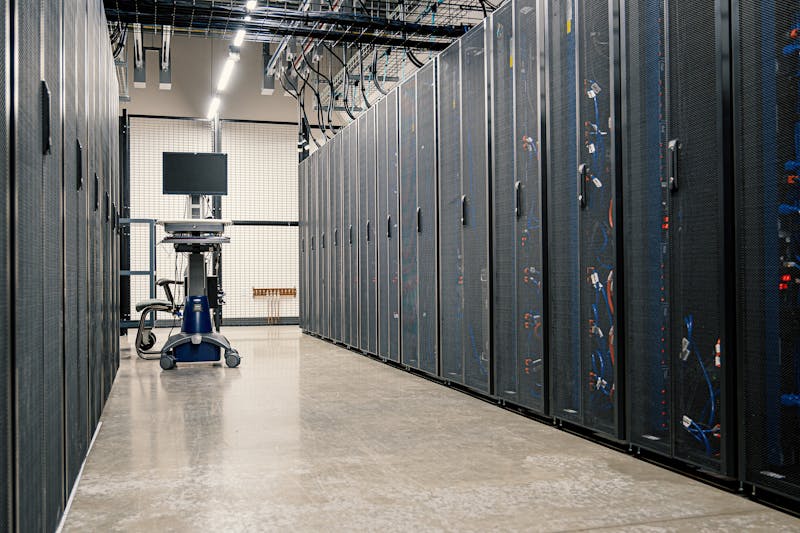
Legacy data centers, built for batch and storage, were not designed for the power density and cooling that GPU inference demands. Retrofitting them, more power per rack, denser cooling, faster interconnect, is a separate build from the greenfield hyperscale campus, and it is where much of the 2026 spend is quietly going. The unglamorous middle child of infrastructure is suddenly the busy one, because it is the one closest to the people using the models.
Why the edge, and why now
Three forces converge. First, model quality at smaller sizes improved, so a capable model can run on modest hardware near the user instead of a giant cluster far away, which changes the economics of where to put the compute. Second, privacy and data-residency rules push processing to where the data lives, especially in regulated industries that cannot ship records to a distant region. Third, bandwidth costs and variability make round-trips to a distant region expensive and flaky for high-volume services that cannot tolerate jitter.
The result is a tiering of compute: giant campuses for training and heavy batch, metro facilities for low-latency inference, and increasingly small edge nodes, even on-premises boxes, for the most sensitive or time-critical work. Each tier has a job, and the job is defined by how close the compute must sit to the event it serves, not by how cheap the power is at the site.
The infrastructure gap
The catch is capacity. Edge sites were sized for light workloads, not racks of accelerators drawing tens of kilowatts each. Power, cooling, and skilled staffing are scarce outside major hubs. A metro data center that handled web traffic a few years ago may simply lack the electrical feed to host a GPU cluster today, and upgrading that feed is a construction project, not a configuration change that a script can apply.
Operators are responding with prefabricated modules and tighter liquid cooling, but the build-out lags demand. For the near term, inference at the edge will be constrained less by software than by concrete, copper, and cooling water, the unglamorous inputs that decide whether a clever model actually runs where it is needed. The bottleneck has moved from the algorithm to the building, and builders, not coders, hold the key.
What it means
For builders, the implication is to plan inference topology deliberately: which models stay central, which move to metro, which drop to the edge. For enterprises, it is a reason to revisit where data lives and what latency users will accept before a feature ships, because a feature that lags is a feature nobody uses. And for the industry, it is a reminder that AI's physical footprint is spreading out, not consolidating into a handful of mega-camps.
The hype cycle framed AI as a cloud story. The deployment cycle is rewriting it as a distributed one, and the metro data center, long the middle child, is the facility everyone suddenly wants a seat in, at a moment when the seats are already filling. Our Cloud & Edge section follows the build-out, and Semiconductors covers the chips that fill the racks.

The cost of distribution
Spreading compute to the edge is not free. Every new metro node is a site to power, cool, secure, and staff, and the sum of many small facilities can cost more to run than one large one. The economics only work where latency or residency makes the proximity worth the overhead. Smart operators will keep the bulk of training central and push only the latency-sensitive slice outward, accepting a more complex topology because the alternative, a round-trip to a distant region, is the thing users will not tolerate.
The skill is in the split, not the spread. Putting everything everywhere is the rookie error; it multiplies cost without multiplying value. The operators who win will be the ones who can state, in writing, which model runs where and why, and who revisit that map as models shrink and bandwidth improves. Distribution is a design decision, and like every design decision, it rewards the teams that make it deliberately.
For the enterprises buying this, the practical move is to start small. Pick one latency-sensitive feature, place it in one metro node, measure the gain, and expand from evidence. The firms that treat edge as a bet to stage, not a revolution to declare, are the ones still standing when the hype cools and the electricity bills arrive. The rest will have built elegant infrastructure that no one uses, which is its own quiet failure.