AI Data Center Expansion Accelerates as Tech Giants Grapple with Power and Pressure
September 1, 2026 — The explosive growth of artificial intelligence has triggered a massive expansion of data center infrastructure worldwide, but the rapid build-out is raising pressing questions about energy capacity, local impacts, and long-term sustainability.
Power Grid Strain and the Summer Crunch
The summer of 2026 has seen data center operators pushed to their limits as AI workloads demand unprecedented power. In northern Virginia, Dominion Energy reported record electricity demand from data center clusters, with some facilities drawing up to 200 megawatts apiece — equivalent to a small city's worth of power consumption. Grid operators in Texas have issued multiple warnings about potential brownouts during peak afternoon hours, as crypto mining operations and AI training clusters compete for the same limited generation capacity.
"We're seeing grid stress that we haven't encountered since the early 2010s summer peaks," said one grid operator who asked not to be named. "Every new AI facility that comes online adds another layer of stress, especially during heat waves when cooling demands spike and renewable generation dips."
The problem is particularly acute in regions where data center construction has outpaced grid upgrades by years. In some cases, utilities have had to impose "interconnection queues" that can delay new facility connections by three to five years — a timeline that threatens to strangle the AI boom before it even gets started. Tech companies have begun lobbying federal regulators for expedited interconnection procedures, arguing that the nation's AI competitiveness depends on resolving these bottlenecks quickly.
Community and Environmental Pushback
Near data center sites in Arizona and Georgia, resident groups have organized to oppose new construction, citing concerns about water usage, noise, and property values. A proposed $1 billion data center complex in Phoenix faced vocal opposition at a recent public hearing, with residents questioning the wisdom of locating massive water-intensive facilities in a desert region facing prolonged drought.
The environmental picture is equally complex. Data centers consume millions of gallons of water daily for cooling tower operations, even as AI companies publicly pledge carbon-neutral goals. In Virginia's Loudoun County — data center alley — residents have documented cases of lowered water tables and increased runoff from the sprawling campuses.
"I'm not anti-technology," said one longtime county resident at a planning commission meeting. "I'm asking why we're sacrificing our water supply and quality of life to power experiments that benefit people in other zip codes." Critics also point to the carbon footprint of construction materials — concrete and steel account for roughly 15 percent of global CO2 emissions, and a single large data center can embody many thousands of tons of embedded carbon.
The Cooling Conundrum
Traditional air-cooled data centers are particularly water- and energy-intensive. Newer facilities are experimenting with liquid cooling, immersion cooling, and even seawater cooling in coastal locations. Microsoft has been piloting two-phase liquid cooling systems that reduce water consumption by up to 95 percent compared to conventional approaches, while Google has committed to replenishing 120 percent of the water it consumes by 2030.
But scaling these technologies remains challenging. Liquid cooling systems require substantial upfront capital expenditure, and many existing facilities would need major retrofits to adopt them. The industry is also grappling with standards for refrigerant handling and disposal, as some cooling fluids carry environmental risks of their own. A recent study by the Uptime Institute found that while liquid cooling can reduce PUE from 1.6 to 1.2, the total cost of ownership savings typically only materialize after a three-to-five-year payback period — too long for many real estate-driven development cycles.
Reinventing the Data Center
Despite the challenges, the pressure is spurring innovation. Hyperscalers are redesigning facilities from the ground up with AI-specific workloads in mind — focusing on higher chip densities, optimized airflow patterns, and modular construction that can be deployed closer to renewable energy sources. Some companies are exploring "dark sites" that operate disconnected from the main grid, powered entirely by on-site solar and battery storage during peak hours.
The U.S. Department of Energy has launched an initiative to develop more efficient data center technologies, with $400 million in funding earmarked for next-generation cooling, power electronics, and building management systems. Industry consortia are also working on open standards for energy reporting, which could give customers visibility into the carbon footprint of their AI workloads. The Green Grid, a global consortium of technology companies, has released an updated version of its data center efficiency framework that includes revised PUE metrics adjusted for AI workload characteristics.
Economic and Workforce Implications
The data center boom is reshaping regional economies across the United States and Europe. In Quincy, Washington, a town of just over 700 residents, a 120-megawatt facility brought by a major cloud provider promised jobs but also strained the school district's budget as property values surged and new families arrived without corresponding school-age child infrastructure. The county commission eventually negotiated a community benefits agreement that included funding for broadband expansion, water infrastructure upgrades, and a graduated tax abatement structure.
Workforce dynamics are shifting as well. Data center operations require significantly fewer employees per megawatt than the construction phase — typically three to five full-time staff for a facility that consumed 200+ megawatts during peak operation. This imbalance has led some economic developers to advocate for "data center corridors" paired with training programs that prepare local residents for roles in facility operations, cybersecurity, and systems administration. The median salary for data center operations roles ranges from $65,000 for entry-level positions to over $120,000 for senior engineering management, according to the Uptime Institute's 2026 workforce survey.
Critics point out that many operations roles are filled through contractor pathways with limited benefits, while the bulk of the economic value accrues to the tech companies and property owners. A few forward-thinking municipalities have begun requiring project labor agreements that mandate local hiring preferences, apprenticeship participation, and health insurance standards as conditions of development approval.
The Path Forward
Nobody expects the data center boom to stop — AI demand shows no signs of slowing. But how the industry manages its environmental and community footprint will likely determine social license for continued expansion. The most forward-looking operators are treating sustainability not as a compliance checkbox but as a core design principle, from chip selection to facility location to cooling architecture.
As one data center designer put it: "The question isn't whether we can build bigger facilities. The question is whether we can build them in a way that's compatible with the communities and ecosystems that surround them. The answer will shape the AI industry for the next decade."
Mayor of a mid-sized Texas city recently expressed frustration with the pace of approvals: "We want the jobs and economic development that these facilities bring, but we also need our elected officials to do the hard work of updating our zoning codes, upgrading our grids, and ensuring that the benefits are shared broadly — not just captured by a handful of tech companies."
The regulatory scene is beginning to shift. Several U.S. states have introduced legislation requiring data center operators to disclose energy sources, water usage, and carbon emissions as a condition of operating permits. The European Union's recently enacted Corporate Sustainability Reporting Directive will also impact multinational AI companies, requiring granular ESG disclosures that could influence site selection and investment decisions.
Conclusion
The AI data center expansion presents a trilemma: meet soaring compute demand, minimize environmental harm, and maintain community support. None of these goals is achievable in isolation. The companies that thrived in the previous wave of cloud computing are discovering that the rules have changed — the margin for unchecked growth has narrowed, and stakeholders across the value chain are demanding greater accountability.
The next twelve months will be decisive. Facilities that can demonstrate genuine efficiency gains, water reuse, and community engagement will clear the path for continued expansion. Those that cannot may find themselves facing delayed permits, increased opposition, or — in the most extreme cases — halted projects mid-construction. The industry's response will likely shape not just the trajectory of AI infrastructure, but the public's trust in the technology itself.
Sources: The Verge — All the latest updates on AI data centers
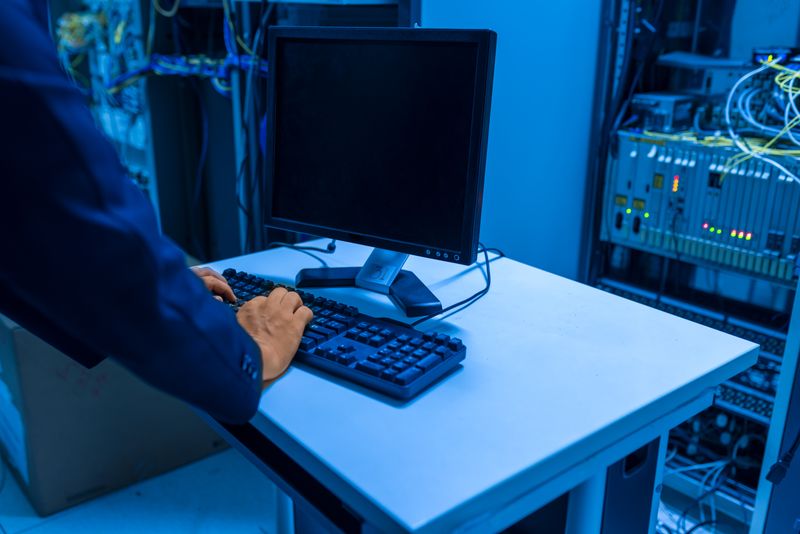
Photo: IT professional operating computer in a server room (Pexels, ID 37605911). Verified: HTTP 200, JPEG image, 800×534 pixels.
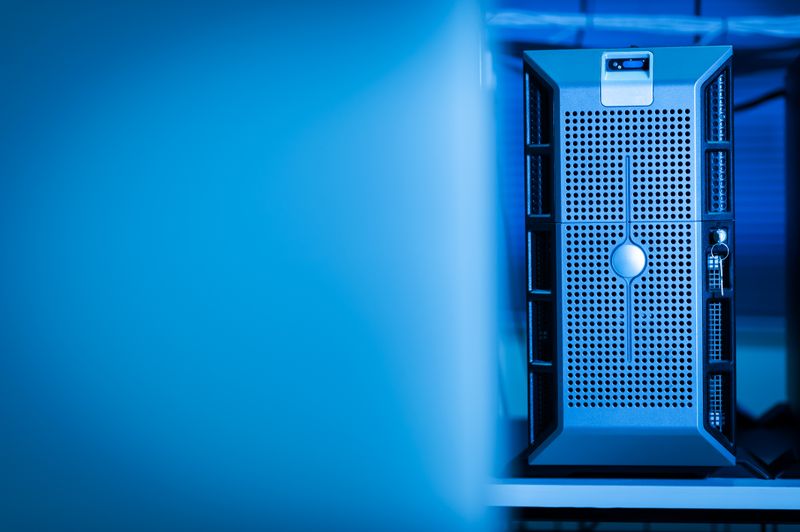
Photo: Modern server rack in data center environment (Pexels, ID 17489163). Verified: HTTP 200, JPEG image, 800×532 pixels.
Keywords: ai, data centers, infrastructure, energy, technology, artificial intelligence