AI Breakthroughs and Risks: GPT-6, Robotics, and Global Governance in October 2026
Introduction
The month of October 2026 has delivered a dense sequence of artificial intelligence milestones that span model breakthroughs, robotics convergence, scientific discovery, and regulatory response. From OpenAI's GPT-6 family rollout to TikTok CEO Shou Zi Chew's prediction of major scientific breakthroughs within three years, and from Singapore's AI risk management guidelines to the International Monetary Fund's recognition of AI investment as a global growth driver, the technology is transitioning from hype to structural economic force. Simultaneously, cautionary voices warn that AI's employment impact remains unresolved and that governance frameworks must evolve at the same pace as capabilities. This article surveys the key AI developments of mid-October 2026, weighing both the momentum and the risks. For deeper coverage of artificial intelligence developments, see the AI category section.
Main Content
GPT-6 Family: Frontier Intelligence and the AGI Debate
OpenAI has made the GPT-6 family broadly available across its ChatGPT tiers in early October 2026. GPT-6 Sol powers Plus, Pro, Business, and Enterprise users, while GPT-6 Luna serves Free and Go-tier users. The release introduces Intelligent UI, a capability that enables ChatGPT to generate fully interactive responses—tappable buttons, forms, charts, and interactive diagrams—directly within chat conversations. A 7-speed bicycle diagram and a Sunday lamb roast planner demonstrated how the model can render visual layouts and planning tools rather than plain text alone.
Beyond the user-interface advances, OpenAI President Greg Brockman stated at a September news conference marking the GPT-6 Astra launch that this model marks a fundamental turning point toward artificial general intelligence. "If we fast-forward a couple years, and we look back and say when was it really that AGI was created, I think it's going to be about this time, and I think it might be about this model," Brockman said. Astra delivered headline scores including 99.9% on ARC-AGI-3, 98% on FrontierMath Tier 4, and 100% on ExploitBench. However, independent researchers quickly qualified these results. ARC Prize Foundation President Greg Kamradt cautioned that saturating a closed benchmark does not constitute proof of AGI, noting Astra's score dropped to 62.7% under neutral harness testing. External benchmarks from Artificial Analysis showed Astra's aggregate intelligence index flat at 61 compared with GPT-5.6 Sol, trailing competitors such as Anthropic's Claude Fable 5.1. GPT-6 Astra also carries a 250% base API price increase, from $4/$20 to $10/$50 per million input/output tokens, raising questions about whether performance gains come from compute brute force rather than architectural breakthroughs.
Safety researchers at Stanford expressed concern over OpenAI quietly revising published metrics post-launch, including Astra's reported hallucination rate shifting from 4.2% to 2.0% before reverting. Yet OpenAI maintains that Astra demonstrates stronger resistance to jailbreak attempts and improved honesty about capability limits compared with GPT-5.6 Sol. The performance claims have sparked debate across the AI community, with some analysts questioning whether these metrics truly represent a leap in general intelligence or simply represent more sophisticated prompt engineering and computing power applied to existing architectures. The question of what constitutes AGI remains central to the ongoing discussion about AI development trajectories.
Robotics Breakthrough: GPT-6 and Embodied Intelligence
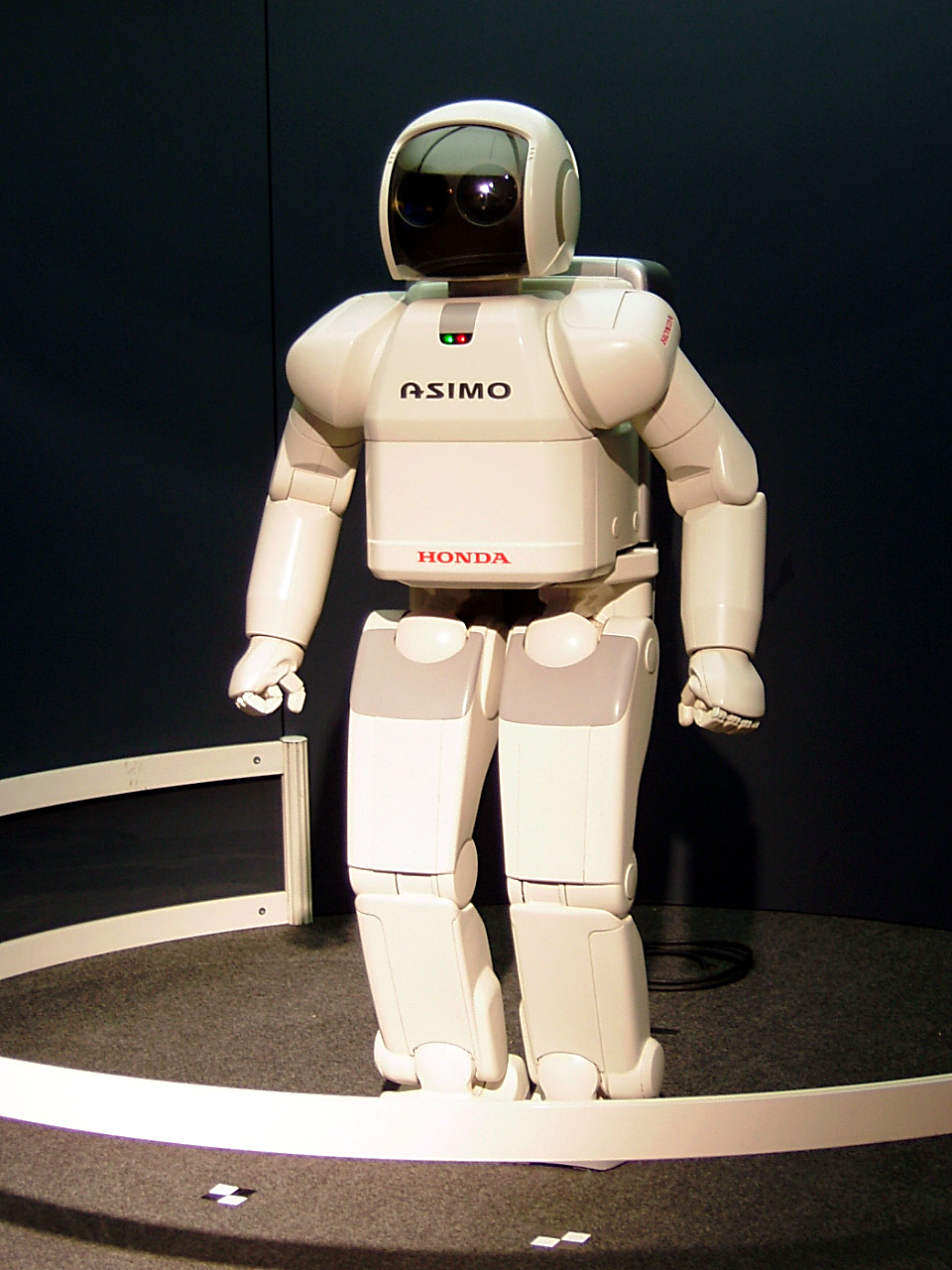
The GPT-6 release is already reshaping expectations for robotics. Unitree Robotics founder Wang Xingxing said at an October 12 event in Shanghai that OpenAI's latest AI advances could produce a robotics breakthrough "within one or two years." Wang stated that a potential GPT-7 model released next year could directly crack the problems of embodied intelligence—a threshold his company had previously estimated might take two to three years at the fastest pace, or as long as a decade. Wang noted that GPT-6 had accelerated industry timelines enough to make a "ChatGPT moment" for embodied AI plausible within a year.
TikTok CEO Shou Zi Chew reinforced this view at the DBS Asia Future Forward Conference in Singapore on October 12, predicting major scientific breakthroughs from AI within the next two to three years across physics, biotech, chemistry, and material science. Chew highlighted ByteDance's own AI research expansion, including the April unveiling of Protenix-v2, an AI model focused on biomolecular structure prediction with drug discovery applications. He also warned about alignment challenges, asking how models can be aligned to human values when they perform tasks that seem obvious to humans but not to machines. Chew cautioned that cybersecurity risks are growing as AI makes fraudulent activities cheaper for malicious actors, noting that users may grant AI agents extensive permissions without fully understanding consequences. This convergence between AI language models and physical robotics is reminiscent of the way large language models have transformed code generation—the technology now promises to similarly transform how robots learn and interact with the physical world.

The data center imagery above underscores a critical point: advanced AI models like GPT-6 require massive computational infrastructure, while autonomous robots require precisely the same data center ecosystems that the IMF has identified as AI growth drivers. The same facilities that house AI training clusters are becoming increasingly important for deploying AI-driven robotics systems in logistics, manufacturing, and services. This technological convergence suggests that the future of robotics may be as much about data center optimization as it is about mechanical innovation.
AI in Science and Mathematics
OpenAI announced on October 6, 2026, that it is releasing a broad range of new mathematical results produced by an internal frontier model. The company committed $5 million to a new Simons Foundation initiative to help mathematicians examine, understand, and build on AI-generated results. The release includes formalizations of many proofs in Lean, a programming language that allows mathematical proofs to be computer-checked, along with summaries of model reasoning and compute estimates—each result used roughly the equivalent of three hours of ChatGPT Pro thinking.
Chew's ByteDance announcement similarly emphasized scientific AI. Protenix-v2 targets biomolecular structure prediction, signaling how major tech companies are directing AI research beyond consumer applications toward drug discovery and fundamental science. These parallel developments suggest AI is becoming a cross-cutting research instrument rather than merely a product feature. The implications extend beyond chemistry and physics; AI's ability to solve complex combinatorial problems is also transforming computational biology, materials science, and even protein folding research. Scientific publications are beginning to include AI-generated results as legitimate findings, marking a shift in how academic work is produced and validated.
For more on these developments, see the broader AI coverage at category.ai or explore the technical details published by the OpenAI Research Blog.
Regulatory Response: Singapore's AI Risk Guidelines
Singapore has moved swiftly to establish AI governance standards. The Monetary Authority of Singapore (MAS) issued Guidelines on Artificial Intelligence Risk Management on October 7, 2026, setting supervisory expectations for financial institutions to manage AI risks across the enterprise and individual use case levels. Effective from October 7, 2027, the Guidelines require FIs to maintain inventories of AI use cases, assess risk materiality, apply proportionate controls across the AI lifecycle, and manage third-party AI dependencies.
MAS Deputy Managing Director Ho Hern Shin emphasized that realising AI's benefits sustainably requires managing risks that come with increasingly capable systems. The framework covers board oversight, risk appetite, data governance, human oversight, cybersecurity, monitoring, and change management. MAS plans to consult further on agentic AI guidance in 2027. The Guidelines reflect a risk-proportionate approach: smaller FIs with low-risk AI use may implement basic policies, while larger institutions face more comprehensive obligations. This regulatory approach mirrors similar frameworks being developed in the European Union and United States, though Singapore's implementation timeline appears more aggressive. The financial sector's rapid adoption of AI for fraud detection, algorithmic trading, and customer service chatbots makes MAS's guidance particularly relevant for institutions worldwide looking to balance innovation with risk management.
The regulatory landscape is also evolving globally, with the European Union's AI Act entering its implementation phase and the United States considering new executive orders on AI safety. These developments suggest that by 2027, AI governance will be a critical consideration for any financial institution deploying advanced models, whether in customer-facing applications or back-office operations.
Global Growth and Employment Risks
The International Monetary Fund's October 2026 World Economic Outlook credits AI investment as a key driver behind its upgraded 3.1% global growth forecast for 2026. The IMF noted that just 32 countries now account for 95% of global growth, compared with 54 countries earlier in the year, highlighting a growing divergence between AI-benefiting economies and those left behind. Advanced economies building AI platforms and countries supplying AI hardware—including South Korea, Malaysia, Mexico, and Thailand—received growth upgrades. The concentration of growth in a narrow set of economies underscores the winner-take-most dynamics that have characterized the AI revolution as much as any previous technological wave.
Yet the same IMF report warns of AI-related downside risks. A reassessment of AI profitability could crater investment and asset prices. If productivity gains fail to materialise, US GDP could fall by 0.8%, with spillover impacts on Asian technology exporters reaching up to 0.4% by 2028. These risks arrived alongside Singapore President Tharman Shanmugaratnam's October 12 warning that AI poses pressing employment risks for fresh graduates worldwide. Shanmugaratnam urged governments to address the issue directly, reflecting growing anxiety that AI adoption may outpace labor-market adjustment. The need for workforce retraining and social safety nets has become more urgent as AI systems increasingly automate knowledge work tasks that were once considered immune to technological displacement. The question of whether AI will create more jobs than it displaces remains hotly debated, with economists pointing to both historical precedents of labor-market adaptation and unprecedented concerns about the scale and speed of current AI advancements.
A comprehensive examination of these policy challenges can be found in the global economy section and the latest reports from the IMF and World Bank.
Conclusion
October 2026 shows AI at an inflection point. GPT-6's broad deployment, Unitree's robotics optimism, OpenAI's mathematical results, and ByteDance's scientific AI push demonstrate that frontier models are entering domains once reserved for human researchers and engineers. But the AGI debate remains unresolved, independent benchmarks temper enthusiasm, and regulators are only beginning to define risk frameworks. Singapore's MAS Guidelines offer one model for balancing innovation with oversight, while the IMF's growth projections remind policymakers that AI's economic dividend is real but unevenly distributed. Whether AI delivers broad-based prosperity or deepens divergence depends on how quickly governance, safety research, and workforce adaptation can keep pace with model capabilities. The convergence of language models, robotics, and infrastructure suggests that the next chapter of AI's story will be written not just in research papers but in boardrooms, data centers, and regulatory offices worldwide, as organizations grapple with both the tremendous potential and the very real risks that come with increasingly autonomous systems.
References
- https://openai.com/index/gpt-6-for-everyone/
- https://www.livescience.com/technology/artificial-intelligence/openai-claims-weve-entered-the-agi-era-has-gpt-6-astra-really-demonstrated-general-intelligence
- https://www.scmp.com/tech/big-tech/article/3370603/openais-gpt-6-may-lead-robotics-breakthrough-soon-next-year-unitree-founder
- https://openai.com/index/sharing-ai-progress-in-mathematics/
- https://www.cnbcafrica.com/2026/tiktok-ceo-sees-major-scientific-breakthroughs-from-ai-within-three-years
- https://www.mas.gov.sg/news/media-releases/2026/mas-sets-out-supervisory-expectations-on-responsible-ai-adoption-by-financial-institutions
- https://www.channelnewsasia.com/world/imf-ai-investment-global-economic-growth-outlook-6454666
- https://www.reuters.com/world/asia-pacific/singapores-president-warns-ais-risk-employment-fresh-graduates-2026-10-12/